
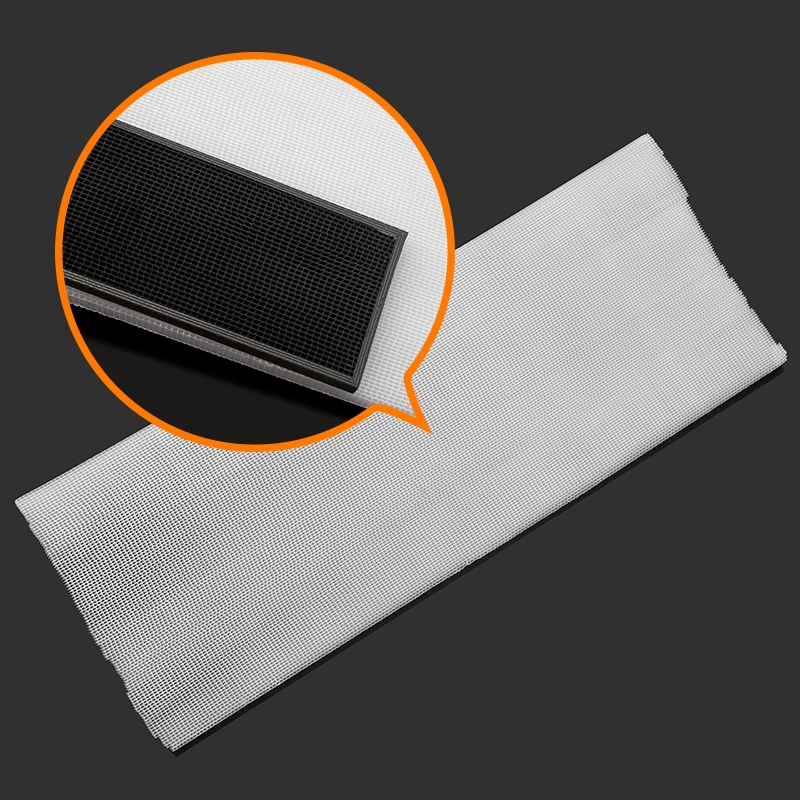
A disposable air conditioner filter is replaced because it looks dirty, not because it has stopped working. Those are different conditions, and confusing them is what makes the replacement interval shorter than it needs to be. Understanding which one applies is the whole of the saving.
Appearance versus performance
A filter darkens long before it materially restricts airflow. The dust that collects on the face is visible immediately; the dust that matters is what has loaded into the depth and closed the flow paths. A filter that looks filthy can still be passing most of its design airflow.
That cuts both ways. Discarding on appearance wastes filters that were still working. But waiting until airflow audibly drops means the coil has already been running dirty for weeks, which is the expensive part. Neither extreme is right, and the useful signal is somewhere between.
What actually drives the interval
Three things, in order of effect: dust loading in the space, hours of operation, and the face area of the filter. Face area is the one nobody controls and the one that matters most. A small filter in a high-loading room is replaced constantly; a larger panel in the same room runs for months. If you can increase face area, do that before changing the media.
Operating hours matter more than calendar time. An air conditioner running sixteen hours a day through a summer loads its filter at several times the rate of one running four hours, and a seasonal schedule that ignores this is wrong for both.
Where a washable panel changes the arithmetic
Washing converts a purchase into a task. Whether that is better depends entirely on the labour: if someone has to dismantle the grille every three weeks, the saving evaporates. If the panel is accessible and the interval is months, it is straightforward.
The other change is that a washable panel removes the guesswork about whether a filter is finished. You wash it when it is visibly loaded and it comes back to a known condition. There is no judgement call about whether it still has life in it.
The honest counter-argument
If your loading is very low – a clean bedroom, a few hours a week – disposables are cheap and infrequent, and a washable panel may never pay for itself within the time you keep the unit. Washable media earns its cost where loading is high or access is awkward enough that a purchase order is more trouble than a rinse.
We would rather say that than sell panels into an application where they are the more expensive option.
A sixty-second test that settles it
Hold a single sheet of lightweight paper – a tissue, a receipt – against the return grille with the unit running. If it stays firmly against the grille, suction is healthy. If it droops or falls, airflow is restricted and the filter is loaded enough to matter.
It is not a measurement, and it will not tell you whether the filter is at sixty percent or ninety. What it does is replace a visual guess with a functional one, and it takes about as long to do as to describe. Repeat it every few weeks and you will find the interval your particular installation actually needs, which is more useful than any figure from a manual written for a different climate.
One caution: do the test with the same grille position and the same fan setting each time. Comparing a reading taken on high with one taken on low tells you nothing, and this is the usual reason people conclude the test is unreliable.
What we can do
We supply washable pre-filter panels cut to air conditioner apertures. Tell us the aperture, roughly how many hours a day the unit runs, and whether the air is dusty or greasy, and we will tell you whether a washable panel is worth it for your case – sometimes it is not.