
A fouled evaporator coil is the most common reason an air conditioner stops cooling properly, and it is habitually diagnosed as a refrigerant problem. The gas charge is usually fine. The air cannot get through the fin block, and everything downstream of that follows.
What accumulates, and where
The fin block is a dense stack of aluminium fins with gaps of a millimetre or two. Lint bridges across the face. Finer dust and, in kitchens, a film of cooking oil work into the depth. The oil film is the one that matters: dry dust can often be rinsed off, while an oily film binds dust into a layer that water alone will not move and that keeps catching more.
Loading is rarely even. It concentrates where air velocity is highest and where the coil face is closest to the return path, so a coil can be badly fouled over a third of its face while the rest looks presentable. A quick look through the grille with a torch usually shows the pattern.
What it does to performance
Less air across the coil means less heat absorbed, which means the refrigerant does not fully evaporate and the coil surface temperature falls. In cooling mode that drives the surface below freezing, moisture in the air freezes on it, and ice further blocks the airflow. The unit now has two restrictions feeding each other.
The compressor keeps running because the thermostat has not been satisfied. Energy use rises while delivered cooling falls, and the discharge air feels less cold than it did. Owners often report that the unit “runs all the time now” – which is accurate and is a symptom, not a cause.
Left long enough
Sustained icing and the freeze-thaw cycling it causes is hard on fin bonds. Compressor wear increases with long run times and with liquid floodback when evaporation is incomplete. None of this fails dramatically; it shortens service life by a season or three, which is harder to notice and more expensive than a breakdown.
Prevention is cheaper than cleaning
Coil cleaning is a service call, sometimes a disassembly, and it is done annually at best. Keeping lint and dust off the coil face is a filter change or a rinse, done as often as the loading requires. The economics favour prevention strongly, which is the whole argument for a return screen that actually captures something.
It is worth being clear that a return screen does not eliminate coil cleaning. It extends the interval, sometimes substantially. The coil will still need attention.
Checking before you call anyone
Shine a torch through the return grille at the coil face. If you can see a mat of lint or a grey film across the fins, it is a cleaning job. If the fins look clean and the unit still will not cool, it is probably refrigerant or airflow from another cause, and a service call is the right move.
Cleaning a coil is gentle work. A soft brush along the fin direction, a fin comb where fins are bent flat, and a coil cleaner used as directed – followed by a rinse, and somewhere for the water to go. High pressure bends fins, and bent fins are a permanent restriction. It is also worth cleaning the drain tray at the same time; a blocked tray overflows and the leak gets blamed on the filter.
What we can do
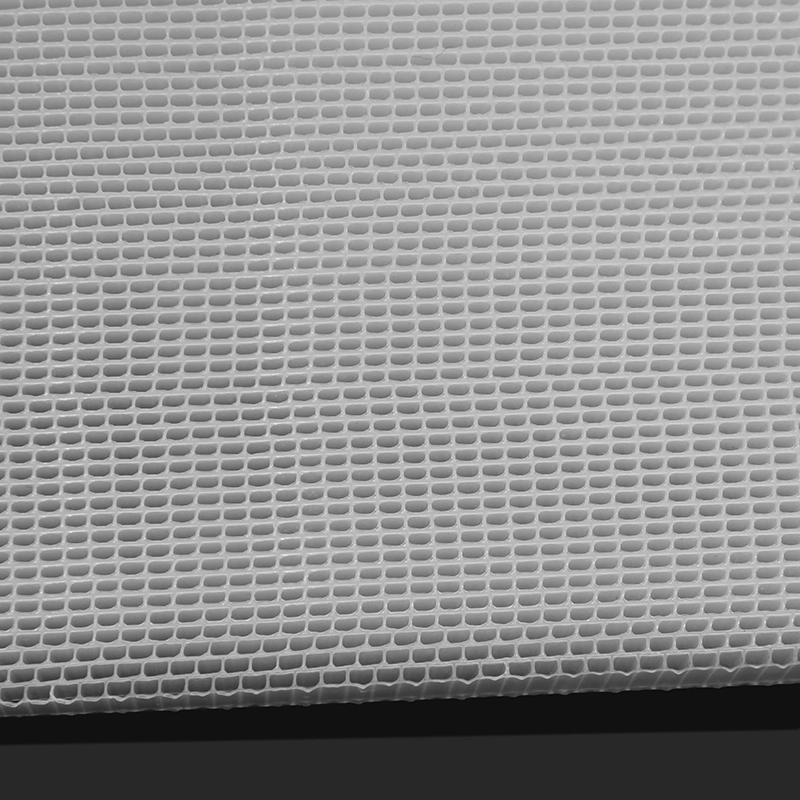
We supply washable PP honeycomb pre-filter panels cut to air conditioner apertures, which is the cheapest stage you can put in front of a coil. Tell us the aperture and how the room is used – kitchen, workshop or ordinary living space – and we will tell you what the screen should be and whether it will fit behind your grille.