
A reefer container is not a dry container with cooling added – it is a system that moves air through the load, and a load that blocks the airflow arrives warm in the middle no matter how cold the unit is set. Loading for airflow comes before loading for volume.
How the air moves
Cold air enters through floor channels running the length of the container, rises through the load, and returns to the unit at the door end. Anything that blocks the floor or the return path reduces the air reaching the middle of the load.
Which means: the floor channels must stay clear, and the space at the door end above the load must stay clear. Both are routinely blocked by crates loaded to the last centimetre.
What vented crates do for you
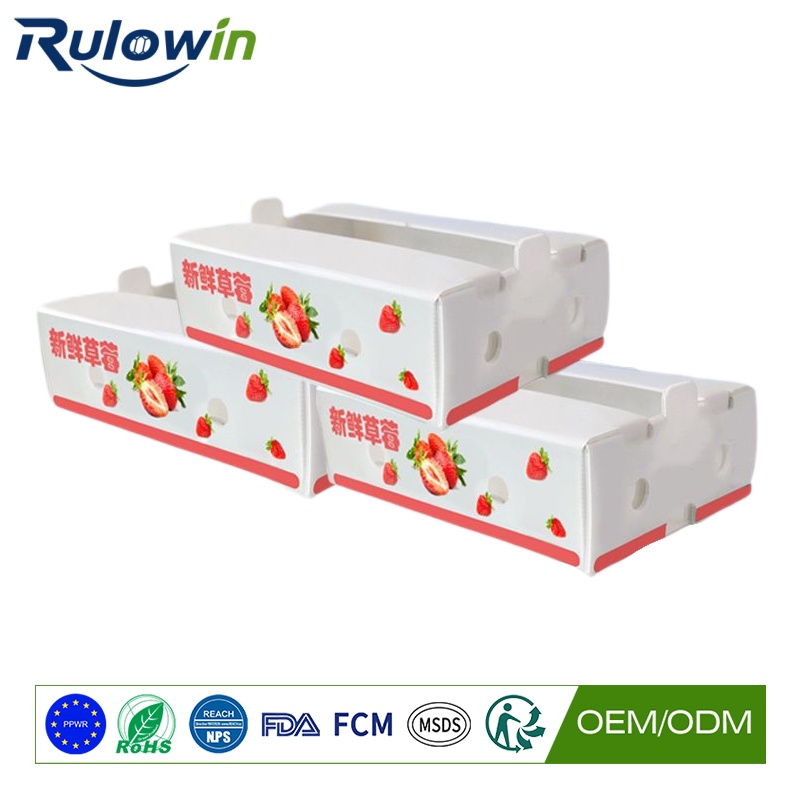
A vented crate lets air pass through it, so a stack of vented crates cools through the stack rather than only around it. A solid-wall crate does not, and a container of solid crates cools far more slowly and less evenly.
This is the main reason produce crates are vented, and it is why solid-wall crates are the wrong choice for a reefer even though they stack more neatly.
Stacking pattern
Align the vents. A crate turned ninety degrees relative to the one below blocks the vertical air path through the stack, and a stack with blocked vents behaves like a solid block.
Leave gaps between stacks where you can. A container loaded tight wall to wall has no air path around the load, and the outer crates cool while the inner ones do not.
Load height
Below the load line marked in the container. Loading above it blocks the return air path and the unit then recirculates air that has not passed through the load. It is one of the most common causes of a warm-centre arrival.
What else goes wrong
Crates loaded wet, which freeze together into a block at the edges of the load. And crates stacked too high for their loaded strength, which crush the bottom layer – cold PP is more brittle, and a crushed bottom crate in a reefer is a common sight.
Crate count per pallet layer is worked through in how many produce crates in one pallet layer, and pre-cooling in crates for pre-cooling after harvest.
Palletised or hand-stacked
Palletised loads cool better because there are defined air paths between pallets, and they are much faster to load and unload. Hand-stacked crates fill the container better and block the air paths unless gaps are deliberately left.
If you hand-stack, leave the gaps. If you palletise, accept the volume penalty – the arrival temperature is usually worth more than the extra crates.
Record the temperature
A data logger in the load, read on arrival, tells you whether the problem was the loading or the unit. Without it, every warm arrival is an argument.
And the floor
Do not lay anything over the floor channels – no sheet, no pallet placed across them, nothing. It is the single most common cause of a warm centre and it is invisible once the container is loaded.
What we can do
We make PP crates for fruit and vegetables with vent patterns specified for airflow, and we will tell you which pattern suits your container loading. Tell us the crop and the reefer setting – if your problem is airflow rather than crates, we will say so.