
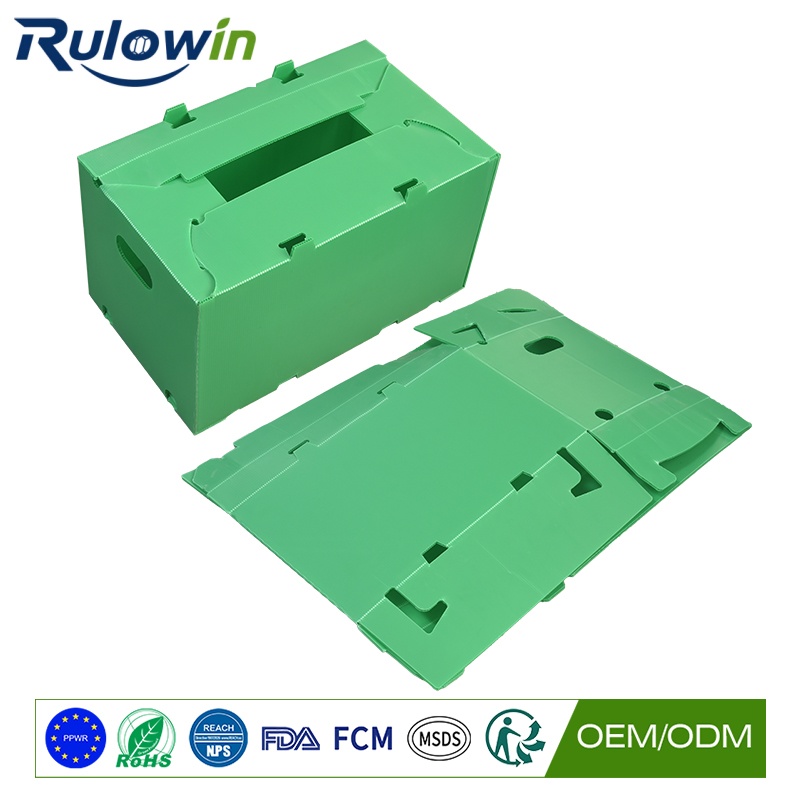
The number of crates in a pallet layer is one of those figures that quietly determines cost for years. Get a layer of eight crates instead of ten and you have lost twenty per cent of every pallet you will ever build with that crate – and the loss is invisible because the pallet still looks full.
Divide the footprints
A standard euro pallet is nominally 1200 by 800 millimetres. A crate of 600 by 400 gives you a clean two-by-four grid – eight crates, no waste. A crate of 550 by 350 gives you two along one axis and two along the other with a lot of overhang, or three along one axis and two along the other with a gap. Neither is good.
So the first check is arithmetic: does the crate footprint divide into the pallet footprint with minimal remainder, in at least one orientation, and preferably two? Crate dimensions that look arbitrary almost always cost someone a crate per layer.
Overhang is worse than a gap
A small gap in the middle of a layer is tolerable. Overhang – crates projecting past the pallet edge – is not. Overhanging crates get hit by forklifts, by door frames and by the adjacent pallet, and they are the ones that arrive cracked.
If you have to choose between a layer with a gap and a layer with overhang, take the gap. Better still, change the crate.
Interlock versus column stack
Some crates are designed to interlock – rotated ninety degrees per layer – which ties the layers together and gives a more stable pallet without strapping. Interlocking usually means the crate footprint is not a simple divisor of the pallet, and the layer count changes between alternate layers.
If you are comparing two crates, compare them stacked the way each is meant to be stacked. A crate that gives ten per layer column-stacked and eight interlocked is not obviously better than one that gives nine interlocked and is more stable.
Height, again
Layer count is only half. The other half is how many layers you can stack before the load becomes unstable or exceeds a height limit – which for produce is often set by the vehicle or the cold room rather than by the crate. We covered this in what size crate you need for 20 kg of tomatoes.
Worth measuring both: crates per layer, and layers per pallet. Multiply them and compare. One crate can win on the first and lose on the second.
What to do when the crate does not fit the pallet
Sometimes the crop dictates a footprint that no standard pallet divides into cleanly. Before accepting a lost crate per layer, check two things.
Whether a different pallet works better – some operations run an industrial pallet specifically because it suits their crate. And whether the crate can be turned: a footprint that wastes space one way often fits well rotated ninety degrees.
If neither works, accept the loss and count it. A crate per layer out of eight is twelve per cent of your pallet capacity, and knowing that number is what lets you judge whether a custom footprint is worth the tooling.
What we can do
We make PP crates for fruit and vegetables in footprints that divide cleanly into standard pallets, and we will tell you the layer count for the pallet you actually run. Tell us the pallet and the crop and we will work it out – including if one of our standard crates gets you an extra crate per layer.