
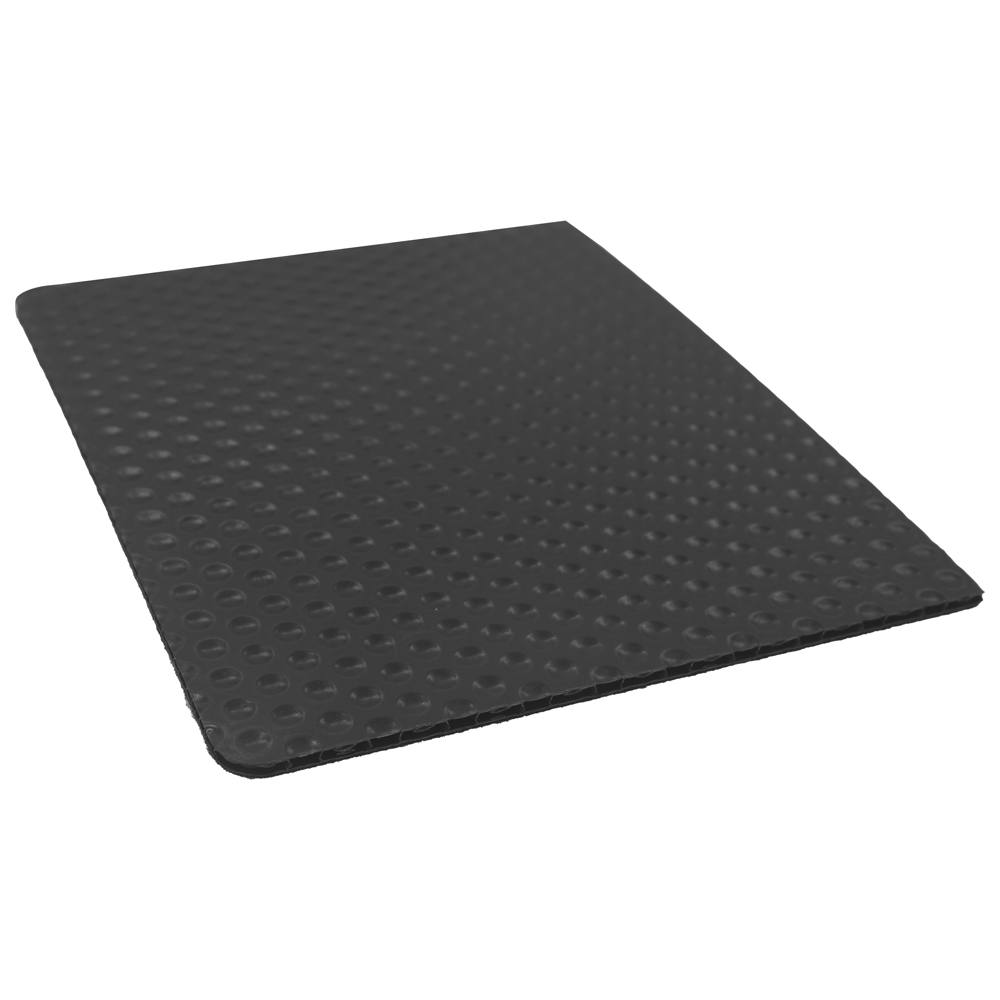
Edge sealing is the line on a protection board order that almost nobody questions, and it is usually quoted the lazy way: all four sides, every panel, one rate. On a large order that default is a meaningful sum spent sealing edges that butt against a wall and will never see water or traffic.
How the line is actually priced
Edge treatment is a per-linear-metre operation, not a per-panel one, which is why small panels cost proportionally more to seal than large ones. A layout made of many narrow strips has far more edge per square metre than the same area laid in full panels, and it is the reason a cut-heavy order can come back noticeably more expensive than the area alone suggests. Ask for the edge rate separately from the panel rate and the number becomes visible.
Three treatments, three price points
A welded edge is done on the extrusion line, is the same polymer as the panel, and survives repeated washing. It is the most expensive per metre and it has to be specified before production starts – it cannot be added later. An extruded trim is fitted after cutting, costs less, and is the practical option for panels cut to a layout. Edge tape is the cheapest, is fine on dry internal work, and comes off under pressure washing. The honest choice depends on how many wash cycles the panel will see, not on which is technically best.
The default nobody challenges
Concealed edges do not need sealing. An edge against a wall, a column, a skirting or another panel in a dry internal area sees neither water nor traffic. The specification that saves money is simple: seal exposed cuts in traffic routes and wet areas, leave the rest open. It takes one line on the order and it has to be written before the cutting programme is set, because once panels are cut the decision has already been made.
What sealing does to the programme
Factory welding adds a production step and, on a tight lead time, it can be the step that pushes a delivery out. Site-applied trim adds labour at the point panels are laid, which is the busiest moment in the sequence. Neither is a large cost on its own; both are the kind of small addition that turns a comfortable lead time into a late one. Ask which of the two the quoted date assumes.
The site-cut problem
Panels cut on site to fit around columns and services have open edges that nobody has priced for. Where cutting is unavoidable, either order a trim length with the panels or accept that those edges are consumable. The panels most likely to be written off at the end of a job are the ones that were cut and left unsealed.
What to put on the order
Named treatment, list of which edges, and whether the panels will be washed. Three lines, and they remove the most common dispute on a protection order – the one where the buyer expected sealed edges and the supplier quoted open ones, or the reverse.
How to tell what you have been sold
Run a hand along the edge. A welded edge is continuous and slightly proud; a taped edge has a visible line and lifts at the corner with a fingernail. Both are legitimate and they cost different amounts, but you should know which one you bought – a taped edge will not survive repeated pressure washing and a welded one will.
How to check what you were actually sold
A welded edge is the same polymer as the panel, continuous, and slightly proud of the face. A taped edge has a visible line and lifts at the corner with a fingernail. Both are legitimate products at different prices, and the point of knowing the difference is that the cheaper one has a shorter life under washing – so if you are paying for welded and receiving taped, that is a pricing dispute worth having early rather than at handover.
Check the first delivery rather than the sample. Samples are usually prepared carefully; production panels are not always. Run a hand along the edge of three panels from three different pallets and look at one cut face under a light. If the treatment varies between pallets, the production run was not consistent, and the panels that fail first will be the ones with gaps in the seal. That check takes two minutes and it is the only practical way to hold a supplier to the specification you wrote. Delamination at a cut edge is the failure that follows, and it is described in repairing delaminated honeycomb panel edges.
What we can do
We quote PP protection board with welded, trimmed or open edges priced per linear metre so the saving on concealed edges is visible rather than buried. Send us the layout and the wash regime, and we will price the edges we think are needed. The physical reason it matters is set out in why sealed edges matter on reusable panels.