
Thickness is the first thing buyers ask about and the least useful specification on its own. What it buys depends entirely on what the board has to do, and beyond a few millimetres it stops buying the thing people assume it buys.
What thickness actually does
Increase bending stiffness, which is load spreading. A thicker board of the same construction spreads a wheel load or a foot load over a wider area by the time it reaches the floor. That is the genuine benefit and it is real: going from 6 mm to 10 mm on a wheeled route is a meaningful improvement.
What it does not do much of
Absorb impact beyond a modest point. For a dropped tool, the gain from 10 mm to 20 mm is much smaller than most specifiers assume, because the mechanism is energy absorption in the core rather than depth. Where the requirement is genuinely impact, the answer is usually a different core density rather than more thickness.
Weight and handling
A 1200 x 2400 board in a typical protection grade weighs somewhere between four and eight kilograms depending on thickness and skin weight. The same size in plywood is in the twenties. That difference decides whether one person can carry several panels up a flight of stairs, which decides whether the protection gets moved as the work moves – and that is worth more than the extra thickness would be.
Stiffness per kilogram
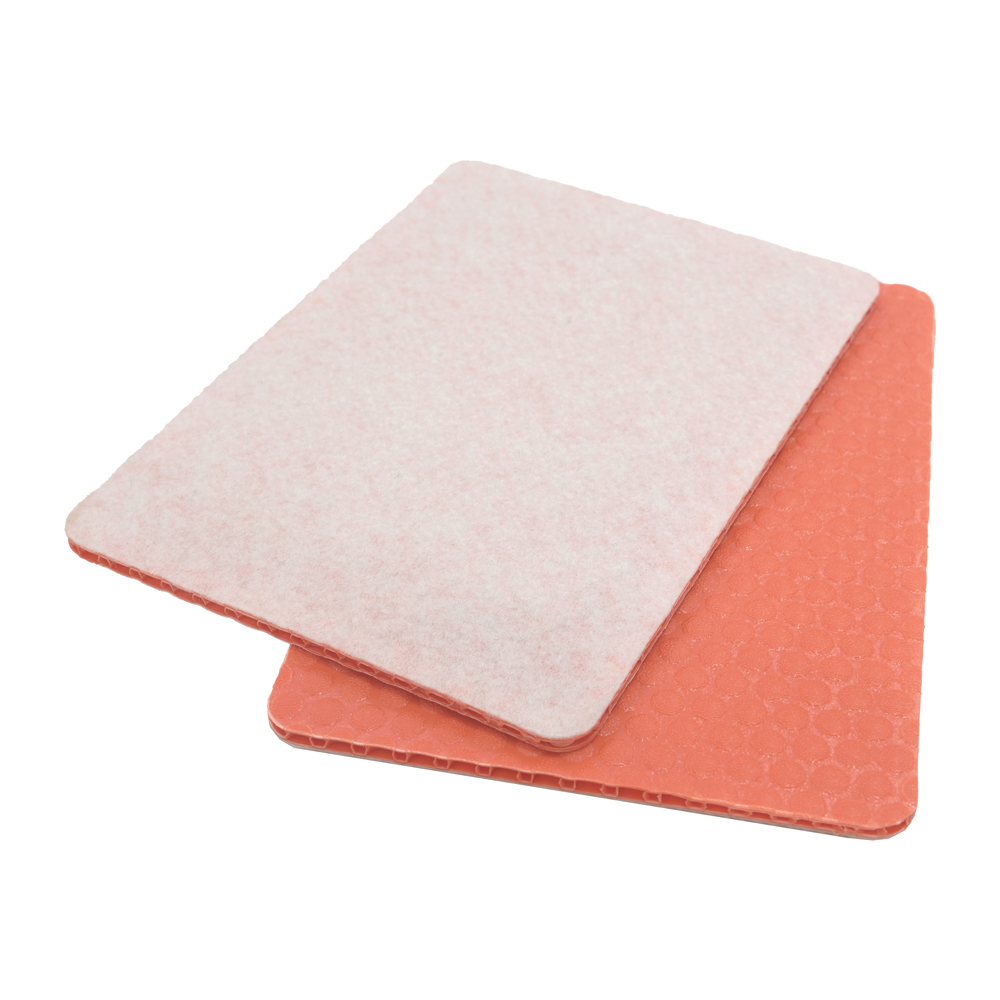
The measure that matters. A honeycomb core puts material at the two faces where bending stress is highest and removes it from the middle where it does nothing, which is why a light honeycomb board is stiffer than a heavier solid sheet of the same thickness. If a supplier cannot tell you the stiffness or the weight per square metre, ask.
Choosing
Say what the board has to carry and how it has to be handled. A wheeled route in a warehouse wants thick and stiff. A client-facing corridor on foot traffic wants thinner and lighter. A stair wants light enough to carry and stiff enough not to dish. Those are three different boards.
What thickness does to the edge detail
A thicker board needs a shallower taper at its edge to avoid a trip lip, and on a route used by trolleys that taper has to be long enough for a wheel to climb without a shove. Where thickness goes up, the edge detail has to change with it. This is the detail most often missed when a specification is upgraded, and it is why a thicker board sometimes performs worse on site than a thinner one.
Buy thickness for the load, not for the feeling
Thickness is the first thing buyers ask about and often the least useful number, because two panels of the same thickness can perform differently depending on cell size and wall thickness. What actually determines performance under load is weight per square metre – it is the honest proxy for how much polymer is in the panel.
For foot traffic over a finished floor, a light panel is enough and has a real advantage: it is easier to carry, cut and lay, and crews actually use it. For trolley routes, scaffold feet and machinery, go up a grade in the traffic lanes only rather than across the whole area – a common saving that keeps the heavy panels where the load is. The lightest panels are also the ones most likely to curl at the edges after being stored badly, so thickness interacts with storage. The denting behaviour behind this is in why thin protection sheet does not stop dents.
What we can do
We supply PP honeycomb protection board across a range of thicknesses and will state the weight per sheet as well as the thickness. Tell us the load and the access, and we will recommend one – including where a lighter board is the better answer because it will actually get moved. Load behaviour is set out in why thin protection sheet does not stop dents.