
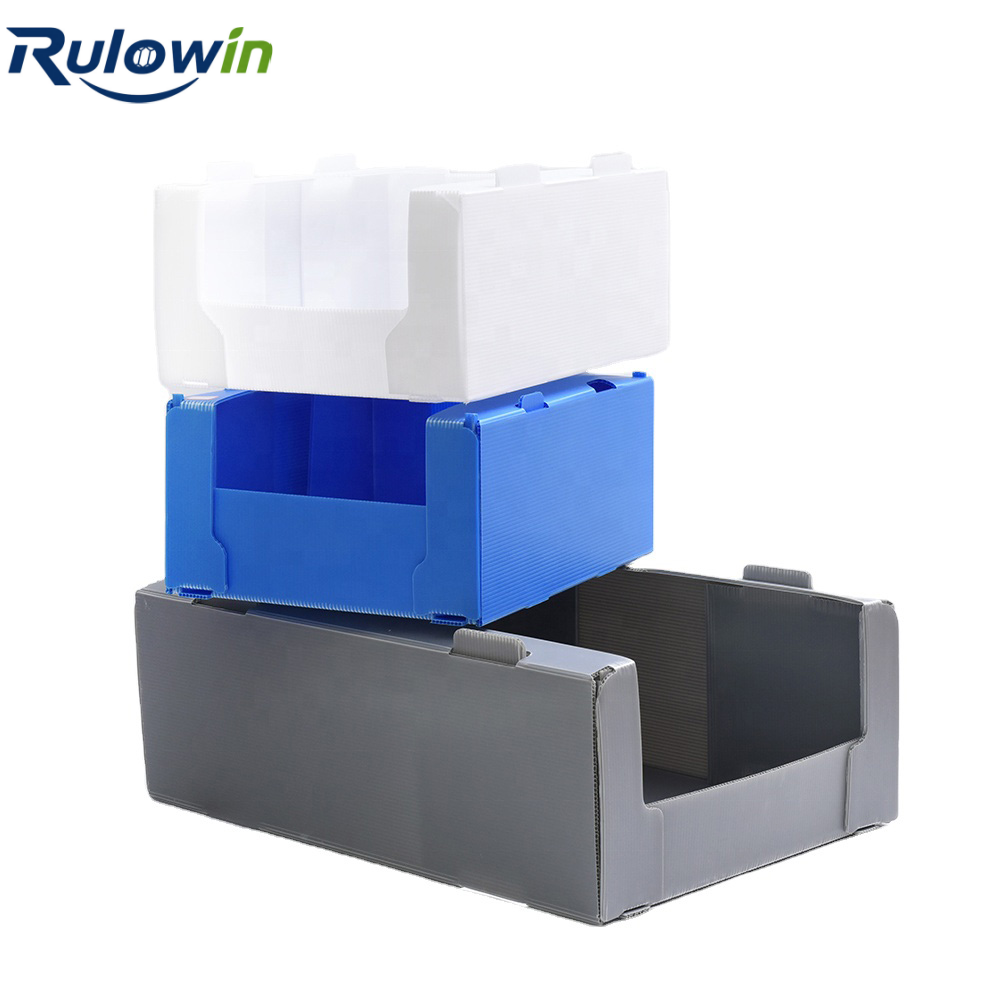
Polypropylene is a low-surface-energy material, which is a technical way of saying that adhesives do not like sticking to it. A standard paper label with a general-purpose adhesive will go on fine and start lifting at the corners within a few weeks, and in a picking environment – where boxes are handled constantly and rub against each other – sooner than that.
Why it happens
Adhesives work by wetting out into the surface. Polypropylene’s surface does not let them, so the bond is weaker than it looks and fails progressively from the edges inward. Temperature cycling makes it worse: the plastic expands and contracts more than paper does, which works the adhesive loose.
Note that this is a surface property, not a durability problem with the box. A box that loses labels is otherwise perfectly serviceable.
Option one: the right label
A label with an adhesive formulated for low-surface-energy plastics – usually a modified acrylic – solves it for most operations. These cost more per label than a general-purpose one and are still cheap. If you are labelling PP boxes and have not specified the adhesive, this is the first thing to change.
A flexible face stock helps too. A stiff label on a surface that flexes will lift; a conformable film label moves with it.
Option two: treat the surface
Corona or flame treatment raises the surface energy of polypropylene and makes it accept ordinary adhesives. This is done at manufacture and lasts long enough to matter, though the effect decays over months. If you are ordering boxes in volume and want to use your existing labels, ask for a treated label area.
Worth knowing: treatment decays, so a box that gets labelled a year after manufacture will not behave like one labelled a week after.
Option three: do not use labels
Printed or embossed directly onto the box, or a card holder – a slot moulded into the box that takes a printed card. For operations that reassign boxes constantly, a holder is easier to live with, because the identifier changes without any adhesive at all.
Direct printing lasts as long as the box and never lifts. The trade is that the identifier is fixed, which suits a permanent box number and not a per-order one.
Where to put it
Wherever it is, keep it off the handle and off the corners. Labels on a handle get rubbed by every carry, and corner labels get scuffed by every stack. A flat area on the long face, set in from the edge, outlasts the same label placed anywhere else.
Also worth fixing first: if boxes are overloaded and bulging, no label will stay on a deforming surface. That is covered in why picking box handles tear, which is the same underlying problem.
Scanning, which is a separate question
A label that stays on can still fail to scan. Glossy label faces reflect scanner light and polypropylene surfaces behind a thin label can make the contrast worse than expected. Use a matte face stock and test with the actual scanners on the actual boxes before committing to a label.
Placement matters more than people think: a label on a curved or flexing area will scan inconsistently even when it is perfectly stuck down.
What we can do
We supply picking boxes with a flat, treated label area, or with a moulded card holder if you prefer. Tell us how you identify boxes today and we will tell you which of the three routes fits – including when your existing labels are fine and only the placement needs changing.