
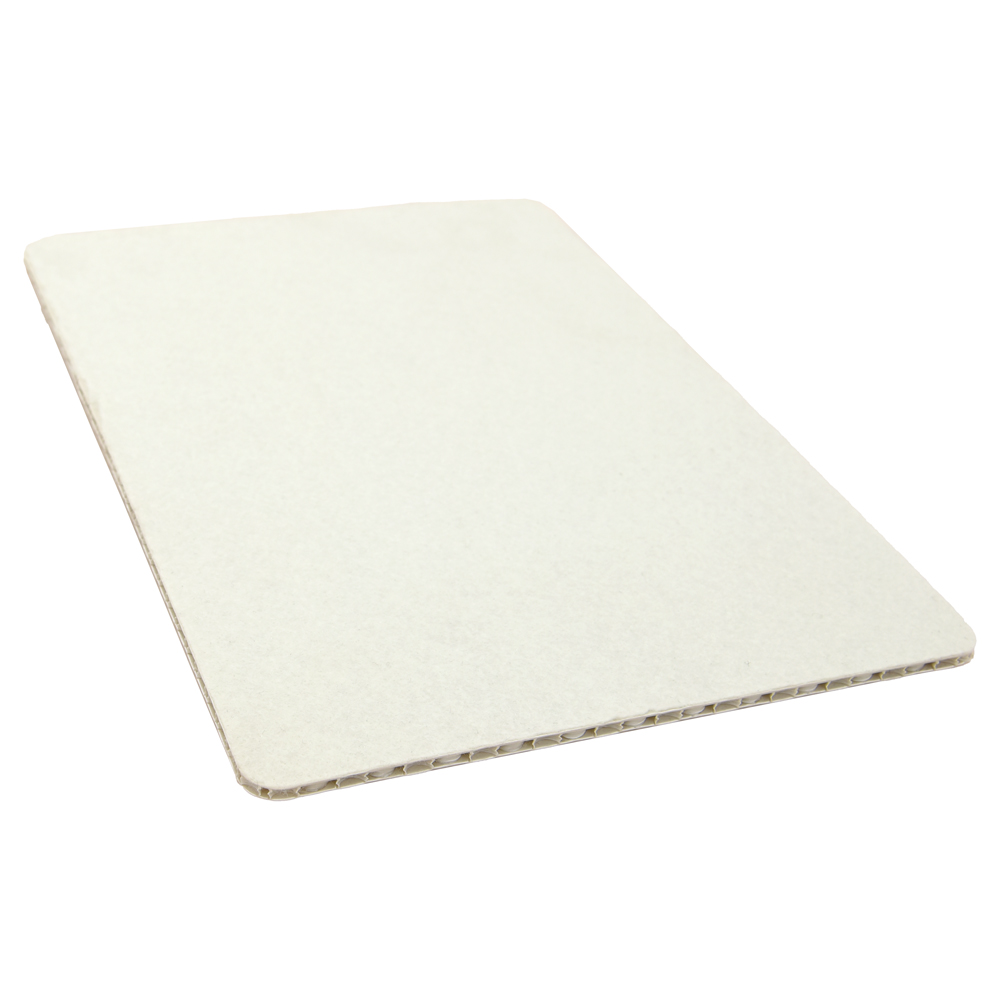
Ordering honeycomb panels in volume is not difficult and it is easy to get wrong, because the thing that decides whether they work – the relationship between span, load and thickness – is rarely written down anywhere. Here is the list we would work through before signing anything.
1. Span, not just pallet size
The unsupported distance, not the overall dimension. A panel sitting on a full deck behaves completely differently from one bridging a stringer gap. Measure what is actually under the panel where it will be used, not what the pallet drawing says.
2. Load, and how it is applied
Total weight is not enough. Note whether it is distributed or concentrated, and if concentrated, the footprint of whatever is touching the panel – four feet of fifty millimetres is a completely different problem from a flat base. Suppliers need this to size anything.
3. Ask for a bending figure
Most panel data sheets quote compressive strength, measured through the thickness. That is the wrong number for a panel working in bending. Ask for flexural stiffness or a deflection figure at a stated load and span. A supplier who cannot produce one is not sizing panels, they are selling thickness.
4. Thickness, face weight and cell size
These are independent. Two panels of identical overall thickness can behave differently because core and faces are split differently. Get all three on the quote so you can compare properly and reorder consistently.
5. Additives, and whether you need them
UV stabilisation if the panels will sit outdoors. Anti-static if you are handling electronics. Flame retardant if a customer specification demands it. None of them is free, and none of them is worth paying for if you do not need it – a common way bulk orders get quietly more expensive.
6. Edge finish and trim
Unsealed edges let water and dust into the core, and they are where delamination starts. If panels get washed or stored outside, specify sealed edges. Also confirm the trim tolerance – a panel that arrives two millimetres over size will not drop into a jig.
And one question for yourself
Do the panels come back? If not, durability is worth very little and you should be buying the cheapest panel that survives one trip. If yes, trip life dominates and a thicker panel is cheaper per trip. That answer changes everything else on this list, which is why we put it last but ask it first.
If you have not sized the panel yet, what thickness honeycomb panel you need walks through span and load properly.
Samples, and what to do with them
Get a sample of the actual thickness you intend to buy, not a representative offcut of whatever is on the shelf. A sample of the wrong thickness tells you nothing about whether the panel will span your gap.
Then abuse it. Stand on it across the span you are worried about. Drop it on a corner. Leave it in the sun for a fortnight. Five minutes of deliberate misuse on one panel is worth more than any datasheet, and any supplier confident in the specification will send one without argument.
What we can do
We supply PP honeycomb panels in bulk and quote against a full specification. Send us this list filled in, or send us blanks and we will work through it with you – including telling you when a cheaper corrugated sheet is the right buy.