
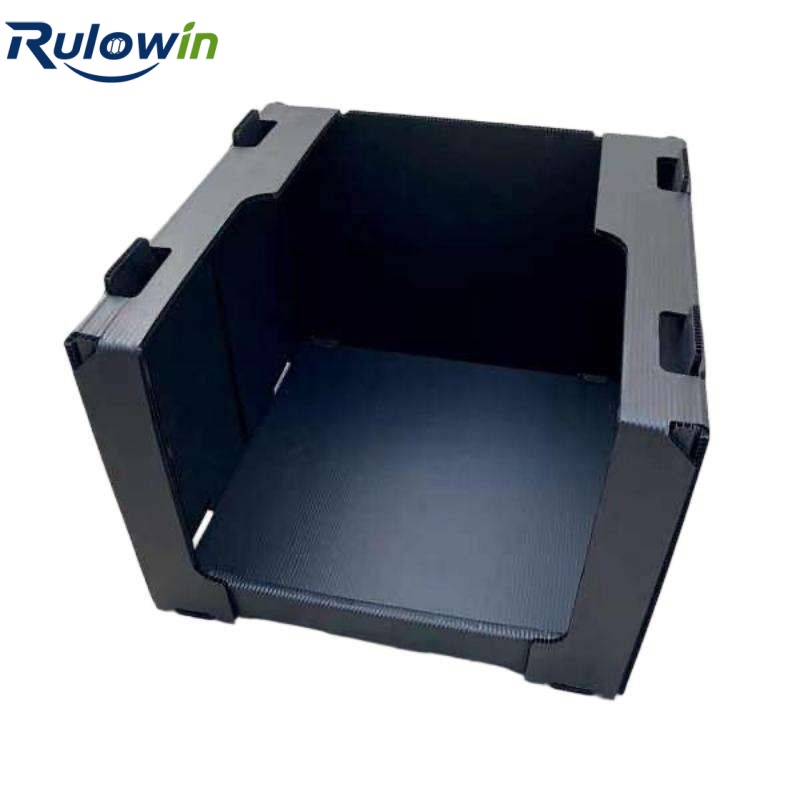
A picking box with a torn handle is a box that has been lifted one-handed, overweight, several hundred times. The tear never starts in the middle of the grip. It starts at the radius, where the handle meets the box wall, because that is where the stress concentrates, and it starts on boxes that are being carried rather than moved on a cart.
The radius is everything
A sharp internal corner between handle and wall is a crack waiting for a load. The radius at that junction is the single biggest determinant of handle life, and it is not something you can see on a photograph or judge from a specification sheet that lists only overall dimensions. Two boxes that look identical in a catalogue can differ by an order of magnitude here.
If you are comparing boxes, put a finger into that corner. If it comes to a point, the handle will fail early regardless of how thick the material is.
One hand versus two
Pickers carry boxes one-handed because the other hand is holding a scanner or a list. That is the reality and it should be designed for. A box specified on the assumption of two-handed carrying will fail in a picking aisle within weeks.
Practical consequence: the rated load for a picking box should be read as a load for carrying, not a load for holding. If a picker is going to lift it by one handle, the realistic working load is a good deal lower than the number on the sheet.
What overloading actually does
The first thing an overloaded box does is bulge. The walls bow out, the handle opening deforms, and the radius at the grip root tightens as the material pulls. Then the tear starts. By the time you see a wall bowing, the handles are already working well beyond what they were specified for.
A picking line that has a weight limit usually enforces it badly, because nobody weighs anything. The cheap intervention is smaller boxes. A box that cannot be overloaded is better than a rule about not overloading one.
Cold and age
Two accelerants. Cold reduces impact and tear resistance, so a chilled picking environment tears handles faster than an ambient one. And polypropylene oxidises slowly – a box that is four or five years old tears more readily than the same box new, even if it has been stored indoors. Neither is dramatic on its own. Together with overloading, they are the difference between a season and a year.
Repairing a torn handle, and why it rarely pays
A torn handle can be welded, and the weld will usually hold. What it will not do is restore the section – the tear happened because the radius was working beyond what the material could take, and welding the tear back together leaves the same radius in place. It tears again, usually next to the weld.
So repair is worth it for a box you need today and not for a fleet. The durable fix is at specification: a bigger radius, or a box rated for the weight people actually put in it. Which brings us back to size – a box that cannot be overloaded does not develop torn handles.
What we can do
We supply picking boxes with generous radii at the handle root and wall sections that resist bulging at the loads pickers actually carry. Tell us the target weight per box and whether picks are carried one-handed, and we will size it honestly – which sometimes means telling you to go a size smaller.