
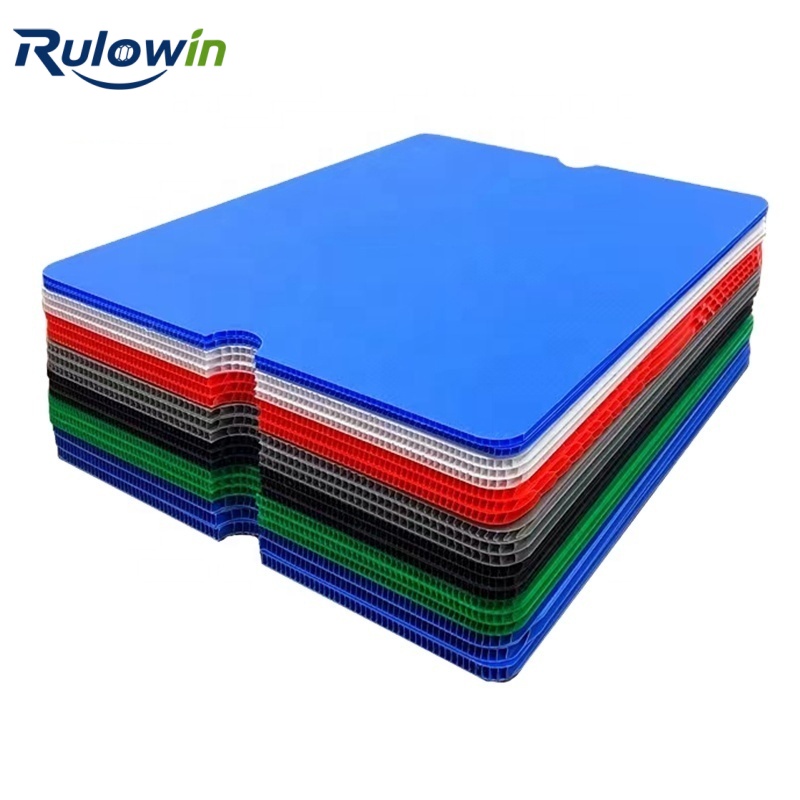
Ask for a fold in corrugated polypropylene sheet and you will get one of two things: a crease, where the material is compressed along a line, or a score, where material is displaced or partially cut through to create a hinge. They look similar flat and behave very differently folded.
What each one actually is
A crease compresses the sheet locally. The outer faces and the flutes are squeezed together so that the natural resistance to bending along that line drops. Nothing is removed and the material on both sides of the line stays continuous, which matters enormously if the fold has to hold anything back.
A score removes material – a shallow channel cut into one face, sometimes with the flutes crushed. The hinge is much freer. It is also thinner at exactly the point where the two faces meet, and that thin section is where cracks start.
Fold count is the deciding question
If the fold is made once in manufacture and then lives folded, either works. If it will be folded and unfolded repeatedly – a collapsible box, a lid, a reclosable flap – the crease wins almost every time, because the score has already spent part of the material’s fatigue life before the customer touches it.
This is why some designs crack at the corner after a handful of trips while identical-looking ones survive for years. It is rarely the polymer; it is which line was put in – the same distinction we drew for cutting, scoring and folding corrugated sheet.
Crease depth is a narrow window
Too shallow and the sheet refuses to fold where you want and buckles either side of the line. Too deep and you have effectively scored it, with the same fatigue penalty and sometimes a visible mark on the face. There is a correct depth per grade and per thickness, and it changes if the sheet direction changes.
Direction matters more than people expect
Corrugated sheet has a flute direction, and folding across the flutes behaves completely differently from folding with them. A design that creases beautifully one way can fight you the other. Specify the grain direction on the drawing, or the converter will pick whichever nests best on the sheet and it will vary between batches – which is what “it used to fold better” usually turns out to be. The same issue appears with sleeve box hinge edges.
The fold radius is not free
A creased sheet still has a minimum practical fold radius. Forcing a tighter corner than the material wants puts all the strain into a shorter length of the outer face and tears it. If your design needs a genuinely sharp corner, you need a mechanical corner – a welded or fixed angle – not a fold.
How to test before you commit
Take samples, fold them the way the operation will fold them, at production speed, for more cycles than you think necessary. Twenty cycles tells you nothing. Several hundred tells you whether the fatigue life is measured in months or years, and it costs an afternoon.
What we can do
We crease and fold corrugated PP sheet and will ask how many times the joint opens before we quote it. Tell us the fold count and whether the panel ever gets washed or stored cold, because both change which line we would recommend – and sometimes the honest answer is a welded corner instead.