
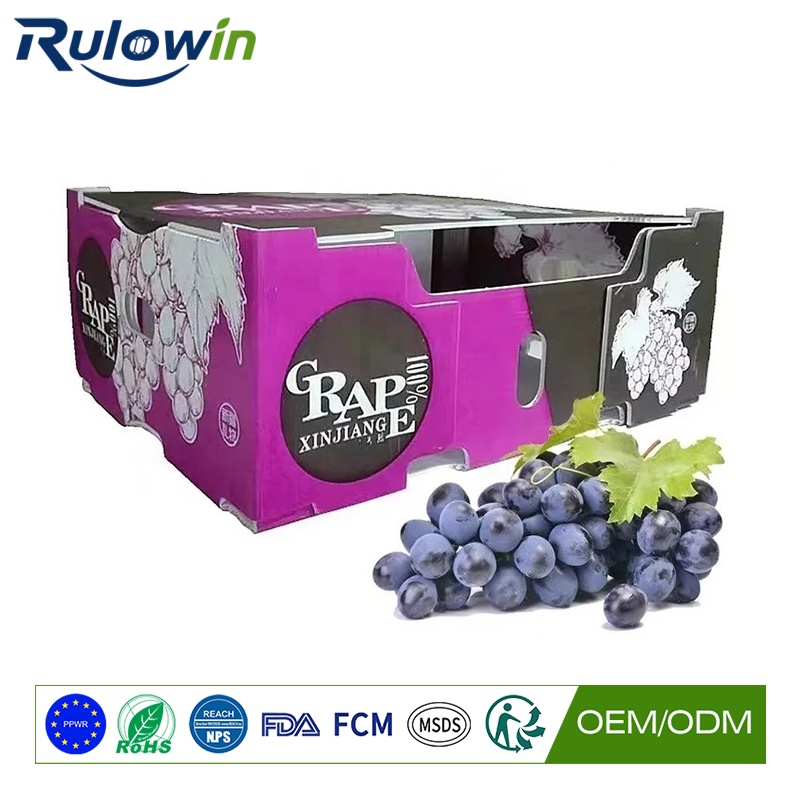
The difference between a quotation that holds and one that gets revised is almost always the quality of the enquiry. Suppliers are not being difficult when they ask questions – a crate price depends on weight, additives, tooling and freight, and none of those can be inferred from a crop name.
The six things that matter
Crop and fill weight, because that sets the structural requirement. Footprint and pallet pattern, because that sets the dimensions. Stack height in use, because that sets the load case. Months outdoors per year, because that sets the UV package. Wash method, because that affects material choice. And quantity with delivery terms, because that sets the price. Six fields, and a supplier with all six can quote accurately.
What happens with too little information
The supplier makes assumptions, and the assumptions are conservative – a heavier crate, a full additive package, a delivered price. That produces a quote that is higher than it needs to be and that a competitor with better information will beat. Under-specifying does not get a cheaper quote; it gets a padded one.
Why the pallet pattern matters more than people think
Crate footprint determines how many fit on a pallet, and a footprint that leaves a large gap is wasting transport volume on every single trip. A crate designed around a standard pallet pattern – typically a 1200 x 1000 or a 1000 x 1200 footprint – is more efficient over a decade than one chosen because it looks right. This is covered in detail in fruit box sizes that actually match the pallet.
Food contact and documentation
If the crates touch food, ask for the food contact declaration with the quotation rather than after the order. It is a routine document and asking early is the difference between having it in the file and chasing it during an audit. Where recycled content is involved, the declaration needs to cover that grade specifically, which is the point made in food contact questions before buying PP crates.
Lead time is part of the quote
A price without a date is not a quotation. Crate production is scheduled, and a custom colour or a printed crate has a longer lead than a stock item. Ask what is stock and what is made to order, and ask for the lead time on each – then check it against the season start.
Ask for the datasheet
Weight, dimensions, nesting ratio, stack load rating, material and additive package. If a supplier cannot produce that quickly, they will not be able to support the fleet later either. It is a reasonable test and it takes one email.
The one question that saves the most time
Ask what is stock and what is made to order, and get the lead time on each separately. A fleet enquiry almost always mixes the two – a stock footprint in a stock colour, plus a printed or custom-sized item – and quoting them together produces a single pessimistic lead time for the whole order. Splitting them usually means the bulk of the fleet ships weeks earlier.
The second question worth asking is whether the quoted crate has been through a wash tunnel of the type you run. A crate that has only ever been hand-washed may have corners a fixed-nozzle tunnel cannot reach, and that is discovered after the fleet arrives rather than before.
What we can do
We quote produce crates against a short specification and will send a datasheet and samples before you commit. Send us the six fields, or tell us what you know and we will ask for the rest.