
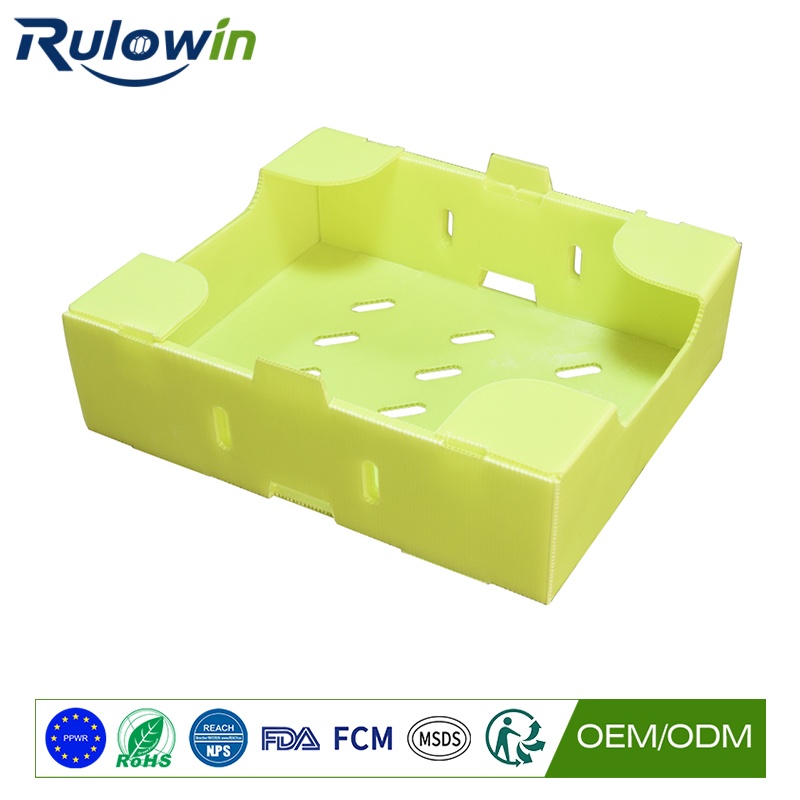
Crate footprint is usually chosen from a catalogue or inherited from whatever the operation used before. It is worth ten minutes with a tape measure and a pallet, because the footprint determines how much produce fits in a truck, and that is a cost that repeats on every load for the life of the fleet.
The two footprints that matter
Most produce moves on either a 1200 x 1000 mm or a 1000 x 1200 mm pallet, and the crate footprint should divide into whichever one the operation uses. The common alternatives are a footprint that gives an even two-by-three or three-by-four pattern with minimal gap, and one that leaves a strip down the side that is too narrow for another crate. The second looks like a small waste and is not.
What the gap costs
An unreclaimed strip of fifty millimetres down one side of a pallet is roughly four per cent of the pallet area. Over a season of hundreds of loads, that is four per cent of the transport cost, and it is being paid for a decade. A crate that costs slightly more and uses the pallet properly is cheaper than a cheaper crate that does not.
Overhang is worse than a gap
A crate that overhangs the pallet edge is worse than one that leaves a gap, because the overhanging corner takes the impact in a tight aisle and it is the corner that cracks. Crates should sit within the pallet footprint. Where the pattern does not work out, the honest answer is usually that the wrong crate size was chosen rather than that the pallet is wrong.
Stacking pattern and stability
An interlocking pattern – alternating the orientation by layer – is more stable than a column stack, and it requires a footprint where the two orientations combine to fill the pallet. That usually means a footprint with a specific ratio between length and width rather than a square. It is worth checking whether the crate supports interlocking, because a column stack of tall crates in a moving truck is not as stable as it looks.
Height and the door
Footprint gets the attention and height is what stops the load fitting. A stack that is too tall for a truck door, a cold room door or a container requires the whole load to be re-stacked or split. Check crate height against the tightest door in the chain before ordering, including the height of the pallet and any wrap.
Where standardization helps
A fleet on a common footprint can be mixed between crops, pooled with neighbours and sold on if the operation changes. That flexibility has value that does not appear on a quotation. It is the argument behind the common produce crate sizes used across Europe, and it is why an unusual footprint should have a strong reason behind it. The sizing question is discussed further in fruit box sizes that actually match the pallet.
What to do when the customer’s pallet is different
It happens constantly – a fleet bought for one pallet and a customer who requires another. The options are a crate footprint that works tolerably on both, which usually means one slightly short of ideal on each, or a second fleet, which costs capital. Most operations end up accepting a small efficiency loss on one pattern.
Before accepting it, measure it. Lay the crates on the second pallet and count how many fit per layer and how much gap is left. A four per cent loss is acceptable and a twelve per cent one usually justifies a second footprint or a conversation with the customer about the pattern.
What we can do
We supply produce crates in footprints built around standard pallet patterns and will tell you the pattern and the crates-per-pallet figure for each. Send us your pallet size and we will say which footprint uses it best.