
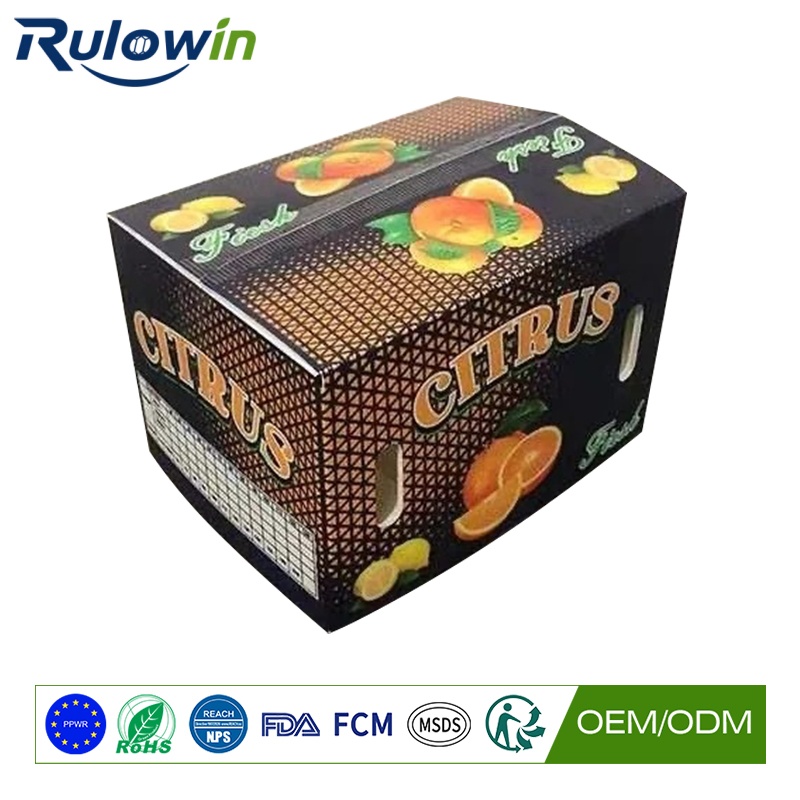
Box dimensions are usually chosen for the product and the picker. Pallet efficiency gets considered afterwards, if at all, and the cost of that decision is invisible because it never appears on an invoice.
Why it matters more than it looks
Transport is charged by the trailer or the container, not by the box. A pallet pattern that wastes fifteen percent of the footprint means fifteen percent more vehicle movements to shift the same crop. Over a season that is real money, and it is being spent by a decision nobody revisited.
The standard footprints
Two dominate: 1200 x 1000 mm and 1200 x 800 mm. The first is the general European and international standard; the second fits European retail distribution and gives better access in some racking. Which one you should design for depends on where the pallet goes, and it is worth confirming with your customer rather than assuming.
How to test a footprint
Take the pallet dimensions and divide by candidate box lengths and widths in both orientations. You are looking for a combination where the boxes cover most of the deck with overhang no more than about 20 mm per side.
Overhang is the thing to avoid. A box hanging over the edge has no support under that part of the base, and the stack above transfers load through it. Underhang – a small gap – is much less harmful.
Column stacking versus interlocking
Column stacking, where each layer sits directly on the one below, gives the best load path and the worst stability. Interlocking patterns are more stable but often waste footprint and put walls over gaps. Many produce boxes use a small interlocking lip that gives stability without losing much coverage – that is usually the better compromise.
Height is a separate decision
Box height should be chosen against the load height limit, which is usually set by the trailer or the container rather than by the pallet. Common limits leave a usable stack height that is not a round number, and boxes sized to a round number often leave an awkward gap at the top.
It is also worth checking the height against your cold room door and any racking, because a stack that is 50 mm too tall is a stack that has to be split.
Don’t forget the empty leg
Nested or collapsed empty boxes are why reusable boxes get shipped back economically. Ask what the collapsed height is and how many fit on a pallet, because a box that nests well can make the return leg nearly free and a box that does not can make it expensive.
Where custom sizing pays
If you are running enough volume that a few percent of pallet efficiency is worth having, a custom footprint pays back quickly. Below that, choosing the closest standard size and optimising the pattern is usually the better use of money – tooling is not free.
Footprints worth knowing
The two standard footprints cover most situations: 1200 x 1000 mm, which is the general international standard and the safer default, and 1200 x 800 mm, which suits European retail distribution and fits some racking better.
Which one you should design for is a question for your customer rather than for us, because it is set by their pallet pool and their racking. If you supply several customers with different preferences, the honest answer is often to pick the one that covers most of your volume and accept a small efficiency loss elsewhere, rather than running two box sizes.
It is also worth asking whether your customer uses a pooled pallet service, because pooled pallets have their own dimensional requirements and a box that overhangs one will be refused.
What we can do
We supply produce boxes in standard footprints and can tool custom sizes when the volume justifies it. Send us your pallet size, load height limit and how the boxes come back and we will tell you whether a standard size already fits well enough.