
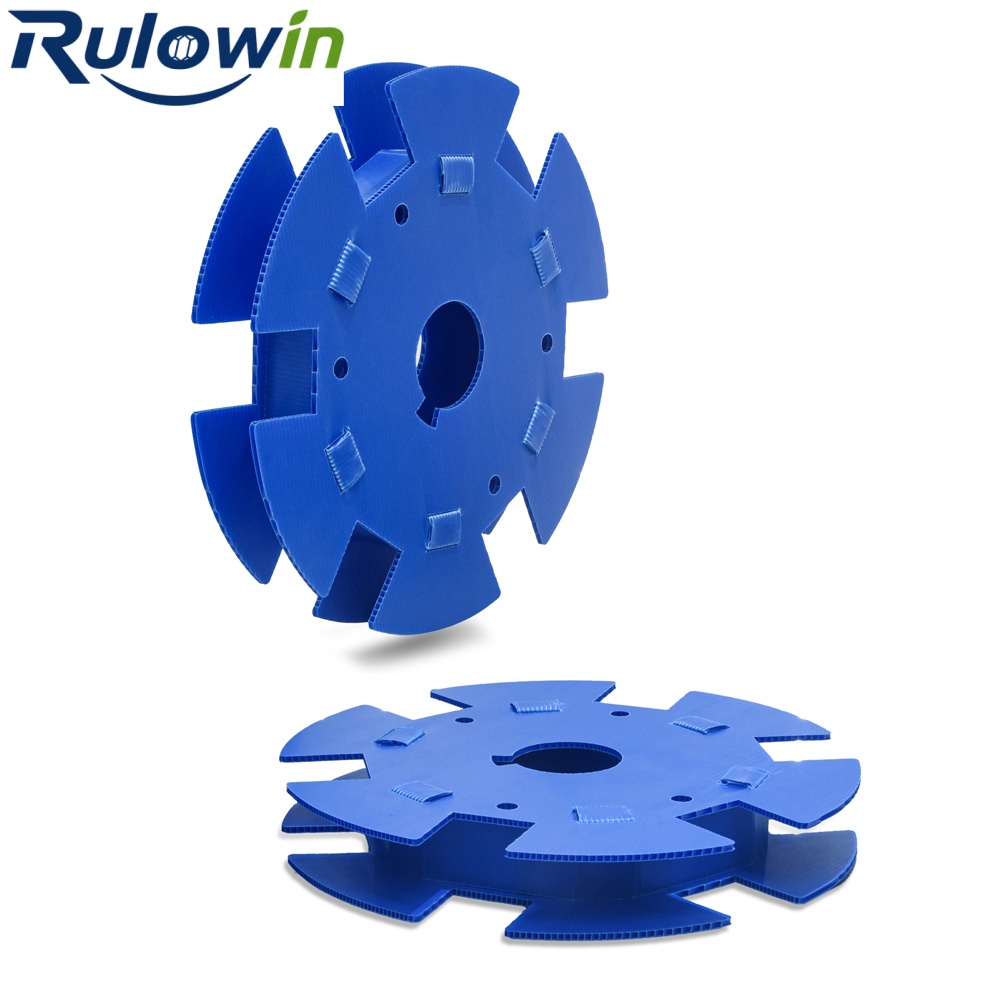
Starting a heavy spool takes effort and everybody notices. Stopping one is where the damage happens, and it gets far less attention — partly because the effort is invisible, done by a brake rather than a motor.
What is actually stored
A rotating spool holds energy proportional to how heavy it is and how fast it is turning, and to where that weight sits. Weight at the rim contributes much more than weight near the centre, which means a big-diameter spool is disproportionately harder to stop than its weight alone suggests.
Doubling the speed quadruples the stored energy. This is the fact that matters most, because most people think about speed as a throughput variable and not as an energy one.
Where the energy goes on stopping
Every stop has to dissipate that energy somewhere. The options:
- Into the brake. The intended path. Brake components wear, which is normal and manageable.
- Into the product. If the spool keeps turning while the line has stopped, the product goes slack, and slack becomes tangle — the mechanism described in our article on bird-nesting at payoff.
- Into the spool itself. If the brake grabs at the bore while the pack tries to keep going, the torque has to pass through the spool structure. That is a load most spool specifications never consider.
- Into the drive interface. Keyways, pins and clamping surfaces take a shock load they were specified for steady-state torque, not for.
The third and fourth of these are where low-cycle fatigue failures come from, and they are rarely identified as such because the failure looks like ordinary wear.
Emergency stops specifically
A controlled stop ramps down over whatever period the drive allows. An emergency stop does not. The energy is the same; the time is a fraction, so the peak load is many times higher.
Two practical consequences worth knowing:
- A spool that survives a thousand normal stops may fail on a handful of emergency ones. This is why “it has been fine for a year” is not evidence that a design is adequate for its worst case.
- The load path usually goes through the bore. Which means bore condition and fit matter more on equipment that trips frequently — the same territory as our bore wear article, but with a different cause.
Frequent start-stop operation
Some processes cycle constantly — indexing lines, cut-to-length, anything that starts and stops several times a minute. For these, the steady running condition is almost irrelevant. What matters is:
- Acceleration and deceleration rates
- How many cycles per shift
- Whether the spool is driven or braked by the bore
- Whether the pack is heavy at the start of the run and light at the end, which changes the energy every cycle
That last point is easy to miss. A line that behaves well at the end of a spool can be over-stressing everything at the beginning, purely because there is more weight out at the rim.
What to do about it
- Brake through the largest diameter you can. Braking at the rim or through the flange generates lower torque for the same stopping force than braking at the bore.
- Set deceleration rather than accepting the default. A slightly slower ramp costs seconds and reduces peak loads substantially.
- Count the emergency stops. If they are frequent, that is a design condition, and the spool should be specified for it.
- Look at the bore after a period of frequent stops and see whether it is wearing faster than the running hours suggest.
What we can and cannot influence
We cannot change your machine’s deceleration. What we can do is build our hollow board spools knowing whether your duty is continuous or cyclic, and whether the spool is being braked through the bore — because those two facts change what we would recommend for the core-to-flange joint and for the bore region.
If you tell us your cycle rate, we will factor it in. Most people never mention it, and it is often the thing that explains a failure nobody could account for.