
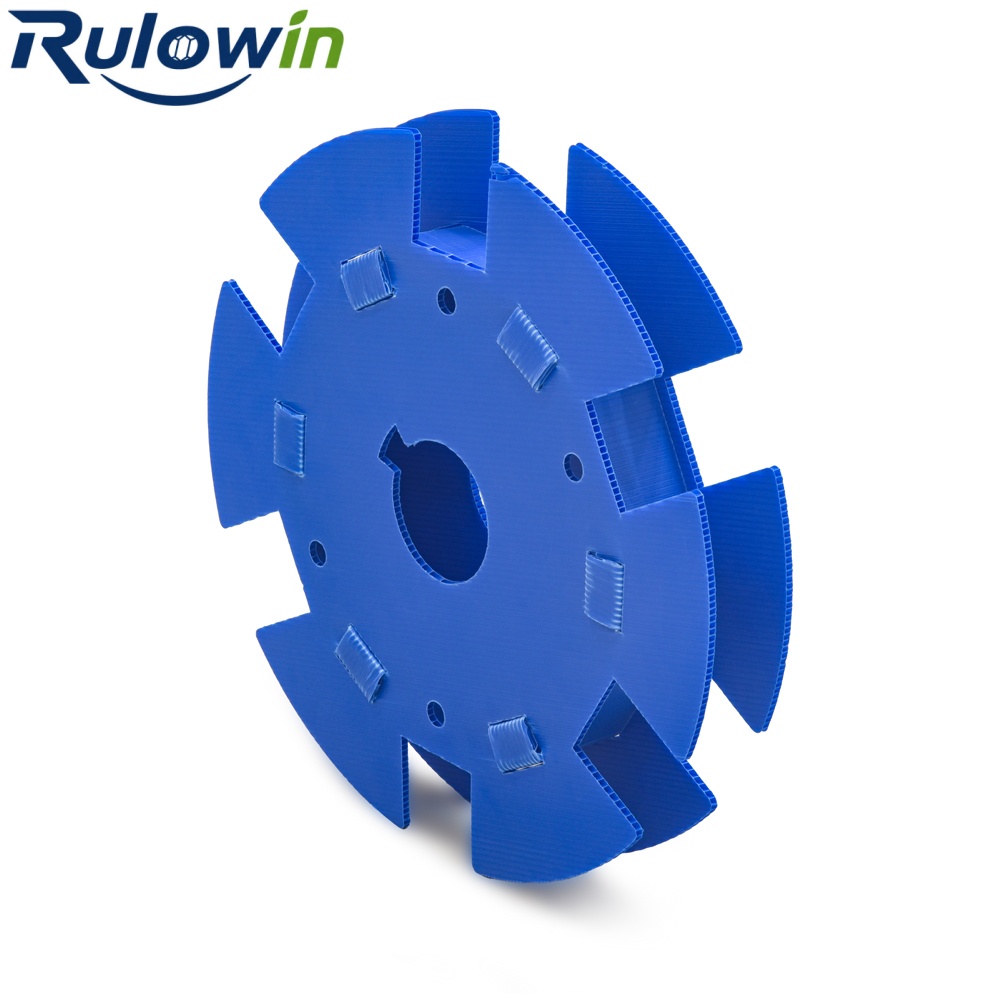
Every time a line starts winding onto a fresh spool, some product gets used up getting the process established. Some of this is unavoidable physics. Some of it is habit, and some of it is a spool design problem wearing a process disguise.
The three sources
Threading length. Product has to run from wherever it comes from, through the tension system, and onto the core before anything useful happens. On a line with dancers, guides and a tension gate this is metres, not centimetres.
Stabilisation. Tension takes time to settle. Whatever is wound during the settling period is wound to the wrong tension, and depending on the product and the customer either gets scrapped or gets rewound.
Attachment waste. Threading the end into the anchor consumes some length, and the disposal of that first unstable metre is standard practice on most lines.
Why it is undercounted
Three reasons it rarely appears as a line item:
- It is spread across every changeover rather than concentrated, so it never looks big at any one moment
- It is often folded into general process scrap
- Nobody has measured it, so there is no baseline to compare against
Measure it once. Ten changeovers, length used before saleable product starts, averaged. On high-value product the annual figure is often the argument that gets a problem fixed.
What is genuinely unavoidable
Threading length is physics. Distance from entry point to core is fixed by the line. Stabilisation is partly physics — any tension control system has a settling behaviour, though how much depends on how well it is tuned, which is covered in our comparison of tension control approaches.
What is habit
- Threading to the wrong spool position. Operators who thread to a convenient spot rather than one that minimises the subsequent adjustment.
- Stabilising at low speed for longer than needed because nobody has tested how short it can be.
- Re-threading after an unnecessary abort. Cutting back to layer two because something looked slightly off, when it would have been fine.
- Starting when the upstream process is not ready, then aborting.
What is actually the spool
This is the category people least often suspect:
- An awkward anchor. If securing the leading end takes three hands and twenty seconds, that is thread time and frustration on every single spool.
- A core surface that needs several wraps before it grips. Smooth cores need more turns to establish hold than textured ones, and that is length you pay for every changeover.
- An unclear start position so operators improvise differently each time, and the improvised version needs correcting afterwards.
- A bore that is slow to seat on the shaft, adding time to every changeover.
Reducing it
The interventions that tend to pay:
- A consistent anchor design that accepts the product quickly and holds it on the first wrap
- A marked start position on the flange so everyone threads the same way
- Tension ramp tested and shortened to whatever the product tolerates rather than whatever everybody assumes it needs
- Bore fit good enough that the spool goes on first time — the subject of much of our article on bore wear
- Measuring it, which does more than it sounds like it should
Changeover frequency changes the answer
On a line running the same product for a week, start-up scrap is noise. On a line doing twenty changeovers a shift, it is a major cost and every second saved is worth real money.
This is worth stating to suppliers. “We change twenty times a day” leads to a different spool recommendation than “we run continuous”, particularly around how the leading end is secured and how quickly the spool can be changed.
A spool-dependent version worth asking about
Our hollow board spools can be built with different lead-in arrangements depending on the product. If you tell us your changeover rate and what product you are winding, we can usually suggest something that shortens the process — and if the honest answer is that your own process is the constraint, we will say that instead.