
The most common mistake in floor protection is carrying the same product and the same fixing method from the landing onto the flight. It works on the flat and it fails on the stairs within days, for reasons that have nothing to do with the quality of the protection.
Load lands on the front edge
On a flat floor, footfall is distributed across the whole surface and the protection is loaded in the middle. On a stair, people plant their foot on the front third of the tread, every time, and the same traffic that a landing spreads over several square metres arrives repeatedly on a strip about 150 mm wide. That strip is where protection wears through first, and it is the nosing – the most fragile part of the stair.
Gravity moves the cover
A panel laid on a flat floor stays where it is put. A panel laid on a tread is on a surface that is effectively a ramp whenever anyone walks on it, and every footfall pushes it downhill a fraction of a millimetre. Over a day’s traffic that is enough to walk a tread cover off the nosing and leave the front edge exposed. This is the failure that gets noticed, because an exposed nosing on a finished stair is a snag item the moment the client sees it.
Going and rise must not change
Adding a cover to a tread adds height and, at the nosing, shortens the effective going. Stairs are regulated dimensions and occupants are calibrated to them; a couple of millimetres of inconsistency between treads is enough to make people stumble. Any stair protection has to be a consistent thickness across the entire flight, which rules out anything that laps, bunches or compresses unevenly.
Fixing is not optional
On the flat, protection can be laid loose and it will usually stay. On a flight it has to be held: a mechanical fix at the top of the run, a high-friction backing, or both. The fix has to hold the cover without touching the finished surface, because the whole point is to protect it – and on a flight that stays in use, grip underfoot matters alongside the fixing, as set out in anti-slip protection for temporary steps and stairs – which is why a fabricated cover that clips to the tread rather than a sheet laid over it usually wins on stairs.
Where stairs genuinely do not need protection
A raw concrete stair in a shell-and-core block, still to be screeded or tiled, needs nothing. A stair used by one trade for two days needs less than a stair used by everyone for two months. And a stair that is going to be replaced outright should be left alone and the money spent on the temporary one next to it. Saying so is cheaper than selling covers that were never needed.
What a stair cover costs against a floor panel
A cut tread cover costs more per square metre than a floor panel, because it is cut and because it carries a fixing detail. Against that, a stair repair costs several times a floor repair for a tenth of the area, and a stair incident costs more than either. On a job with a finished flight, the cover is the cheapest item on the risk list. On a job without one, it is pure waste – which is why the first question is always whether the flight matters.
What we can do
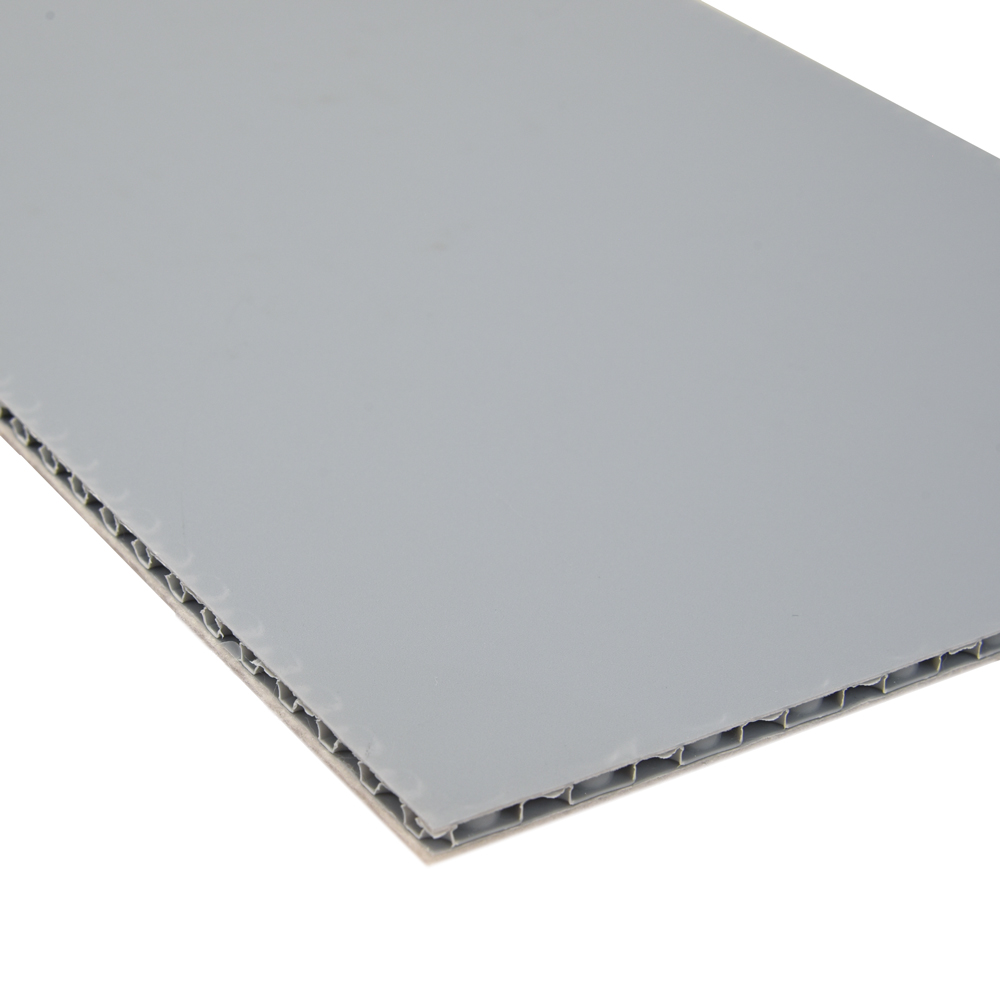
We make PP honeycomb stair tread covers cut to the tread and nosing, with a high-friction backing and a fixing detail that does not touch the finish. Tell us the tread dimensions, what the stair is finished with and how long the programme runs, and we will say whether a fabricated cover or a laid sheet is the right call. Nosing and stringer details are covered in stair nose and stringer protection in PP panel.