
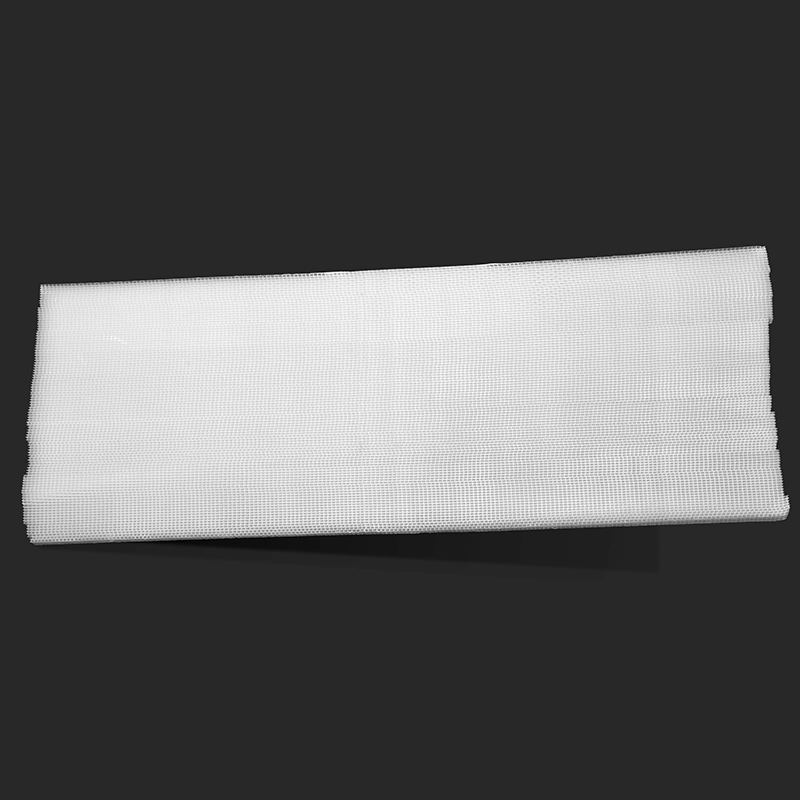
High open area is generally the right call for a coarse stage, which is why it gets specified by default. There are three situations where it is the wrong call, and all three are cases where the thing you need from the stage is not low resistance.
When the stage is the only filtration
If there is no fine stage behind it, the screen is the whole answer, and an open screen delivering very low resistance is also delivering very little filtration. Here the balance moves toward capture, and the pressure cost has to be accepted rather than avoided.
This is common in small standalone equipment – a fan coil, a through-wall ventilator, a small packaged unit – where a single screen is all there is. Specifying a high open area panel into that position produces a machine that moves plenty of air and filters almost nothing out of it.
When the dust is fine
Open geometry catches what contacts a wall, and fine particles follow the airflow. Where the loading is fine – wood sanding dust in part, silica, cement dust – a coarse open screen will pass a large fraction regardless of its open area figure, and the result is a downstream coil or a room that stays dusty.
In those cases the answer is the right fine stage, not a less open coarse one. Trying to solve fine dust with coarse geometry is the specification error that produces the most complaints.
When velocity is already low
The benefit of high open area is that it keeps resistance down at high face velocity. If the system already runs at a low velocity through a generous face, that benefit is smaller, and the capture given up for it is not repaid. A moderately open screen would cost little more pressure and catch appreciably more.
This is a genuine case for not following the default, and it is the one most often missed because the default is right so often.
Local exhaust and source capture
In local exhaust ventilation – a capture hood over a process – the requirement is often to remove a contaminant at source, and the air volume is limited by what the hood can capture. Here an open screen that passes the contaminant defeats the purpose entirely, regardless of how little resistance it adds.
This is a case where the filtration requirement and the airflow requirement are in genuine tension, and the resolution is usually a different stage behind the coarse one rather than a less open coarse screen. Trying to solve it by making the coarse stage finer raises resistance in a system that typically has none to spare.
Odour and gas-phase stages
Where a carbon stage is doing odour or gas removal, it needs protection from coarse loading just as a fine particulate stage does – and it needs it more, because carbon loaded with dust has lost capacity it cannot recover by washing.
The coarse stage in front of carbon should be as open as the airflow allows, because its only job is to keep dust off the carbon. Here high open area is right; the exception that proves the rule is that the stage doing the actual work sits behind it and is not open at all.
What we can do
We supply honeycomb filters across a range of open areas and will ask what sits downstream and what the dust is before recommending one. Tell us the airflow, the face area and whether there is a fine stage, and we will tell you where on the range this stage belongs.