
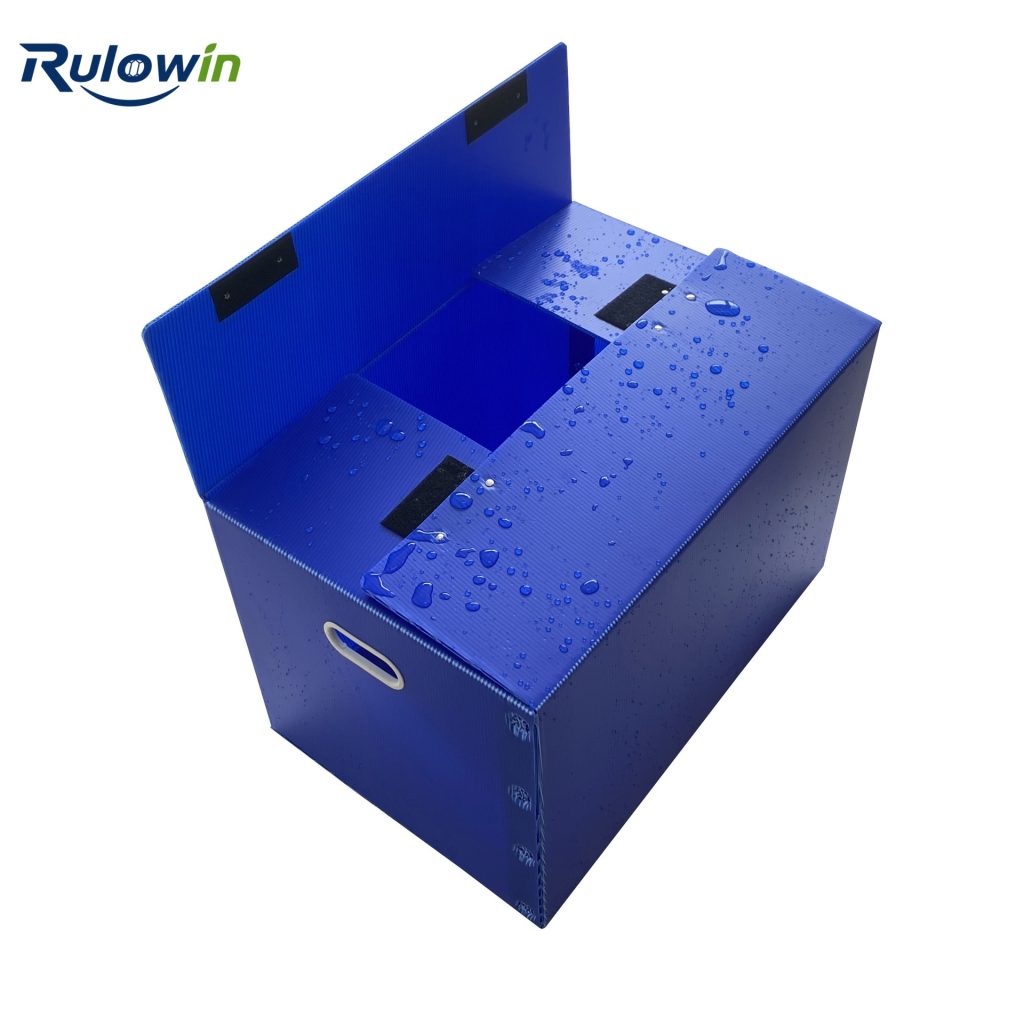
Outbound loads get planned. Return loads get whatever is left. In a two-way movement, the vehicle that delivered parts comes back with empties, and if those empties do not collapse or nest, the return leg is being paid for at full cube to move air. On a long route that is one of the largest controllable costs in a returnable scheme and one of the least examined.
What the empties are actually costing
A 13.6 metre trailer has roughly sixty-five cubic metres usable. A box that stacks rather than nests might occupy a third of its loaded height when empty, so a trailer of empties is moving twenty cubic metres of air. At a contract rate per kilometre over a four-hundred-kilometre return, run weekly, that is a five-figure annual line. It never appears anywhere, because the vehicle was going back anyway.
The two levers
Nesting: tapered walls so empties sit inside each other, typically three to five to one. Collapsing: walls that fold flat onto the base, typically five to eight to one. Both cost volume on the outbound leg – nesting by shrinking the base relative to the top, collapsing by adding hinges, seams and a folding step at both ends of every trip. Neither is free, and both are usually worth it above a certain return distance.
Where the crossover sits
Collapsing and nesting pay off as return distance and return frequency rise, and they stop paying off when the outbound leg is cube-constrained rather than weight-constrained. As a rough guide: below about eighty kilometres, or where empties travel back on a vehicle that is returning anyway, the extra unit cost and the folding labour are hard to justify. Above that distance on a dedicated movement, they usually are. Run your own numbers before accepting either answer.
The third option nobody considers
Do not send the empties back at all. If the loop is a two-way flow – parts out, something else back – the empties can wait for the next outbound vehicle rather than generating a return movement, which halves the number of empty legs at the cost of a larger fleet. That is a fleet-size decision rather than a box-design one, and it is often the cheapest answer available. Loop design is covered in more depth in return logistics for reusable boxes.
The fourth option: make the empties someone else’s problem
There is a structural answer that beats all the design ones, and it is available more often than people expect. If the two ends of the loop both ship something, the empties can travel on the return of the other product rather than on a dedicated empty run. A plant that ships parts out and receives raw material in has a vehicle going both ways already, and empties cost nothing on a vehicle that was moving anyway.
It requires the two flows to be planned together, which is an organisational step rather than a packaging one, and it usually requires someone in logistics to own both. Where it works it removes the return leg entirely, and it does more for the economics than any nesting ratio. Where it does not work it is because the two flows are planned by different people with different targets, which is worth knowing before spending money on collapsible boxes to solve a scheduling problem.
Where collapsing stops making sense
Collapsible boxes have a folding step at both ends of every trip, and that step costs labour every single cycle. On a loop where boxes are collapsed once and rebuilt once, that is negligible. On a loop where boxes are collapsed and rebuilt weekly for years, it is a recurring labour cost that has to be set against the freight saving – and on short routes it can exceed it.
The other constraint is that collapsible designs have seams and hinges, which are the parts that fail and the parts that make the box harder to clean. In a dirty or wet application a seam is a place where contamination sits. Where the route is long and the boxes are clean, collapsing is clearly right. Where the route is short or the application is dirty, a rigid nestable box usually wins on total cost and on service life, despite the worse headline ratio.
What we can do
We supply PP corrugated turnover boxes in stacking, nesting and collapsible builds, and we will price all three against your two legs rather than steering you to the one with the best headline ratio.