
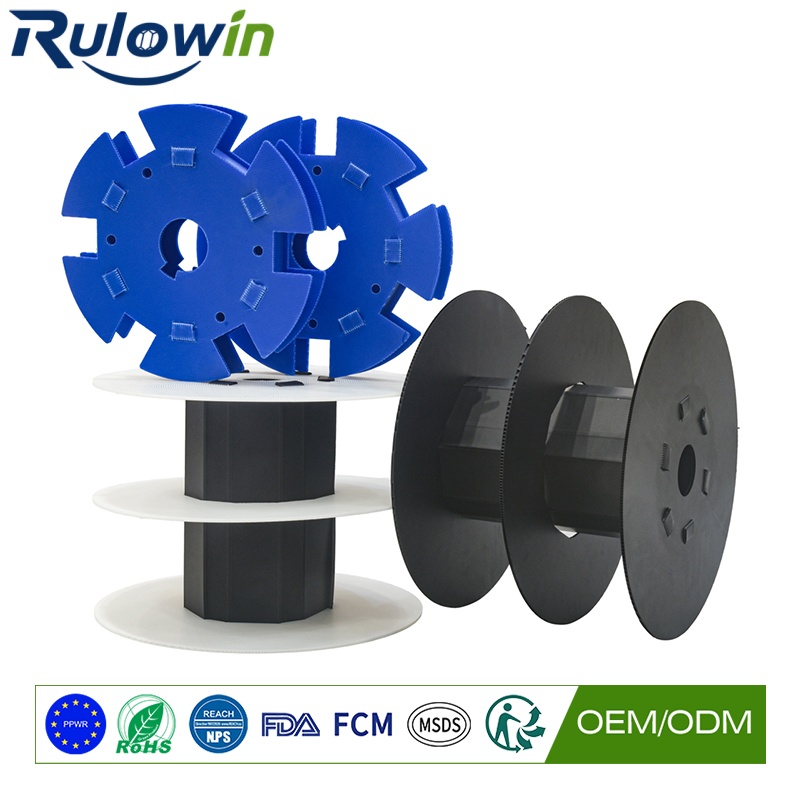
Minimum order quantity exists for a genuine reason — setup cost is fixed and somebody has to cover it. The trouble starts when MOQ becomes the thing that decides how much you buy, rather than your actual requirement.
What MOQ actually reflects
Setup: tooling loaded, machine configured, first parts inspected and adjusted. That cost is largely independent of whether you then make fifty or five hundred, so spreading it over more units makes each cheaper.
Everything in our tooling article comes from this, and none of it is unreasonable. Suppliers are not inventing MOQ to be difficult.
How it distorts decisions
The failure patterns:
- Buying stock you do not need because the unit price at the higher quantity looked better. Then storing it, insuring it, and eventually finding a use for it.
- Over-standardising to reach an MOQ on one size, which pushes you into a spool that is a worse fit for half your products.
- Delaying a purchase until you can justify the minimum, by which time you are short.
- Avoiding a specification change because you still have MOQ-level stock of the old one.
That last one is the expensive one. Holding onto a sub-optimal design because there is stock of it is how companies stay with the wrong packaging for years.
Cost of carrying versus cost of MOQ
The honest comparison most people never do:
- What does it cost to hold the extra units for as long as you will hold them?
- What is the obsolescence probability over that period?
- What does the storage cost, including the space it displaces?
- What is the cash cost, if capital has a cost?
Often the premium for buying your actual requirement is smaller than people assume, and smaller than the carrying cost of the excess.
Ways around it
- Ask about scheduled releases. Commit to the MOQ volume, take delivery in stages. Most suppliers will consider it, and it addresses nearly all of the downsides.
- Ask whether the MOQ is a real cost or a policy. Sometimes a setup surcharge on a smaller quantity is cheaper overall than exceeding your requirement.
- Consolidate across variants. If you use four sizes, ask whether the minimum applies per size or per order.
- Standardise for real reasons, not to hit a quantity — which is a different way of reaching the same standard dimension benefit.
- Talk to us about stock sizes. If it is already being made, the setup argument largely disappears.
When exceeding your requirement is right
- You will genuinely use them within a reasonable period
- You have spare storage and rotation is managed
- The price difference is genuinely large rather than marginal
- The design is settled and unlikely to change
A question worth asking every time
“What is the unit price at my actual requirement, and what is it at your minimum?” If the difference is small, you are being asked to carry inventory to save very little. If it is large, it may be worth it — or it may be worth asking why, because a steep curve sometimes signals that the item is awkward to make and there may be a better-designed alternative nearby.
Our position
We quote minimums where setup genuinely forces them and we will tell you when there is flexibility. For our hollow board spools we would rather build a realistic order at a realistic price than press you into stock you will still be storing when the specification changes.