
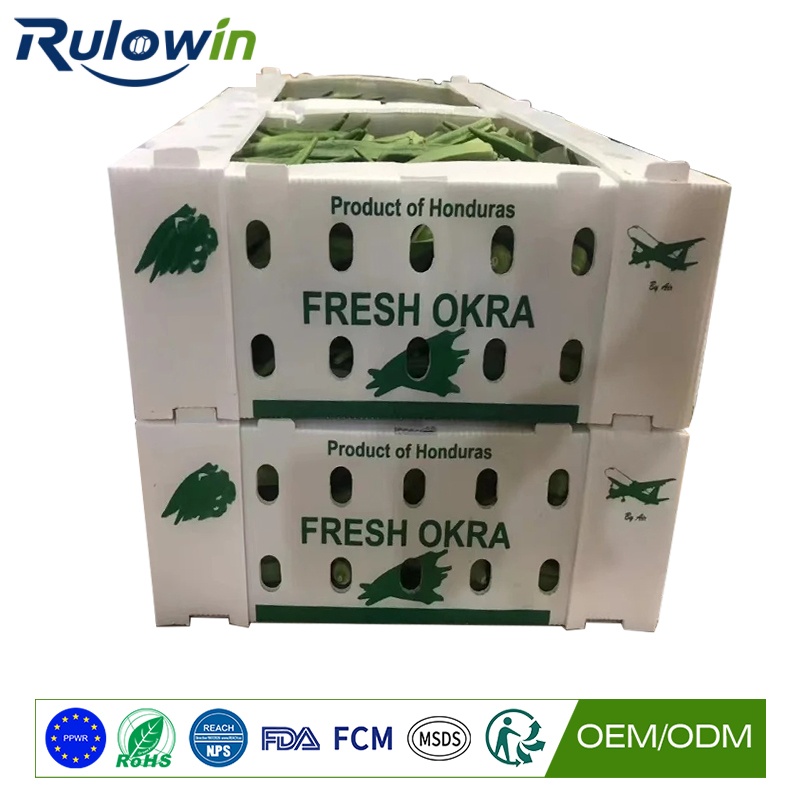
A crate fleet that works eight weeks a year spends forty-four weeks doing nothing, and where that storage is outdoors it is the storage that ages the fleet rather than the work. Most of the damage is avoidable with two decisions made before the season ends.
What outdoor storage actually exposes
Sun on the upper surfaces of a stack, rain running through it, wind moving it, and temperature cycling every day. Of those, sun is the one that shortens life. A stack of nested crates exposes the top crate fully and shades everything below it, which is why the top of an outdoor stack degrades several times faster than the rest – and why rotating stock on its own does very little.
Covering the top is most of the fix
A cover over the top of a stack removes the majority of the UV dose for the whole stack for very little money. It does not have to be a building; a tarpaulin or a purpose-made top cap on the stack works. What it must do is shed water as well as block light, because a cover that ponds water and drips through the stack creates a different problem.
Why not to wrap the whole stack
Wrapping a stack in film keeps the light off and keeps the water in. Condensation forms inside the wrap, crates stay damp for months, and the result is staining and microbial growth on crate surfaces that then has to be washed off before the season. Ventilated shade is better than sealed shade. Where film is used, leave the base open so it drains and breathes.
Nested versus stacked
Nested crates take less height and expose less surface area per crate, which is a genuine advantage for outdoor storage. Stacked crates expose the side walls of every crate in the stack. If the yard is the only option, nesting is the better configuration, and it is worth checking the nesting ratio before assuming a stack is more space-efficient. That ratio is explained in stacking empty produce crates to save floor space.
Ground contact
Crates stored directly on soil take up moisture, collect soil in the drain paths, and grow algae on the shaded underside. They also get buried by grass and are then driven over. A pallet, bearers or even a gravel bed under the stack keeps the bottom crate clean and out of standing water, and makes the stack movable.
Before the season starts
Outdoor-stored crates need a wash before they touch produce, and they need an inspection for cracks at the rim and base corners. Doing that inspection a fortnight before packing starts rather than on the first morning is the difference between a fleet that is ready and a season that starts short of crates. The incoming checks are listed in receiving inspection for reusable produce boxes.
The fortnight before the season starts
Outdoor-stored crates need a wash and an inspection, and doing both a fortnight early is what makes the difference between a fleet that is ready and a season that starts short. The crack inspection is quick: rims and base corners, and anything that fails goes to the downgrade pile.
It is also the moment to clear blocked drain channels. Crates stored dry with soil in the channels will not drain on their first trip, and the failure appears as wet produce arriving at a customer rather than as an obvious crate problem. Clearing them takes a jet and an hour for a few hundred crates.
What we can do
We supply UV-stabilised crates for fleets that live outdoors and will quote a covered-storage grade where the yard is not the only option. Tell us how and where the fleet is stored between seasons – it changes the specification more than the crop does.