
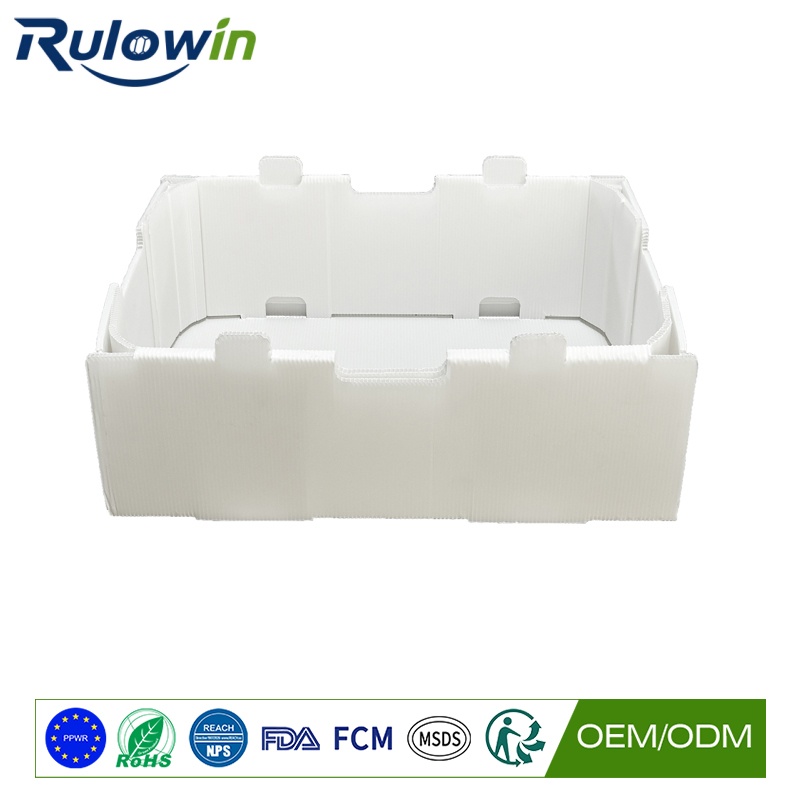
A pallet of new crates looks uniform and is easy to sign for. The properties that determine whether they will last in service – wall thickness, weld quality, drainage, marking – are not visible from the outside of a stack.
The four checks
One: dimensions against the drawing or the approved sample. External dimensions and, more importantly, the internal dimensions if the crate has to hold a specific pack. A crate that is a few millimetres out across the internal width can fail to take the pack it was bought for.
Two: wall and base rigidity. Put a representative load in one crate and lift it. Then stack three loaded crates and watch for deflection. This is the check that catches a lighter construction than was specified, and it takes five minutes.
Three: edges and welds. Look at every edge type present – cut edges, welded edges, folded corners. A weld should be continuous and fused into the parent material rather than sitting on top of it. An unsealed cut edge on a crate specified with sealed edges is a specification breach, not a cosmetic issue.
Four: marking and identification. Check that whatever was specified – a moulded code, an embossed mark, a label – is present and legible, and that it matches the drawing. Worn or missing identification becomes a traceability problem later.
The checks worth adding for food contact
- Material information for the actual batch, not a general statement about the product range.
- Cleanliness on arrival – new crates should not arrive with dust, mould release residue or debris from machining.
- Odour – a noticeable plastic smell suggests residual monomer or an additive issue, and it matters if product will be in contact.
- Sharp edges or flash that could damage product or injure an operator.
Sampling rather than checking everything
Checking every crate in a delivery is not practical. A reasonable approach for a first delivery from a new source is to check a spread – a few from the top, the middle and the bottom of the pallet, and more than one pallet if there are several. For repeat deliveries from a proven source, a lighter check at goods-in plus a periodic full inspection.
What matters is that the check happens against a documented reference. Comparing a delivery to a remembered crate is not an inspection.
Retain a sample
Keep one crate from the approved first delivery, marked and stored. It becomes the reference for everything that follows, including replacement orders and disputes. Where colour matters, this is the only reliable way to judge a later batch.
What to do when a delivery fails
Record what was found, with photographs and measurements, and raise it before the crates enter service. Once a crate has been used, the conversation about whether it arrived that way becomes much harder.
A crate that fails on arrival and gets used anyway is a decision to accept the defect – which is fine if it is deliberate, and should be recorded as such.
What we can do
We supply produce boxes and will supply an approved first-article sample with the dimensions and construction marked, so that goods-in has something to check against. If you want a specific attribute controlled – weld integrity, drainage, marking method – tell us and we will call it out on the drawing so it can be verified.