
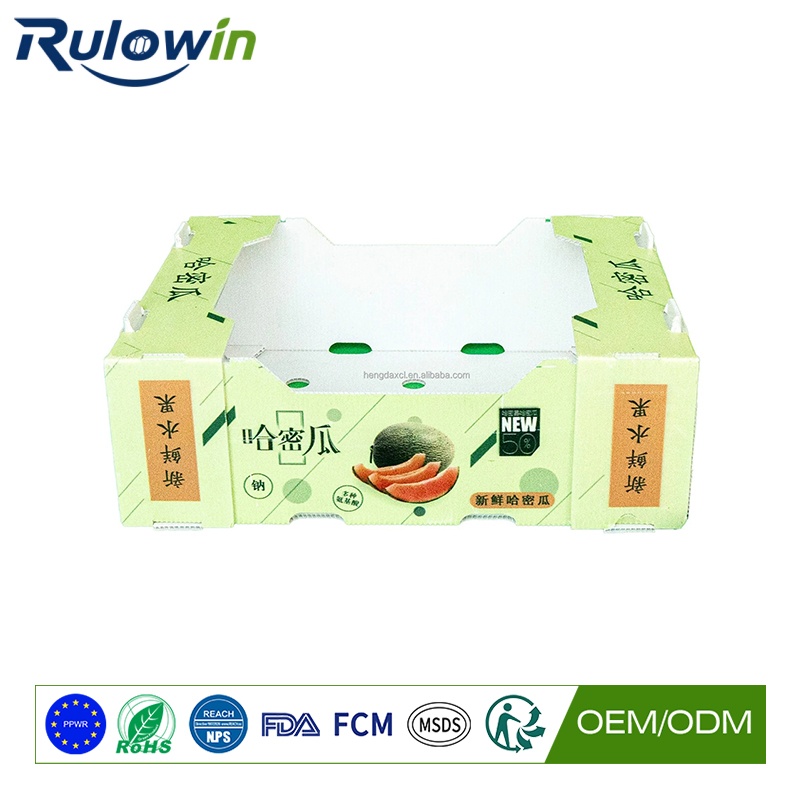
Colour coding on a crate fleet is one of the cheapest control systems in a packhouse – it needs no training, it works across language barriers and it survives a busy day. It has one weakness: the colour is in the polymer and it fades. Once two grades look alike, the system has quietly stopped working.
Why the fade is uneven
Crates do not fade uniformly. The ones that ride on the top of a trailer, sit at the end of a row or live at the top of an outdoor stack get several times the UV dose of the ones underneath. A fleet can contain crates of the same nominal colour spanning a wide range of actual shades, and the range is what causes confusion rather than the fade itself.
Which pigments hold up
Inorganic pigments are generally more light-fast than organic ones. Carbon black is excellent and it also protects the polymer. Some bright organic reds and oranges are the worst performers and can shift noticeably in a single season of outdoor use. If grade colour matters, ask which pigment system is used and pick colours that are known to hold rather than colours that look good on a sample.
Design the code for fading
Choose colours that stay distinguishable after fading rather than colours that are clearly distinct when new. Pale blue and pale green are obviously different on day one and much less so after a season. Dark versus light, or black versus anything, stays readable. Where a code needs more than three or four levels, colour alone is not reliable and should be backed with a label or a print.
Labels and print as a backup
A printed or labelled mark does not replace a colour, but it survives when the colour does not, and it can carry a lot more information – grower, block, pick date. The failure mode with labels is adhesion on a cold, damp crate, which is its own problem and is covered in labels that stay on cold damp produce crates. For a fleet that fades, print plus colour is the reliable combination.
Recoding mid-life
Repainting crates is rarely worth it – paint does not bond well to polypropylene without preparation and it wears off at the hand holes first. The practical options are to re-purpose faded crates to a different code where the shade still reads, or to downgrade them to non-graded work such as storage and internal transport. The second option is usually the cheaper one.
Where colour is doing more than coding
Colour is also used to separate clean from dirty, field from packhouse, and food from non-food. Those distinctions matter more than grade, and they should be assigned the colours that hold up best. If the fleet has a limited number of fade-resistant colours, spend them on the hygiene boundaries rather than on the grade splits.
How often to check the code still reads
Once a season, at the start, under the light the site actually works in. Put one crate of each grade colour side by side and ask someone who has not seen the new ones to sort them. If they hesitate, the code has degraded, and that is the point to re-assign colours rather than after a mis-grade reaches a customer.
Photographing the reference set each year is cheap and makes the drift visible. It also settles arguments about whether a crate is the right colour, which otherwise consumes an unreasonable amount of time in a grading shed.
What we can do
We supply produce crates in a range of stock colours and will say which pigments hold up outdoors rather than leaving you to find out. Tell us what the colour code has to carry and how much of the year the fleet is in the sun.