
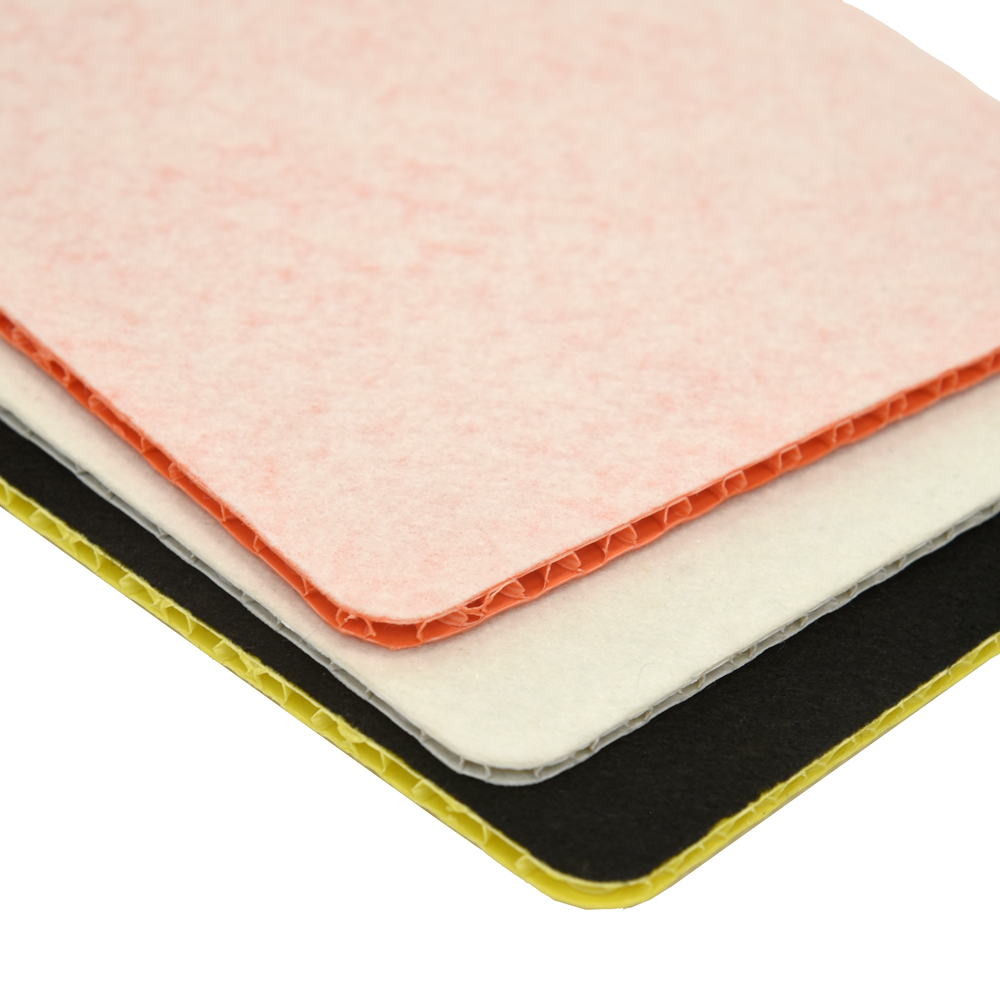
Protection board is durable in use and surprisingly easy to damage in storage. Most of the panels that get skipped on a job were not worn out on the floor – they were bent, crushed or delaminated while sitting in a corner waiting to be used.
Flat is best
Board stored flat on a level surface stays flat. Board stored leaning against a wall for months takes a permanent set and arrives on the floor with a bow that will not lie down. Where there is space, stack flat. Where there is not, store on edge for as short a time as possible and rotate the stack.
What happens at the corners
A panel carried on edge and dropped on a corner splits the skin, and a split skin lets water into the core, which ends the panel. Corners are the weak point of an otherwise durable product, and corner damage is the most common reason a panel gets thrown away. Carry flat or on edge, and set down on the edge rather than dropping the corner.
Weather and sun
Polypropylene is stable in water and reasonably stable in sun, but board stored outdoors for months will accumulate dirt in the surface and, if it is a felt-faced product, will hold moisture and can mildew. Under cover is better, and a simple cover over the stack is enough – it does not need to be sealed.
Stack height
A tall stack of board is light and can be unstable, and it puts a standing load on the bottom sheets. Keep stacks to a sensible height, on a level base, and do not stack heavier materials on top of them. A crushed bottom sheet is a wasted sheet.
What to do between phases
Clean the panels, dry them, and stack them flat under cover. That is the whole requirement and it is the step that gets skipped at the end of a phase, when the board gets tipped into a corner and forgotten. Naming who does it is worth more than any specification detail.
What to do about a wet delivery
Board delivered wet – and it happens – should be stood on edge and separated rather than stacked. Polypropylene itself is unaffected, but a stack of wet felt-faced panels left for a week will mildew on the face. Stand them up, air them, and they are fine. Stacking them is what turns a wet delivery into a lost one.
Flat, dry, and out of the sun
Three things damage stored panels, in order of how often they happen: standing them on edge, leaving them in direct sun, and stacking them under something heavy. Panels stood on edge take a permanent curve, and a curved panel will not lie flat again. Sun on one face makes the panel curl toward the heated side and can fade a colour-matched batch unevenly. Weight on top of a stack crushes the cells at the bottom.
Store panels flat on a level surface, under cover, and keep the wrapping on until use – the wrap is what keeps dust and overspray off the face. If panels have to be stored outside for a period, cover them with an opaque sheet rather than clear film, and keep them off the ground on bearers so water does notwick up from below. Panels that arrive curved from storage usually recover if they are laid flat and weighted for a day or two; panels that arrive delaminated do not recover at all. More on this in storing protection panels between phases.
What we can do
We supply PP honeycomb protection board packed for storage and can advise on stack heights and covers. Tell us how much space you have and how long it will be stored, and we will plan the delivery to match rather than shipping everything at once. Storage behaviour is covered in storing honeycomb panels flat or on edge.