
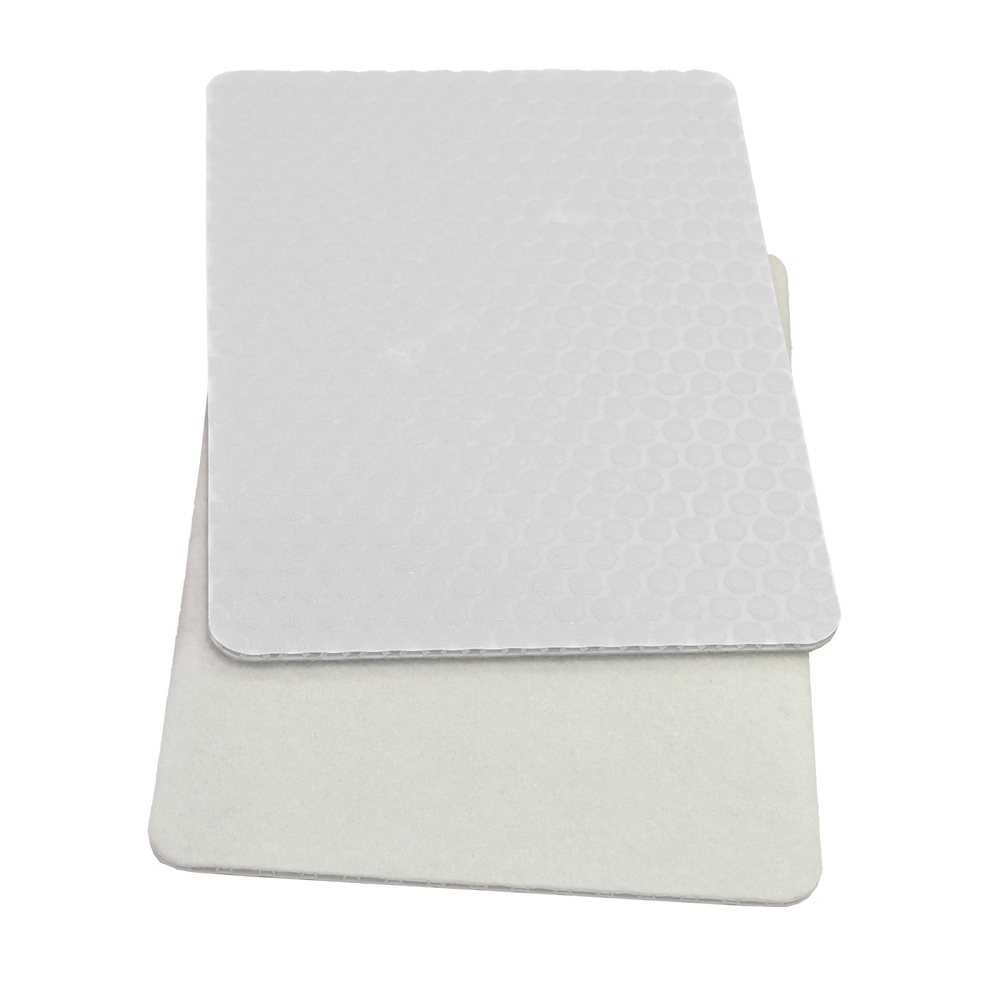
Exporting protection board is mostly a question of how much air you ship. The board is light and bulky, so a container fills by volume and the whole commercial exercise is about getting more sheets into the same space without damaging them.
What fills the container first
Volume, almost always. A 40ft container reaches its cubic capacity well before its weight limit with board of this density, so the packing method matters more than anything else: nested sheets, consistent stacking, and no wasted space at the ends. Ask how many sheets fit before booking, and check whether the number is a real packing calculation or an estimate.
Moisture and condensation
A container crossing an equator or a temperature band generates condensation, and board shipped loosely will arrive with water between the sheets. Board itself is unaffected by water, which is a real advantage over anything paper-based – but the packing, any labels and any packaging will not be. Wrapping and, where the route is long, a desiccant is worth specifying.
Stacking and damage in transit
Sheets shift and corners get crushed. Strapping the stack and protecting the corners costs little and prevents the most common transit damage, which is a crushed edge that makes the outer sheets unusable. On a long sea route that is worth doing properly.
Documentation
Commercial invoice, packing list with sheet counts, and any certificates the destination requires – fire performance, material composition, origin. Getting these wrong delays clearance rather than delivery, which is worse. Ask what the destination requires at the point of order, not at the point of shipping.
When to ship loose rather than palletised
Pallets take space and add weight. Where the destination has handling equipment and the route is short, loose loading in the container gets more sheets in for the same cost. Where the destination is a site with no equipment, pallets are worth the space.
What to check on arrival
Count the sheets against the packing list before signing for the container, and photograph any damaged stack before it is broken up. Claims on export damage are straightforward with both and almost impossible without them. It takes ten minutes at the destination and it is the only point at which the evidence exists.
How panels travel, and what goes wrong
PP honeycomb panel is light and bulky, which means most export shipments are volume-limited rather than weight-limited. You pay for air. That is why panels are usually shipped flat-packed on pallets rather than in cartons, and why the pallet height matters more to your landed cost than the number of panels.
The two things that go wrong in transit are corner damage and moisture. Corners take the knock from container walls and forklift tines; unprotected corners arrive crushed across the first two or three panels of every pallet. Moisture is slower: panels loaded while still warm from production and wrapped in film will hold condensation and can develop surface marks. Ask for corner protection and a vented wrap, and check whether the pallets are strapped or shrink-wrapped – strapped pallets survive being moved by clamp trucks, wrapped ones do not. More detail on the loading side is in shipping and container loading of protection panels.
What we can do
We pack PP honeycomb protection board for export and will state how many sheets fit a container rather than estimating. Tell us the destination, the route and what the clearance requires, and we will quote delivered with the documentation included.