
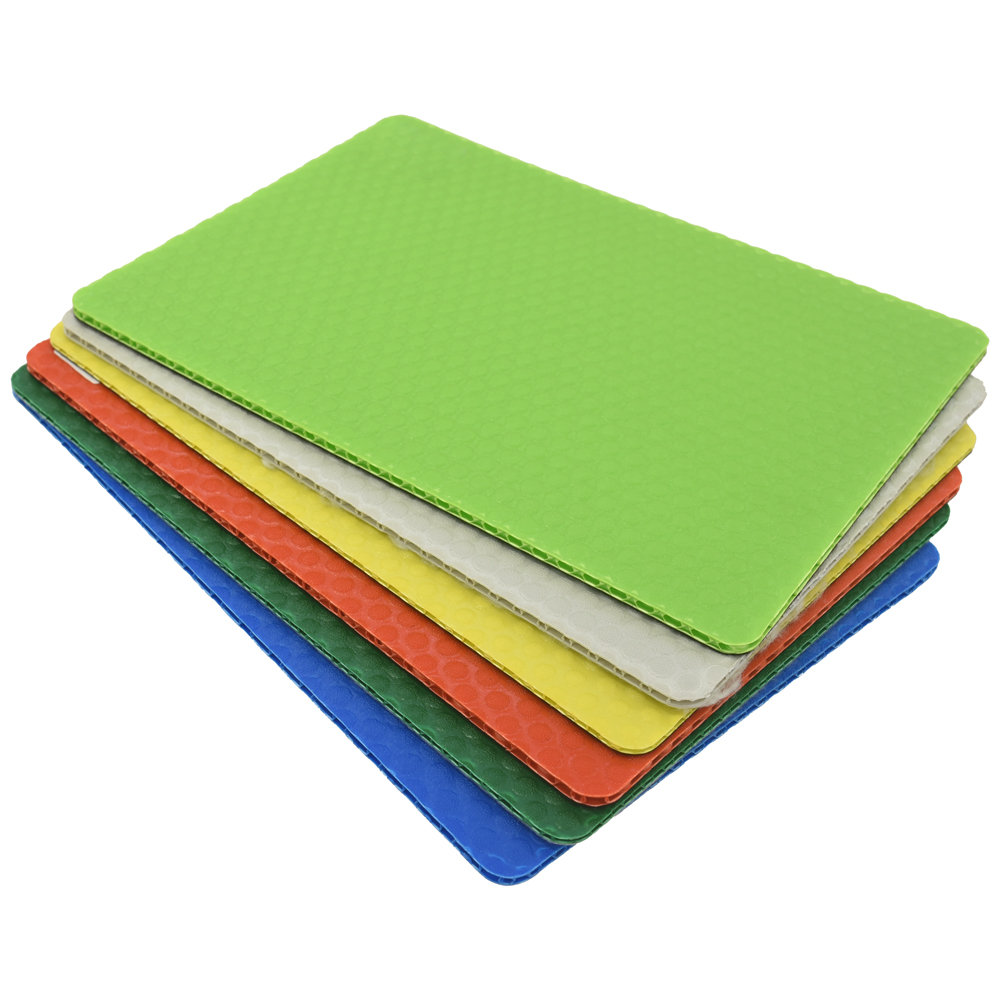
Protection board is one of those products where the freight is a meaningful share of the delivered cost, because it weighs very little for the space it occupies. Understanding how it is packed and how much arrives at once is the easiest way to control that cost.
Why volume matters more than weight
A pallet of board is tall and light. A truck fills up by height long before it reaches its weight limit, so what you are really buying is cubic capacity. That means consolidating deliveries matters more here than on almost any other site material – two half-loads cost substantially more than one full one.
How many sheets per pallet
It depends on thickness and sheet size; a thicker board gives fewer sheets per pallet for the same height. Ask for the sheet count per pallet on the quote rather than assuming, because it determines how many pallets arrive, how much space they take on site, and whether a delivery can be unloaded by hand or needs a pump truck.
Access and unloading
A pallet of board is awkward rather than heavy, and the constraint on most sites is access rather than lifting capacity: a narrow door, a lift with a low capacity, or a route that will not take a pump truck. Tell the supplier what the access is like. Loosely packed sheets that two people can carry are sometimes a better answer than a pallet that cannot get through the door.
Storage footprint on site
A pallet takes up floor space for the duration, and on a tight site that space is contested. Ordering to the phasing rather than the total reduces the footprint and reduces the chance of the board being moved somewhere inconvenient and damaged. Where there is genuinely no space, agreed call-off deliveries are the answer.
What to ask the supplier
Sheets per pallet, pallet dimensions, whether delivery is palletised or loose, whether there is a free-delivery threshold, and whether they will deliver to a specific phase rather than to a total. Those five questions control most of the logistics cost.
What to do when access is tight
Where a pallet will not get through, ask for loose-packed sheets rather than a smaller delivery. Two people can carry board through almost any door, and loose loading costs a little more in handling and a lot less in failed deliveries. Say what the access is like at the point of order rather than discovering it when the lorry arrives.
Why the pallet footprint decides your handling cost
Panel size and pallet size are linked, and buyers usually order the panel size they need without checking what it arrives on. A pallet that is wider than a standard door will not reach the room it is needed in, and re-handling panels by hand through a doorway is where most corner damage happens. Check the pallet dimensions against the site’s access route before ordering, not after delivery.
The second consideration is unloading. If the site has no forklift and the delivery is on a 13.5 m trailer with tail-lift access only, a tall pallet will not clear the tail-lift aperture. Splitting the order across more, shorter pallets costs a little more in freight and saves a lot in damage and delay. We can pack to a stated pallet height for sites with restricted access, and the loading method is covered in more detail in shipping and container loading of protection panels.
What we can do
We supply PP honeycomb protection board palletised or loose, and will state sheets per pallet and the free-delivery threshold on the quote. Tell us the access and the phasing, and we will plan the deliveries to suit rather than shipping everything at once.