
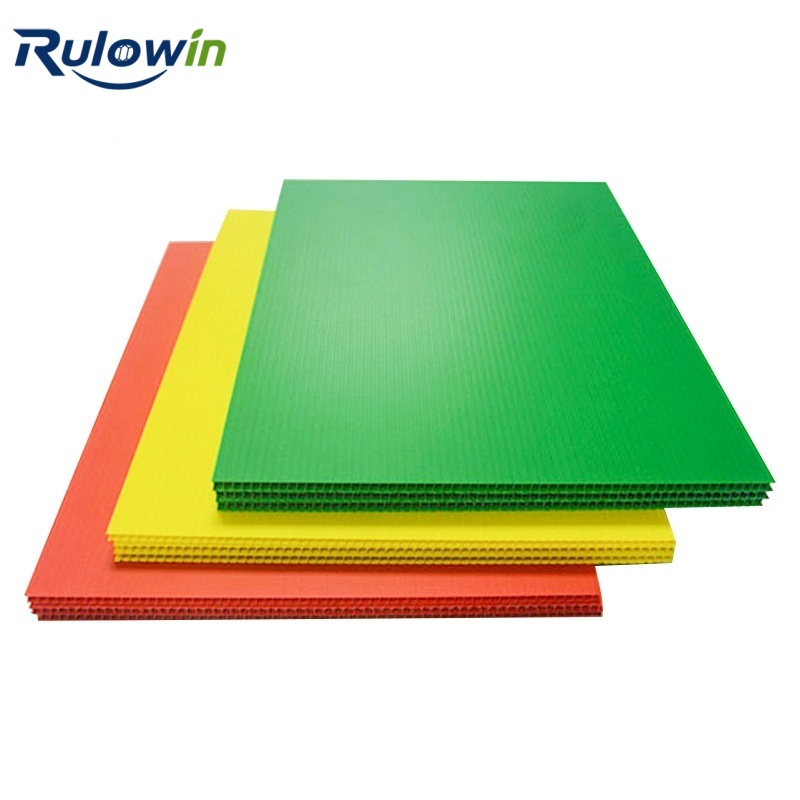
Corrugated polypropylene sheet is a standard temporary floor protector on refits and construction work: it is cheap, it lays flat, it does not absorb spills, and it can be lifted and reused. It works. Two things go wrong with it, and both are specification choices.
Point loads, not distributed loads
A floor protector is not carrying a distributed load. It is carrying ladder feet, trestle legs, trolley wheels – small contact areas with a lot of force behind them. A thin sheet punctures under a ladder foot, and once punctured it tears.
So choose the thickness for the point load, not for the foot traffic. Foot traffic is trivial; a ladder foot on a corner of a trestle is the real case, and it needs a heavier sheet than most people buy.
Joints, which are the trip hazard
Butted joints lift when a trolley crosses them, and a lifted edge is what people catch. Tape the joints, both sides if the traffic is heavy, and use a tape that will come off the floor later without leaving residue – which rules out some cloth tapes on some floors.
Overlapping holds better than butting and uses more sheet. On a short job, butt and tape. On a long one, overlap.
Slip, which is the safety question
Smooth polypropylene is slippery, and a smooth sheet on a smooth floor with dust on it is a genuine hazard. Embossed or textured sheet is the answer, and it costs very little more.
If you are using smooth sheet, at least consider whether the area is one where anyone will be carrying something heavy or moving quickly. On a staircase or a ramp, use the embossed grade without discussion.
Spills and what PP does with them
Nothing, which is the point. Paint, plaster, water – polypropylene is not affected by any of them and wipes clean. That is the whole advantage over paper-based protection, which soaks through and then tears.
The caveat is solvents. Some paint strippers and solvent-based products attack the surface. If the job involves anything aggressive, check before assuming the sheet will survive it.
End of job
Sheet is reusable, and a sheet that has only carried foot traffic comes off clean and goes back on the next job. That is where it beats single-use protection film on cost, and it is worth specifying a grade thick enough to survive two or three jobs rather than the thinnest that gets through one.
Cutting and handling are in how to cut corrugated plastic sheet.
Edges, and the part that fails first
Sheet laid to a wall or a threshold gets lifted at the edge, and once lifted it curls and becomes the trip hazard the sheet was meant to prevent. Tape the perimeter, not just the joints, and use a tape that will release from the floor later.
On a staircase or a landing, cut the sheet to the tread rather than laying it across. A sheet laid over a stair nosing moves underfoot, and that is the most dangerous configuration there is.
Worth a walk-round at the end of each day. Re-taping a lifted edge takes thirty seconds and prevents the one incident that matters.
What we can do
We supply PP corrugated sheet in embossed and plain grades, in thicknesses suited to point loads. Tell us the floor, the traffic and what might get spilled, and we will specify – including when a thinner sheet genuinely will do.