
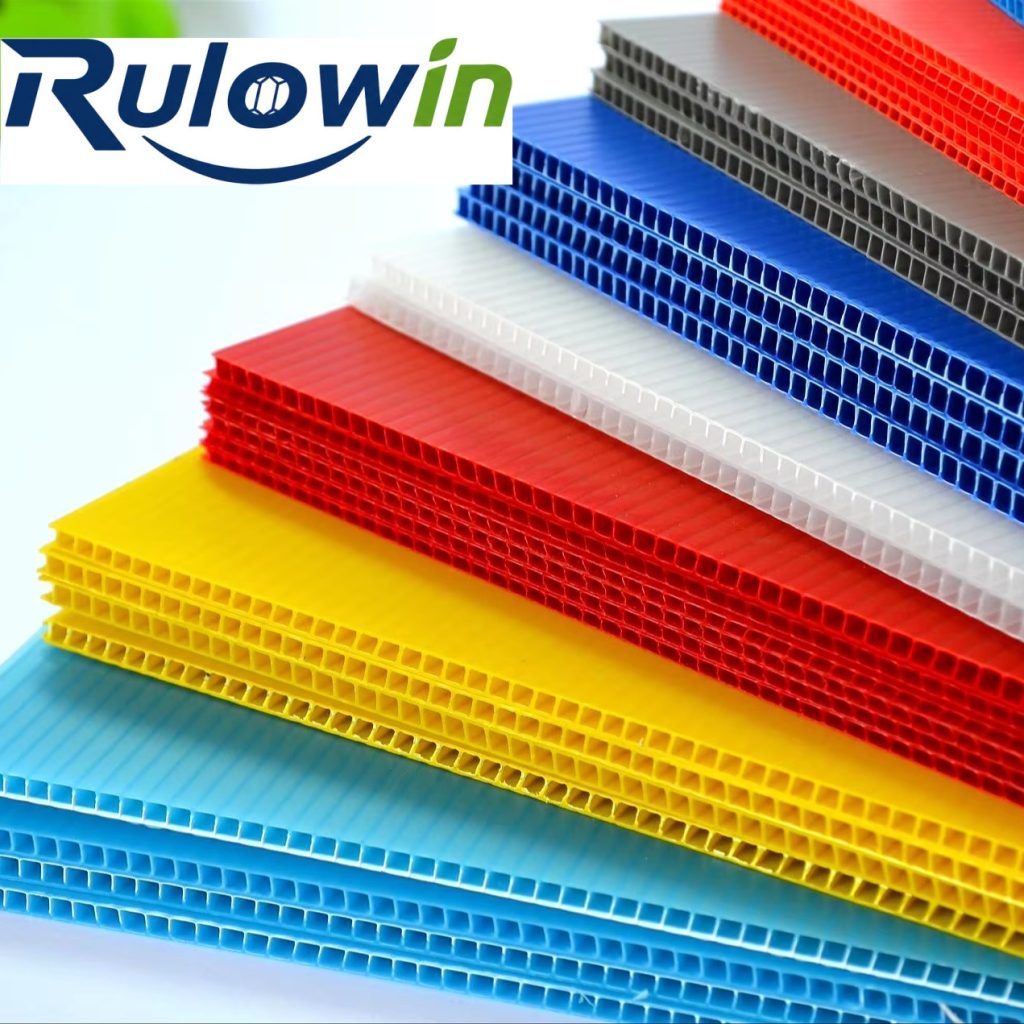
Corrugated plastic sheet cuts easily, which is why almost everyone cuts it badly. The problem is not getting through the sheet, it is what the blade does to the flutes on the way through. Crush the flutes at the edge and you get a soft, ragged lip that catches on everything and looks like a defect even when the dimensions are right.
One sheet: a knife and a straightedge
For a handful of sheets, a sharp utility knife and a steel straightedge is genuinely the best answer. Score twice rather than pressing once. Two moderate passes leave a clean edge; one hard pass crushes the flutes either side of the cut and drags. Replace the blade more often than feels necessary – the sheet is soft and a dull blade tears rather than cuts, and the tear is what you see on the finished edge.
Cut with the flutes, not across them, wherever the part allows it. A cut along the flute direction passes through continuous walls and comes out clean. A cut across the flutes opens every channel and leaves the edge visibly open, which is fine if the edge is hidden and untidy if it is not.
Fifty sheets: stop cutting by hand
At volume, a knife becomes the slowest and least consistent part of the job. A die press is the standard answer for shaped parts and gives an edge that is closed and consistent. For straight cuts, a guillotine with a sharp blade works, provided the blade is actually shearing rather than wedging – a dull guillotine blade does to the flutes exactly what a dull knife does, only faster.
A router with a straight bit leaves a clean edge and seals nothing, which is usually fine. If you are routing, take light passes; polypropylene melts rather than chips, and a heavy pass gives you a gummy edge that needs cleaning up.
Dealing with the open edge
Sometimes the open channels are the problem – dust gets in, or the edge is a finger-catch. The cheap fix is tape. The better fix on a part that matters is an edge trim, or specifying the sheet with a sealed edge from the supplier, which is a standard option and costs very little per sheet.
If the sheets are going outdoors, the edge question matters more than it looks. We covered whether corrugated plastic sheet can be used outdoors separately, and the cut edge is part of that answer.
Drilling, and fixing things to it
Ordinary twist bits work, though they tend to grab as they break through the second face. Back the sheet with a piece of scrap timber and the exit hole comes out clean. For repeated holes, a hole saw gives a rounder result than a twist bit on polypropylene, which tends to wander on the flutes.
Fixings are the part people get wrong. A screw into the flutes has almost nothing to bite on. Either fix through both faces into something solid behind, or use a fastener designed for hollow sheet with a wide bearing surface. Rivets with large flanges work well for thin panels.
What we can do
We supply PP corrugated sheet cut to size, so the trimming step disappears for most of it. Tell us the finished dimensions and whether the edges are visible, and we will cut and seal to suit. If your volume is low enough that cutting in-house is cheaper, we will tell you that rather than sell you a cutting service.