
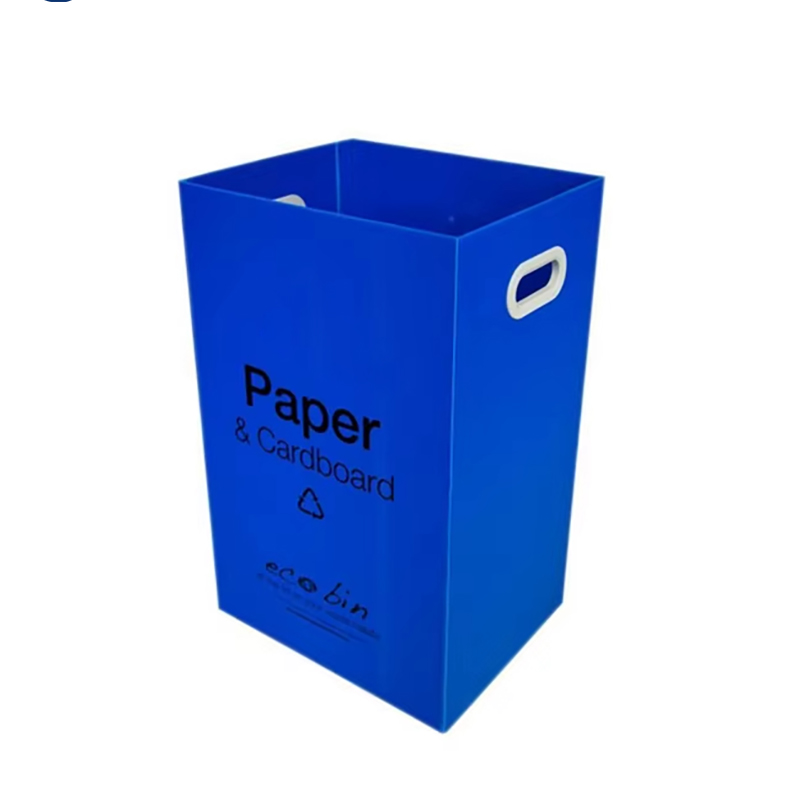
Running several orders simultaneously through one pick area raises throughput, because the picker makes one pass for several orders instead of one pass each. It also puts several similar containers next to each other, and the whole method depends on the picker never putting a part in the wrong one. That is a container identification problem more than it is a process one.
Distinguishing containers at a glance
A picker moving along an aisle has a fraction of a second to decide which container an item goes into. Colour is the fastest channel and it works at a distance, which is why parallel picking operations almost always colour-code. Where containers are all the same colour and differ only by a label, the picker has to read, and reading takes longer than recognising – and gets skipped when the pace is high.
How many distinguishable categories are needed
The number of parallel orders sets the number of categories. Four orders need four colours, and four colours that stay distinguishable after a year of handling and washing is achievable. Twelve orders need twelve, and twelve reliably distinguishable colours is not – at that point the container needs a position or a number as well, and the colour becomes a coarse grouping.
Position as a channel
Where containers are on a cart or in a rack, position is a strong identifier: the second slot is order two. It needs the position to be fixed and the container to stay in it, which means either the containers do not move during the pass or the position is marked on both the container and the cart. Where containers get rearranged mid-pass, position stops working and the method collapses into errors.
What happens when a container is full
An order that fills its container mid-pass needs a second container, and the second one has to carry the same identity. Where the identity is colour, that is easy. Where it is a unique printed identifier, the second container needs a matching one, which means either a spare set of identifiers or a system that can issue one at the point of need. Planning for the overflow case is what separates a method that runs from one that produces exceptions all day.
The cost of a mis-pick
A part in the wrong container is found downstream, usually at packing or at the customer, and the cost of correcting it is far larger than the time saved by parallel picking. Where mis-picks are frequent, the whole method is a net loss. The threshold is low – a method that saves fifteen per cent of pick time and produces one error per hundred orders may not be worth running, depending on the cost of the error.
Where containers help directly
A container with a large, high-contrast colour area, a protected label recess, and a stable footprint that stays where it is put supports parallel picking. A container with a small label area, a low-contrast colour and a tendency to slide does not. The difference is a specification decision, and it is much cheaper to make before the fleet arrives than to work around afterwards. The wider marking question is in durable locating and identification marks.
How to test it
Run a trial with the real containers, at the real pace, for a full shift, and count mis-picks by comparing consolidated orders against the pick list. A rate above about one in two hundred means the identification is not strong enough for the pace, and the answer is usually better container differentiation rather than more training.