
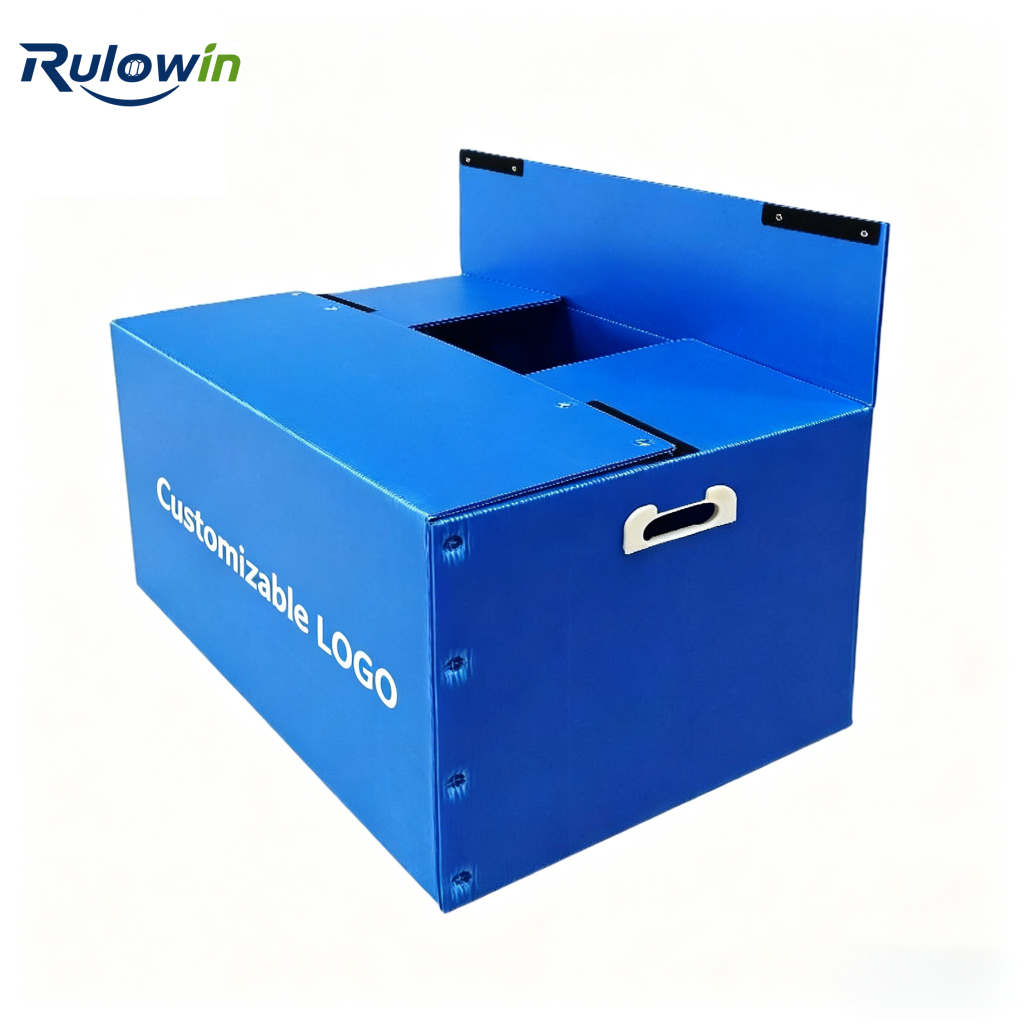
A container that passes through a cross-dock is unloaded, sorted, possibly re-stacked, moved again and loaded – often inside an hour. It experiences more handling events in one day than a stored container sees in a month, and the loads it experiences are different in kind: more impacts, more lateral force, more occasions where it is supported at two points instead of a surface. A strength rating written for stacking does not describe that duty.
Handling events, not storage hours
The useful measure for a cross-docked container is not how long it can hold a load but how many handling events it can survive. Each event is an opportunity for an impact at a corner, a drag along a surface, or a lift that engages one edge instead of the whole base. Where containers fail in a cross-dock, the failure is almost always accumulated handling damage rather than a single overload, and the rating that would have predicted it is not one anybody quotes.
Impact at the corner
Corners take the damage. A container set down on one corner, or pushed into another container corner-first, concentrates the whole load into a small area, and that is where cracks start. A reinforced corner is the single most effective feature for this duty, and it is cheap to include at the tooling stage. Where a fleet is specified for cross-docking, corner reinforcement should be on the enquiry rather than left to the standard design.
Being dragged, not lifted
In a busy dock, containers get slid. Along a roller, across a floor, over a lip between two surfaces. Sliding abrades the base and applies a lateral load at the base-to-wall joint, which is where cross-docked containers typically fail. A base with a continuous perimeter, rather than one interrupted by ribs or holes, resists both better, and a base material with good abrasion resistance lasts longer.
Re-stacking in an unknown configuration
A container arriving in a cross-dock may be stacked on top of a different container, in a different orientation, by someone who cannot see the stacking features. A stacking geometry that only works one way up, or that requires alignment the operator cannot see, will be got wrong, and the resulting stack is unstable. Where containers are mixed in a dock, the stacking features should be forgiving – self-locating, and tolerant of being placed approximately.
Time pressure and the rough-handling factor
A dock under time pressure handles containers faster and less carefully, and the difference is not a small one. Where a specification is written from a careful trial, the real duty is worse. The practical way to allow for it is a margin on the impact and abrasion requirements rather than on the load rating – a container that survives rough handling is usually one with good corners and a tough base, not one with a higher stacking number.
What to inspect on return
Corners, base perimeter, and the base-to-wall joint. Three areas, and between them they account for most cross-dock damage. Where a fleet is inspected on return from a dock lane, checking those three takes seconds per container and identifies the ones needing repair before they fail in service. A repair criterion based on those areas is more useful than one based on general appearance.
Specifying for the duty
State the handling events per trip, the stacking conditions, and whether containers will be mixed with others. Given those, a container can be specified with the right corner and base construction. Given only a load rating, the container will be specified for a warehouse it will never sit still in. The dimensional aspects of the same environment are covered in base design for sorter lines.