
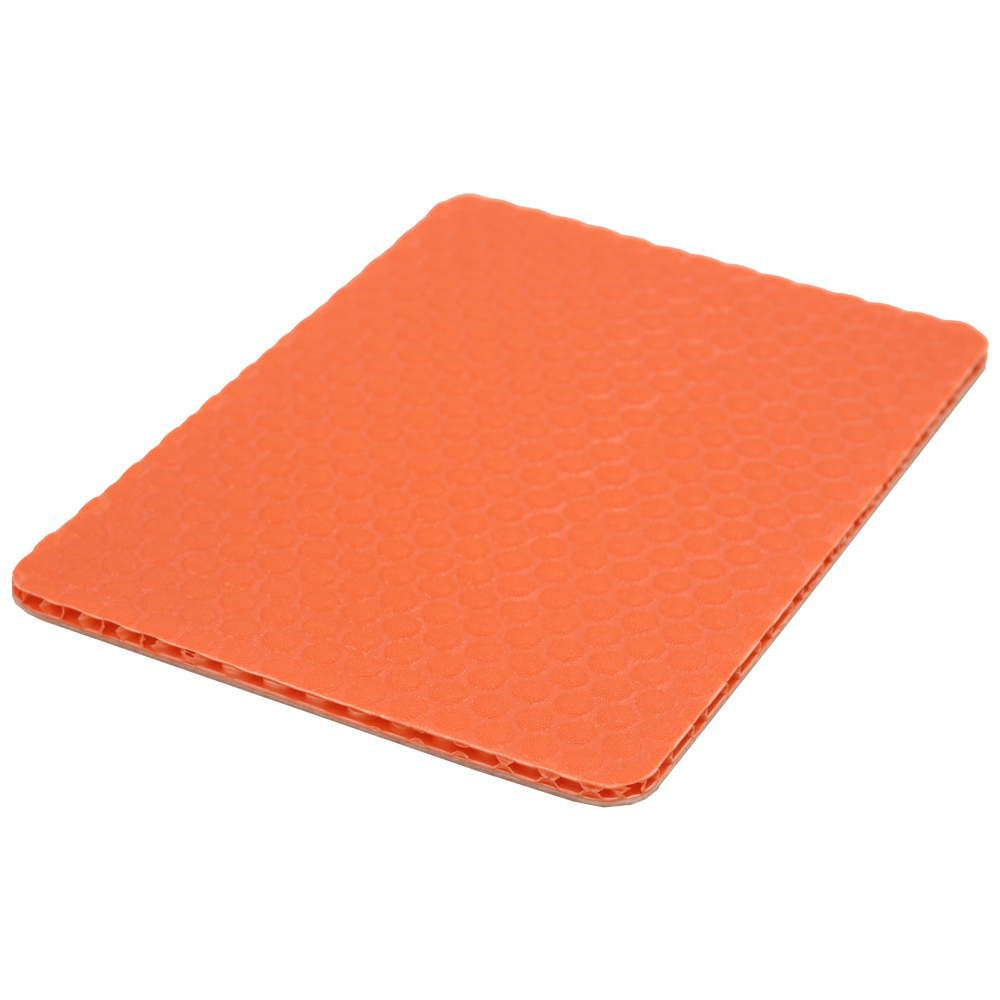
Stone and marble stairs are specified because they look good and they are hard. Both properties are true on the flat surface and both fail at the edge: a stone tread chips at the nosing and etches if anything alkaline sits on it, and neither of those can be repaired invisibly. A chipped marble nosing is a replacement tread, not a repair.
Chemical damage is the one people miss
Marble and limestone are calcium carbonate, which means acid attacks them – and so does strongly alkaline wet cement and grout, which etches rather than dissolves. Plaster droppings and grout slurry left on a marble tread leave a dull mark that no amount of cleaning removes and that needs the stone re-honed. On a stair, where everything spills downhill, the risk is concentrated on the nosing line.
Why the cover has to be impermeable as well as soft
A fibrous face protects against abrasion, but it absorbs whatever lands on it and holds it against the stone. On a marble stair that is actively worse than a cover that lets the spill run off. The specification is a soft face against the stone plus an impermeable layer that keeps wet trades off it – or a cover that is washed the same day, every day, without exception.
The nosing takes everything
Everything carried up a flight eventually catches the nosing, and on stone that means a chip with a sharp edge that cannot be filled to match. A fabricated nosing profile that wraps the front edge and extends down the riser is the single most valuable item on a stone stair. It is also the item most often left off an order because the treads get covered and the nosings get forgotten.
Fixing without drilling
Stone cannot be drilled or screwed for a fixing without risking a crack, and adhesive risks a stain. That leaves friction plus a fixing that bears on something other than the stone – the stringer, the structure above the flight, or the tread below. It is a constraint worth raising before the cover is made, because it determines the shape.
Where stone stairs should be closed instead
If the flight can be taken out of use for the duration, that is better than any cover. On a lot of refurbishments there is a second route, and using it costs nothing while a cover for a marble flight costs real money and still carries risk. We would rather ask the question than quote.
Temporary handrails and the flight as a route
During works the handrail is often the only thing stopping a fall on a stone stair, and it is frequently removed for decorating or for access. Keep a temporary rail in place for as long as the flight is in use. A chipped nosing is a cost; a fall on marble is a serious incident, and the two are not comparable.
What to do about an etched tread
An etch on marble is not a stain and no cleaner removes it – the surface has to be re-honed, which is a specialist job on a stair and rarely matches perfectly. That is the argument for keeping wet trades off a stone flight entirely. Where it has already happened, get a stone specialist in rather than trying anything from the site store.
The cover that works is a PP honeycomb panel cut to the tread with a wrapped nosing; corrugated PP sheet will not hold an edge and will not keep slurry off the stone. Edge behaviour on stone floors is covered in protecting stone and terrazzo from chipped edges.
What we can do
We make honeycomb tread covers with a wrapped nosing profile for stone and marble, with a face chosen for contact with polished stone and a fixing that does not touch it. Tell us the stone type, the tread dimensions and what trades are working above, and we will specify accordingly – including when closing the flight is the better answer.