
Marble and limestone are chosen for how they look and they are the two most easily damaged hard finishes on a project. Both scratch more easily than porcelain, both are porous enough to stain, and both are calcium carbonate, which means acid attacks them. Decorating over them is a genuine risk rather than a formality.
What acid does, and where it comes from
An acid etch on marble is not a stain – it is a removal of the polished surface, and it shows as a dull mark that no cleaning fixes and that needs re-honing. On a decorating job the sources are more common than people expect: some tile and stone cleaners, grout removers, vinegar-based products, and even some adhesive removers. None of them should go near a marble floor, and the protection needs to be chosen so nothing has to.
Soft against it, impermeable above it
A fibrous face protects the polish from abrasion, which is the right contact material. But felt absorbs, and anything alkaline or acidic that lands on it is held against the stone – which is worse than if it had run off. The specification that works is a fibrous face for contact plus a separate impermeable layer to keep liquids off, or a strict same-day wash regime. On a marble floor the second option only works if it actually happens.
Grit is harder than marble
Marble is around three on the Mohs scale and quartz in site dust is seven. Every footfall on a marble floor with grit on it is a lapping operation. This is the argument for a fibrous face and for cleaning the protection, and it is the reason marble floors that were protected still come up dull at handover – the protection stopped holding grit weeks before anybody looked.
Where the risk is highest
Entrances and lift lobbies, where grit comes in from outside. Anywhere wet trades are working above. And the first few metres inside a doorway, which is where everything arrives. Those areas want the heavier specification; the middle of a room with light traffic often needs nothing beyond dust protection.
Sequencing beats product
If marble is being laid, the best answer is often to lay it late, after the wet and dirty trades, and protect it only through the final clean and handover. That is a programme decision rather than a product decision and it removes most of the risk. Worth asking for at tender stage even if the answer turns out to be no.
Testing a cleaner before it goes near the floor
Any product that will touch marble gets tested on an offcut or in a cupboard first, and it gets tested for etching rather than for cleaning – wipe it, leave it an hour, and look at the surface in raking light. Ten minutes with an offcut prevents the single most expensive mistake on a stone floor, which is a cleaner that removes the polish along with the mark.
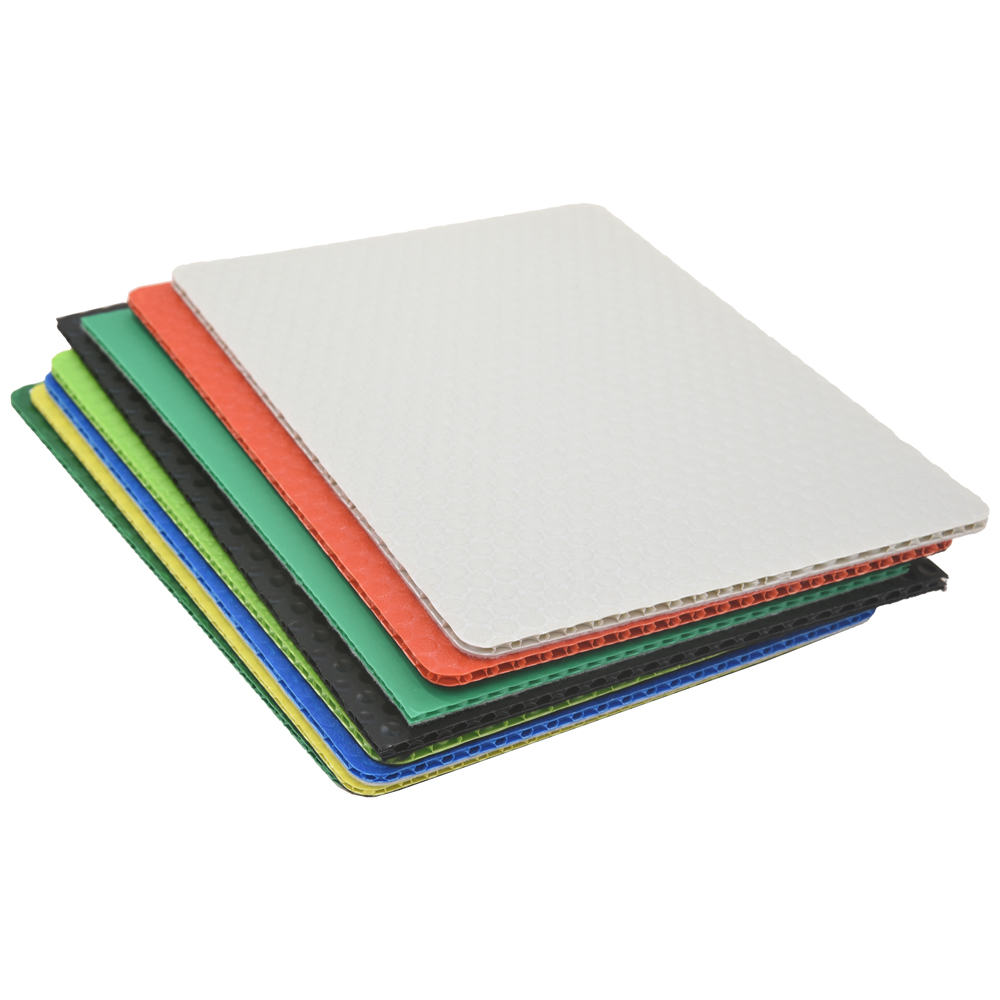
The specification that works is a felt-faced PP honeycomb panel against the stone, with an impermeable layer above it. Corrugated PP sheet alone is neither soft enough to protect the polish nor impermeable enough to keep slurry off it.
What we can do
We supply felt-faced honeycomb panels for marble and limestone and can pair them with an impermeable layer for wet work. Tell us the stone, the finish and what trades are working above it, and we will specify – including telling you when the floor should be laid later instead. Stone edge risk is covered in protecting stone and terrazzo from chipped edges.