
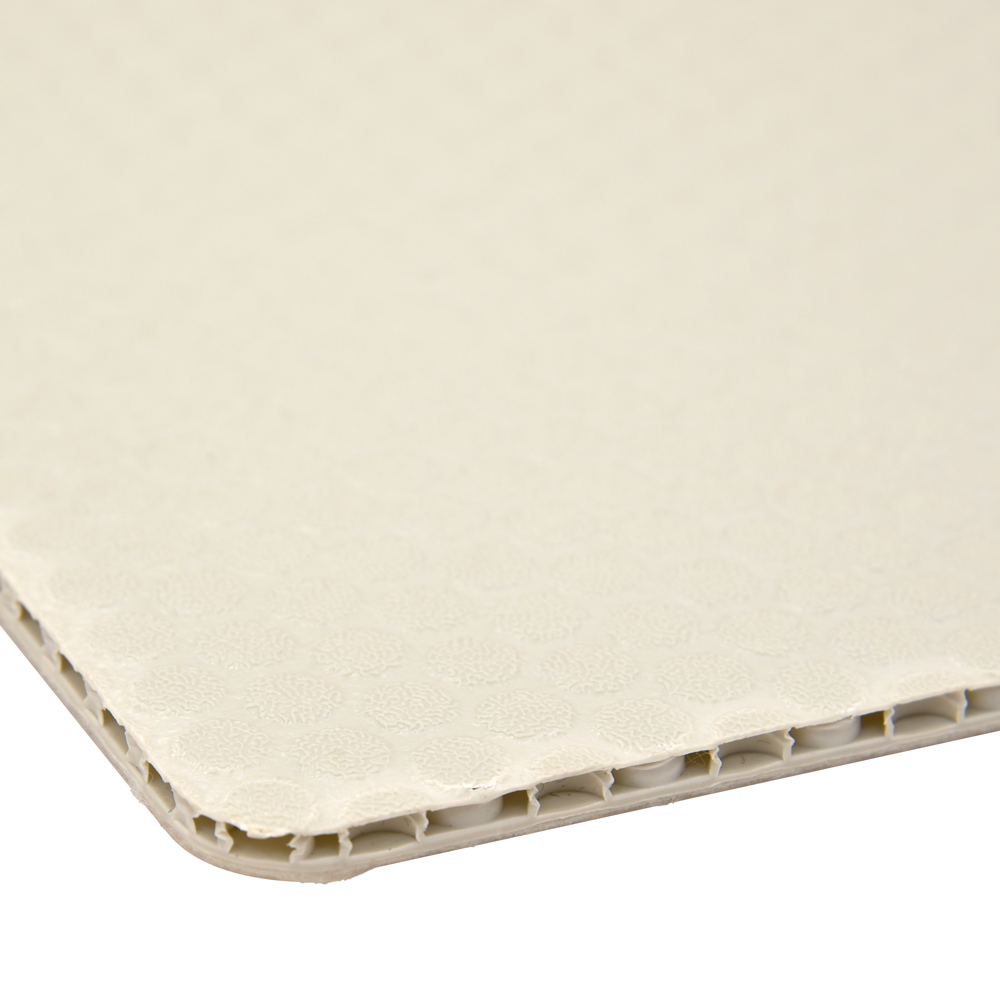
A new screed or self-levelling compound is the one floor where protection can do real harm by being too good. It is still curing, it is giving off water, and it is soft in a way that finishes are not. The requirement is the opposite of what it is for every other floor: it needs to be covered well enough to be walked on and left open enough to dry.
Why a sealed cover is wrong here
A screed dries by losing water to the air. Put an impermeable sheet on it and the water stays in, the surface stays soft, and when the sheet comes up there is a damp, weak layer that will not take a floor covering. Worse, the trapped moisture can produce a laitance bloom on the surface that has to be removed before anything can be bonded to it. The cover has to let vapour through.
What a screed actually needs from protection
Load spreading, mostly. A fresh screed is soft enough that a concentrated load dents it permanently, and the things that dent it are scaffold feet, material stacks and trolley wheels. A rigid panel spreads those loads; a flexible sheet does not, and a sheet over a soft screed simply transmits the point load. Stiffness is the property that matters, permeability the constraint.
Timings
There is usually a walk-on time before any traffic and a longer time before heavy traffic, and both come from the screed supplier rather than from a rule of thumb. Protection goes down after the walk-on time and it stays breathable throughout. Where the programme wants traffic on the screed before it should have it, the answer is a load-spreading panel route rather than opening the whole area.
Condensation under the cover
Even a breathable cover over a drying screed in an unheated building will get condensation on its underside, and that water drips back onto the screed. The fix is ventilation – a gap at the perimeter, an embossed face down so air moves, and ideally some heating and airflow in the room. A covered drying screed in a sealed room is a slow-motion problem.
When to leave it entirely alone
If the screed can be closed for its full drying period, that is better than any protection. Most of the pressure to open it early comes from programme rather than from need, and a week of closure is cheaper than a screed that has to be re-levelled or dried with a dehumidifier for a fortnight.
Testing before the floor covering goes down
A screed has to reach a measured moisture level before anything is bonded to it, and a cover can slow that down without anyone noticing. Take a reading before the cover goes on and again before the floor covering is due, and if the second reading has not moved, the cover is the likely cause. Finding that out a week early is worth a great deal.
Surface laitance and what it means
A weak, dusty layer on the surface of a screed – laitance – means the screed was too wet when it was finished or has been kept wet since. Protecting over it does nothing and the floor covering will not bond to it. It needs removing mechanically before anything goes down. Worth checking before ordering protection, because the answer changes the programme.
What we can do
We supply stiff honeycomb panels for load spreading on young screeds, with an embossed face down so air moves underneath. Tell us the screed type, the pour date and what the supplier says about traffic, and we will say when protection can go down and what it should be. Moisture behaviour is set out in moisture trapping under floor protection.