
Ladders and trestles are on every job and they mark floors in a characteristic way: four small dents in a repeatable pattern, often in a line along a wall. The damage is entirely predictable and almost entirely preventable, and the prevention is not a better protection product – it is a bigger foot.
The load case
A person on a ladder weighs perhaps 90 kg, but the ladder leans, so the load is not shared evenly between the feet and the lower foot takes more than half. Add the horizontal thrust and the feet are also being pushed outward, which is a scrubbing load as much as a vertical one. A 40 mm pad taking 60 kg is a pressure that timber and vinyl will not take indefinitely.
Why protection does not solve it
A soft cover under a ladder foot compresses and the foot still arrives at the floor. A rigid cover spreads it, which helps – but a rigid cover also slides, and a ladder on a slippery panel is a genuine fall risk. That is the contradiction: the property that protects the floor is the property that makes the ladder less safe. It is worth knowing before specifying.
The fix is on the ladder
Ladder feet with a wide pad, a spreader bar, or a purpose-made ladder mat. All three increase the contact area by a factor of several, which drops the pressure below what most floors take permanently, and none of them reduce ladder stability. They are cheap, they last for years, and they should be standard kit on any job with finished floors.
Trestles and saw horses
A trestle carrying a door or a worktop puts a line load on two feet, and it gets dragged across the floor when it is moved. Same answer: wider feet, plus lifting rather than dragging. A trestle with flat feet rather than pointed ones is a small manufacturing difference with a large effect on floors.
Where it genuinely does not matter
On concrete, on a floor that is being covered, and on a floor that is already marked, ladder feet are a non-issue. Worrying about them on a shell-and-core job is wasted attention. Worrying about them on a new timber floor is not, and knowing which floor is which is the whole job.
Ladder feet on a soft cover
A ladder on a soft or thick cover is less stable than one on the floor, because the feet sink and the angle changes. Where a ladder has to go on a cover, use a rigid one and add a spreader pad under the feet so the load is spread and the ladder is not sitting on a compressible surface. Stability and floor protection are not in conflict if the pad is doing the spreading.
Extension ladders outdoors
An extension ladder on a soft or uneven external surface sinks at the feet and the whole ladder settles during use. On paving or a finished external floor that both marks the surface and makes the ladder less stable. A load-spreading board under both feet is standard practice outdoors and it is the same principle indoors: wider feet, harder surface, no sinking.
What we can do
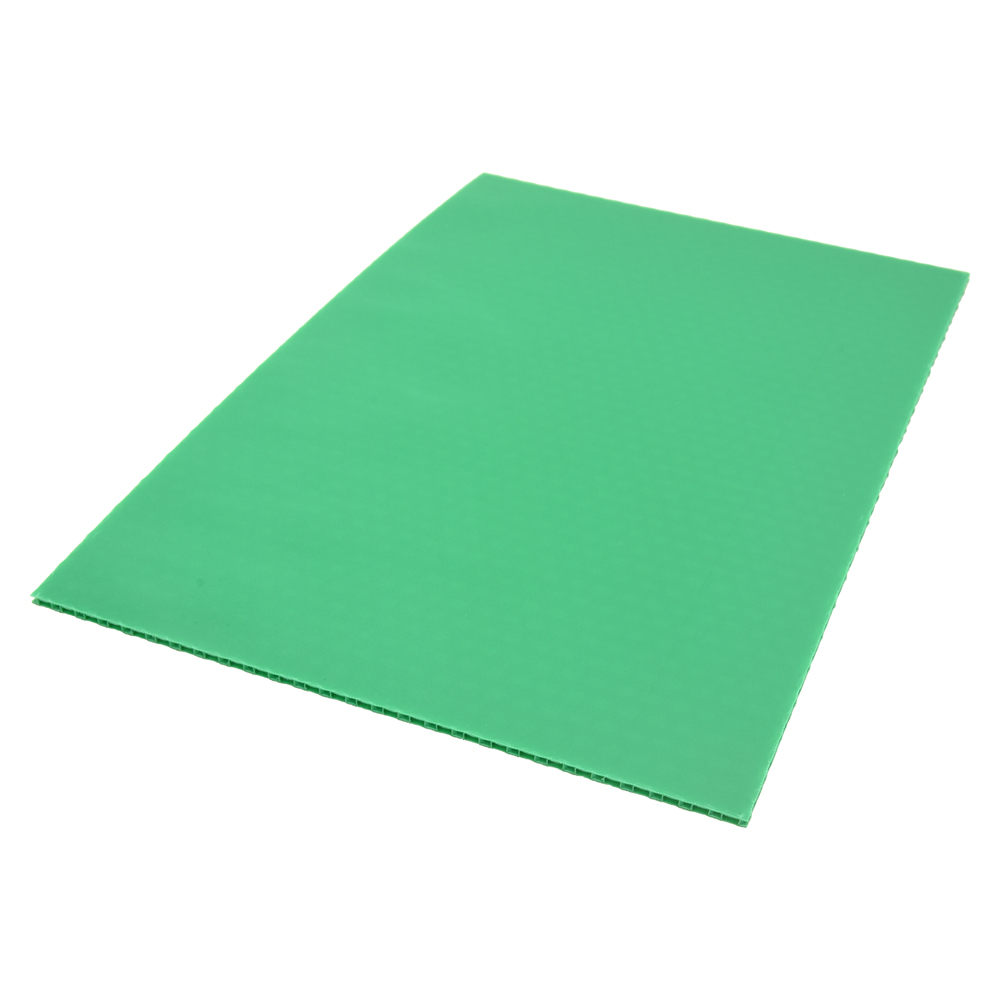
We supply rigid honeycomb panels for ladder routes, but we will say first that the feet are the cheaper fix. Tell us what the floor is and how much work is being done off ladders, and we will tell you honestly whether panels are needed at all. Point load behaviour is explained in honeycomb panels under heavy point loads.