
Moving anything heavy across a finished floor comes down to a choice between two devices, and the right one depends on the floor rather than on the object. A sledge spreads weight over a large area and slides; a dolly concentrates weight onto small wheels and rolls. They are not interchangeable and picking the wrong one causes the damage people then blame on the protection.
What a sledge does
A sledge – a flat platform with runners – spreads the load over its whole footprint and moves by sliding. Sliding needs the surface underneath to be smooth and hard, and it generates friction and heat. On a hard floor under a rigid panel a sledge is excellent: low pressure, no impact, controlled. On a soft floor it can leave scuffing from the slide itself.
What a dolly does
A dolly puts the entire load onto three or four small wheels, each contacting over an area about the size of a thumbnail. That pressure is enormous regardless of what is underneath, and it is why dollies crack tiles and dent timber even through protection. The mitigation is wide, soft wheels and more of them – a four-wheel dolly with wide polyurethane wheels is a different machine from one with narrow nylon castors.
Wheel material matters more than wheel count
Narrow hard wheels cut; wide soft wheels spread and roll. Swapping the castors on a dolly from nylon to wide polyurethane is a cheap change that makes a large difference, and unlike protection it travels with the equipment to the next job. It is the first thing to look at when a floor is being marked by trolley traffic.
Protection has to be rigid under wheels
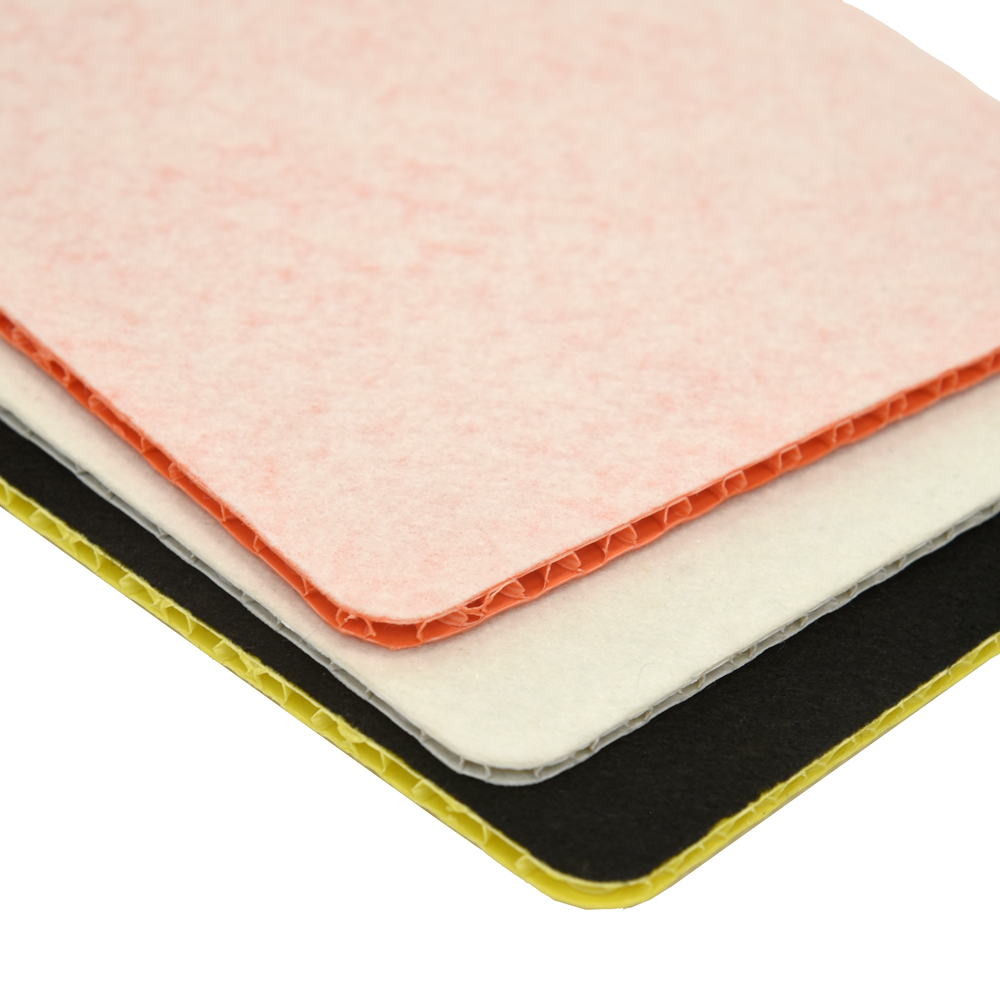
A flexible cover under a wheel dishes and the wheel still reaches the floor with most of its pressure. Under wheels the cover needs to be rigid and thick enough to spread; under a sledge it needs to be smooth and hard enough to slide. Those are different products and using one for both jobs is a common and expensive shortcut.
When carrying is the right answer
For anything under about 50 kg with two people available, carrying beats both. It avoids the concentrated wheel load and the sliding friction entirely, and the risk transfers to dropping it – which is a handling risk rather than a floor risk and is managed by grip and route rather than by protection.
What the wheels leave behind
Rubber and some polymer wheels transfer plasticiser onto vinyl, resin and some stone, leaving a grey mark that appears days later and gets worse with age. Non-marking polyurethane wheels avoid it, and where the fleet cannot be changed, a cover that is impermeable and washable at least keeps it off the floor. Worth checking what the wheels are made of before the move.
Load limits nobody checks
Every dolly has a rating and it is usually exceeded, because the rating is for an evenly distributed load and real loads are not even. A dolly rated for 300 kg carrying 300 kg on one side is effectively carrying double on two wheels. Knowing the rating and staying well under it is the cheapest floor protection available.
Six wheels instead of four
A six-wheel trolley spreads the same load over half again as many contact points and, more importantly, keeps more wheels on the floor over an uneven surface. On a floor with joints and thresholds it is noticeably gentler. Where equipment is being bought for a job with finished floors, it is worth specifying.
The load case that dollies handle worst – a heavy object on four small feet – is described in moving appliances and white goods over protected floors.
What we can do
We supply rigid honeycomb panels for wheeled routes and smooth-faced panels for sledge runs, and we will ask what is moving the load before quoting. Tell us the weights, the device and the floor, and we will say which combination works – including when carrying is the better answer.