
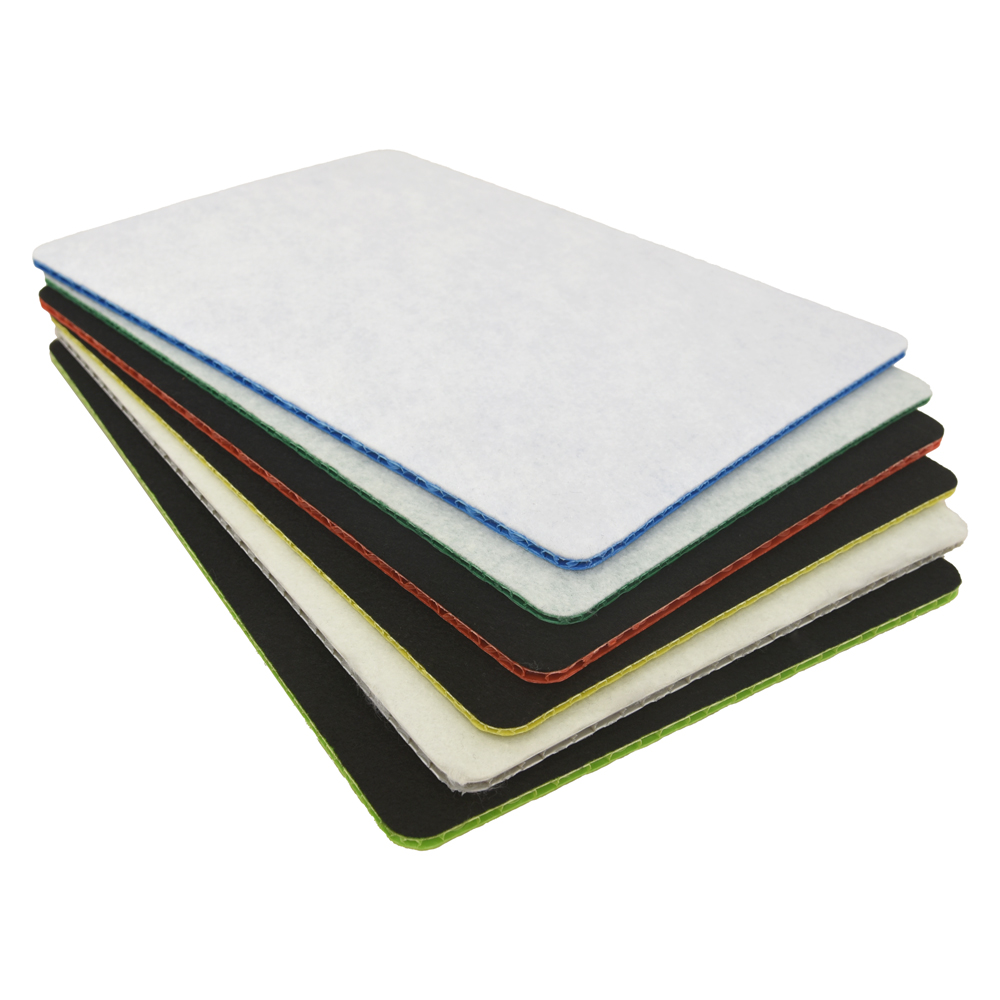
Strip-out is the phase where the floor takes real violence: things get dropped, debris gets dragged, and heavy material moves on barrows with hard wheels. It is also the phase where most people use the cheapest protection available, which is the wrong call – this is where a rigid panel earns its cost and a thin sheet does essentially nothing.
Impact, not abrasion
On a fit-out floor the dominant damage mechanism is abrasion from grit. On a strip-out it is impact: a length of studwork dropped on its end, a radiator swinging into a wall, a skip wheel over a threshold. Impact needs depth and stiffness to absorb and spread, and a thin flexible sheet has neither. This is the case where the thickest available panel is the right one.
Sharp debris is different from grit
Strip-out produces screws, nails, broken tile and metal offcuts, and those punch rather than abrade. A fibrous face that holds grit does nothing against a nail standing on end – that goes straight through soft material and into the floor. What stops it is a hard, thick layer, which is the opposite of what most floor protection is designed to do.
Barrows, skips and thresholds
A loaded barrow on hard wheels is a moving point load and it destroys protection at every threshold and change of level. Protecting the route properly means a continuous run with ramped transitions rather than panels butted against a door plate. It also means keeping the debris off the route – a barrow wheel over a nail is the same nail, driven harder.
Where protecting is pointless
If the floor is coming out, do not protect it. Strip-out floors are usually being removed, and covering them is pure waste. The areas that need protecting during strip-out are the ones that are staying: the entrance, the protected route, and any floor in an adjacent occupied area. That is usually a small part of the floor plate.
What to do instead of protecting
Three things beat protection on a strip-out: a defined debris route that everyone uses, a skip or barrow that is loaded rather than dragged, and sweeping the route at the end of each day. None of them cost anything and together they remove more risk than any product. Say so before quoting, because it is the honest answer.
Screws and nails in the debris
Strip-out debris contains fixings, and a nail standing on end goes through most covers. Sweeping the route at the end of each day, rather than at the end of the week, is what keeps this under control – and sweeping with a magnet where there is a lot of steel is cheaper than replacing covers. It is unglamorous and it is the most effective measure available.
Vibration and the floors below
Strip-out produces vibration, and in a building with occupied floors below, that vibration travels. It is not floor damage but it is a complaint, and it is often attributed to the works correctly. Agreeing working hours andmethods with the building manager prevents most of it, and it is worth doing before the first skip arrives.
What to do with the protection afterwards
Panels used on a strip-out are usually too damaged to reuse on a finished floor and perfectly good for the next strip-out. Grading them rather than skipping them – heavy duty to the strip-out pile, clean ones back into stock – keeps the asset working without putting a damaged panel on a client floor.
What we can do
We supply heavy-duty honeycomb panels for strip-out routes and ramped threshold transitions. Tell us what is coming out, what the route is and which floors are staying, and we will size the order to the route rather than to the area – and tell you where sweeping is the better answer. Load behaviour is set out in dropped tools and dented floors.