
Second-fix joinery is done at the junction between floor and wall, which is the one place protection usually stops. It involves sawing, nailing, and dropping offcuts, all within a few hundred millimetres of the floor, and it produces a characteristic damage pattern: a line of scratches and dents along the perimeter of every room.
Why the perimeter is the problem
Floor protection is laid to within 50 mm or so of the wall, because that is where it is easy to stop. Joinery work happens in exactly that strip. Skirting is scribed, cut and pinned in place; door linings are packed and wedged; architrave is mitred on a saw horse set on the floor. Everything lands in the unprotected line.
Sawdust and offcuts
MDF and softwood sawdust is fine and abrasive, and it gets into the gap between the protection and the wall. Offcuts with nails in them get dropped point-first. Neither is dramatic and both are cumulative, which is why a floor can look fine during the works and show a ring of damage at handover once the furniture is out of the way.
What to do differently
Run the protection up the wall by 150 to 200 mm instead of stopping at the floor, or lay a separate sacrificial strip along the perimeter that gets replaced when it is worn. Both are cheap. The alternative that usually fails is telling people to be careful in a strip nobody can see once the skirting is being fitted.
Nail guns and fixings
A nail gun misfires and a nail goes into the floor rather than the skirting. It happens, and on a hard floor it leaves a mark and on a soft floor it leaves a hole. Nothing protects against it except not having a finished floor under the work – which is the argument for fitting skirting before the floor is laid where the sequence allows it.
Sequencing that avoids the whole issue
Fit skirting and architrave before the floor covering goes down, scribe to the floor afterwards, and there is no finished surface to damage. That runs against the usual sequence on a lot of jobs and it is worth raising anyway, because it removes an entire category of handover snag.
Protecting the floor while the doors are hung
Hanging a door means a heavy, awkward object on a finished floor, wedged and packed at the bottom, with chisels and saws in use at floor level. It is one of the highest-risk operations for a floor and it is usually done with no protection at all. A sacrificial sheet under the opening, replaced when it is worn, costs almost nothing.
Scribing and the mess it makes
Scribing skirting to an uneven floor means pencil, knife and shavings at floor level, and the shavings are abrasive. A sacrificial strip that catches them, replaced or swept daily, keeps them out of the gap between the cover and the wall. It is the least considered and most common source of perimeter damage.
Doors, and the swing over the cover
A door hung over a floor cover may not clear it, and the usual fix is to trim the door – which is a defect. Check the clearance before the cover goes down, particularly where the corridor protection runs through a door opening. A chamfered edge at the door line solves it in most cases.
What to do when the trim is already marked, and why touch-up often does not match, is in fixing scuffs on painted skirting and trims.
What we can do
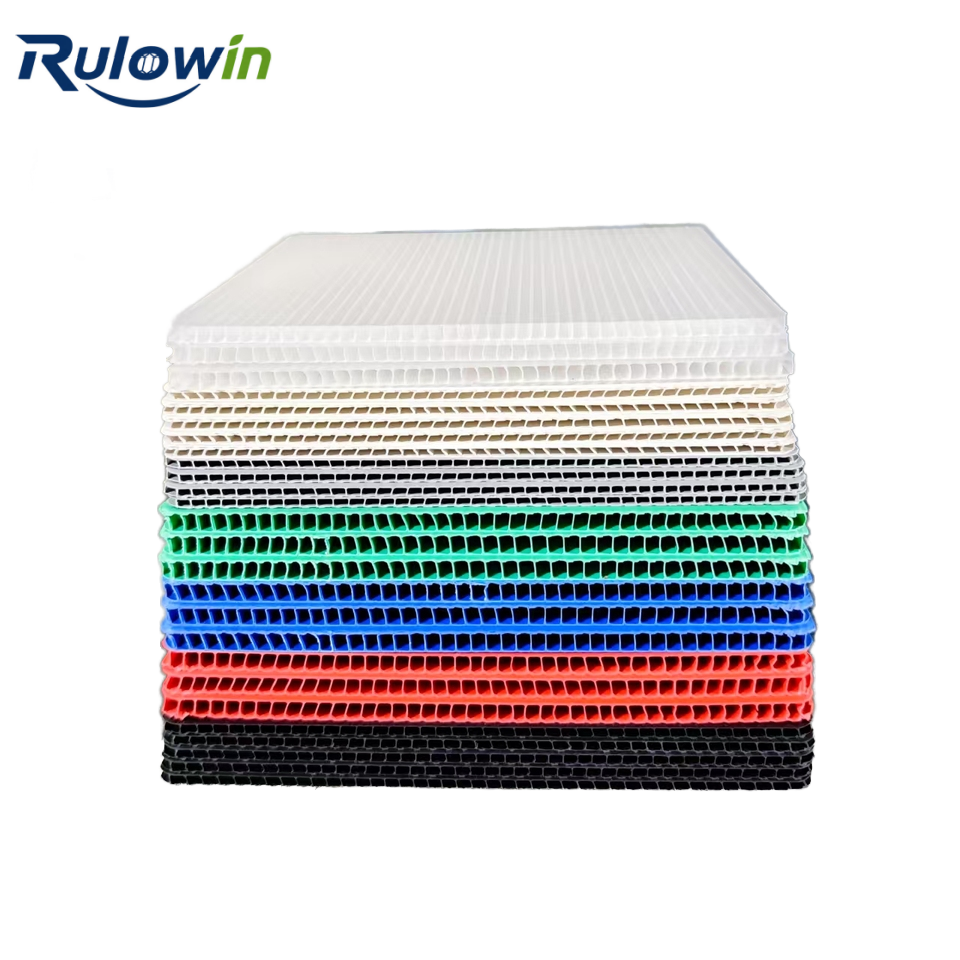
We supply corrugated PP sheet in narrow strips for perimeter protection and honeycomb panels cut to run up to the wall line. Tell us what the floor is and how much joinery is being fitted, and we will size the perimeter strip as a separate line on the order rather than leaving it to chance.