
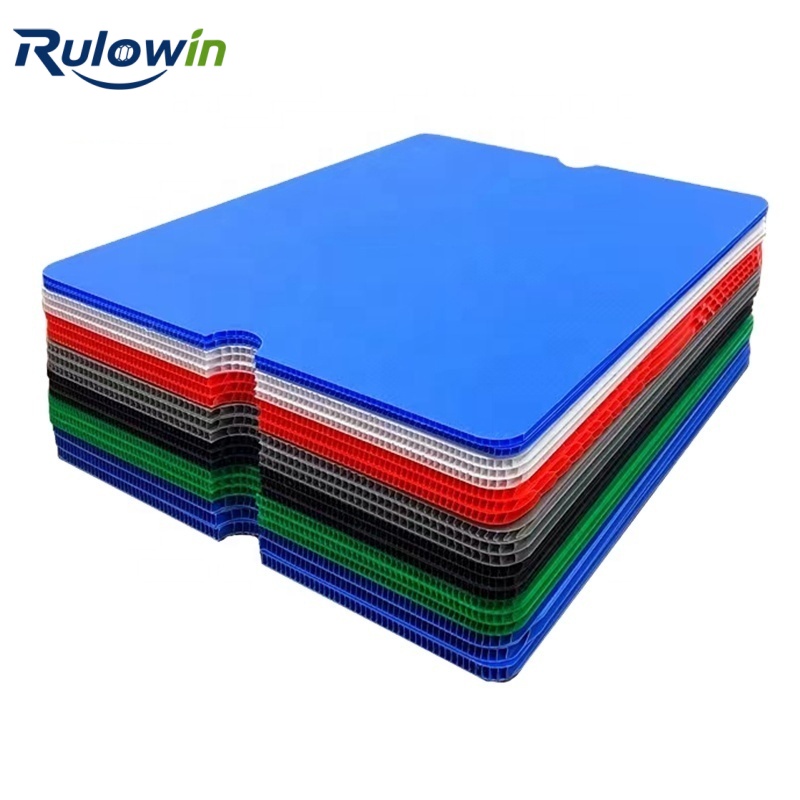
Ink does not stick to polypropylene. More precisely, it does not stick to untreated polypropylene, which has a low surface energy that most inks and adhesives cannot wet out on. Everything that works involves changing the surface first or using a method that does not rely on wetting.
Why it is difficult
Surface energy is the property that determines whether a liquid spreads across a surface or beads up. PP sits below the level that conventional inks and adhesives need. Print on untreated sheet and it looks acceptable coming off the press, then scratches off with a fingernail.
Surface treatments
Corona treatment raises the surface energy by oxidising it with a high-voltage discharge. It is the standard approach, effective, and it decays – the effect fades over weeks to months, so treated sheet needs printing within its window.
Flame treatment does the same thing with a gas flame. Effective on flat sheet, harder to control on a profiled surface.
Plasma treatment gives the best and most durable result and costs more. Worth it where print durability is critical.
A primer or adhesion promoter can bridge the gap where treatment is impractical, with variable results.
Print methods that work
- UV-cured inkjet printed onto treated sheet. Good colour, good adhesion, and the ink cures instantly. The usual choice for short runs and variable data.
- Screen printing with a PP-specific ink onto treated sheet. Durable, good opacity, slower, and suited to flat areas.
- Flexographic printing for volume. Needs treated sheet and matched inks, and it is what most high-volume sheet printing uses.
- Heat transfer or a printed film laminated onto the sheet. Bypasses the adhesion problem entirely by bonding a film rather than printing ink. Very durable and more expensive.
Things that go wrong
- Printing on untreated sheet – the most common cause, and it fails in service rather than at the press
- Printing onto treated sheet whose treatment has decayed – same result, harder to diagnose
- Contamination from dust, handling or anti-static additives blooming to the surface
- Printing across the flutes on a corrugated surface, where contact is uneven and the flute lines show through
- No over-laminate or varnish where the print will be abraded
Designing for it
Print on the flat, not across the flutes. Keep fine detail away from fold lines, because folding stretches the ink layer. If the sheet will be washed or used outdoors, specify UV-stable inks and consider a laminate. And ask for a cross-hatch adhesion test on a sample before committing to a run – it takes a minute and it is the standard check.
Why treatment decays and what to do
Corona treatment is not permanent. The surface energy it creates falls over time as the oxidised layer reorients and as additives migrate to the surface. How fast depends on the grade, the storage temperature and the additive package, but it is weeks to months rather than years.
The practical consequences: treat as close to printing as possible, store treated sheet cool and out of sunlight, and do not assume treated stock from last quarter is still printable. If you are buying treated sheet, ask for the treatment date.
Where printing happens long after the sheet is made, a re-treatment pass before the press is the reliable answer. It costs little compared with a run that fails adhesion testing.
What we can supply
We supply corrugated PP sheet corona-treated for printing, with the treatment date stated, and printed if you want it done in one step. Tell us the print method and the service conditions, because treated sheet has a working window and it is worth planning around.