
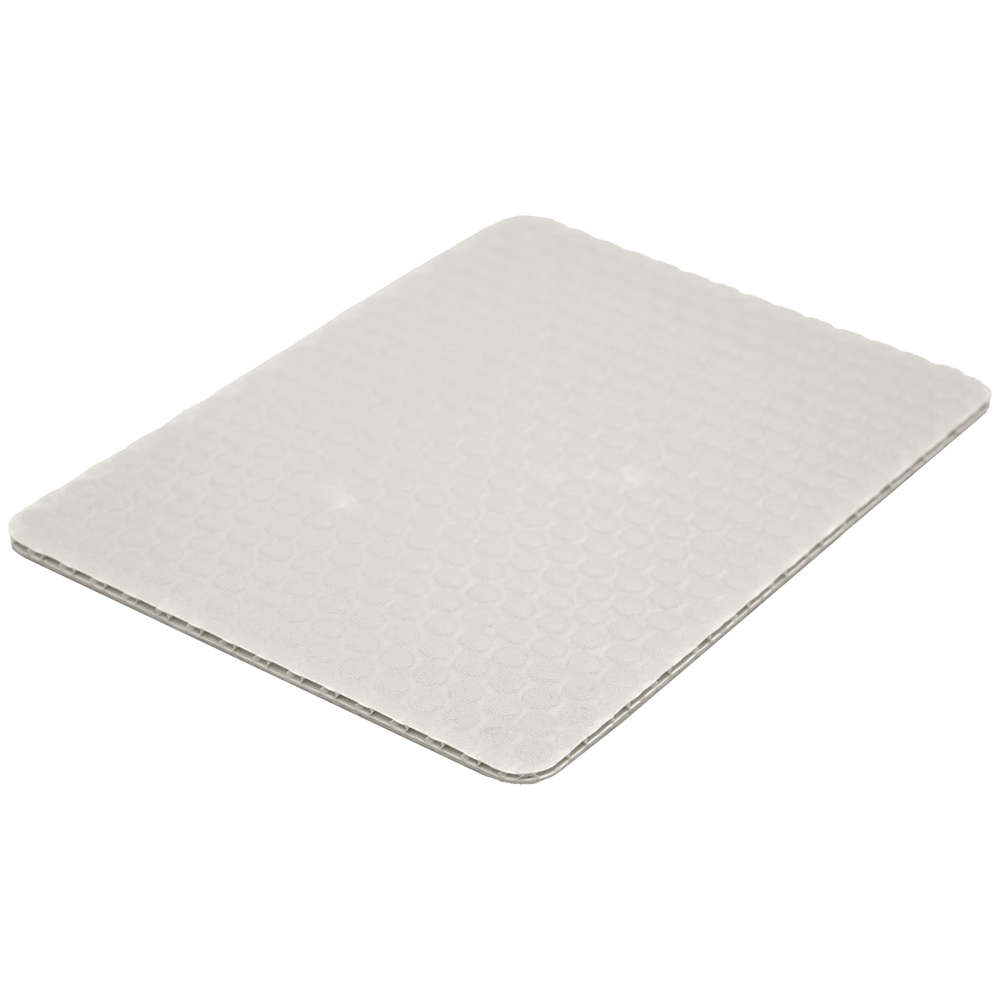
A food or drink production area is cleaned with hot water and chemicals every day, and it is audited against a hygiene standard that asks awkward questions about anything brought into the space. Temporary protection used during works has to be cleanable, non-absorbent and defensible in an audit – which rules out most of the cheap options immediately.
Why absorbent materials are out
Cardboard, MDF and untreated fibreboard absorb water and product, they harbour bacteria once wet, and they cannot be cleaned to a hygiene standard. In a food plant they are usually prohibited outright rather than merely discouraged. Polypropylene does not absorb, it tolerates hot water and detergent, and it dries immediately – which is the entire reason it gets specified here.
Washdown and chemicals
The cleaning regime matters more than the product: caustic and chlorine-based cleaners at temperature, applied daily. A protection board has to tolerate both without degrading or becoming slippery, and the face has to release residue rather than hold it. A smooth face is easier to clean than a fibrous one in this environment, and the fibrous face’s grit-holding advantage is irrelevant on a floor that gets hosed.
Audit questions
An auditor will ask what the material is, whether it is food-safe, whether it is cleanable and what happens to it at the end. Having a material declaration and a cleaning statement ready is worth more than the product itself. Ask the supplier for those at enquiry; they are standard documents and they take far longer to produce after the audit than before.
Where protection is actually needed
During re-fits and line installations in a production area, the risk is to the floor coating and to drains. The coating is expensive and a damaged coating in a food plant is a hygiene issue as well as a cost. Drains get blocked by debris and by protection laid over them – cut around them, always.
Commercial terms for food sector work
Work is scheduled around production shutdowns, which are short and fixed. Deliveries are timed to the shutdown, quantities are called off against a plan, and the supplier has to be able to provide the hygiene documentation with the delivery rather than separately. Reliability and documentation beat price on this kind of work.
Where it is not needed
In dry goods areas, in warehousing attached to the plant, and anywhere the floor is structural concrete. Food plants overspend by applying the production-area specification to the whole site.
Drains and where the water goes
A food plant floor drains to channels and gullies, and a cover laid over them blocks the drainage the whole area depends on. Cut around every gully and keep it clear, and check them at the end of each shift. A blocked gully in a production area causes a standing-water problem that is a hygiene issue as well as a floor one.
Washdown, hygiene rules, and no places to hide
In a food production area the protection has to survive being washed, and it has to have nowhere for product or bacteria to collect. Open flutes at a cut edge are exactly that place, which is why sealed edges are not optional here – an unsealed edge will hold washdown water and residue and will fail a hygiene inspection.
Panels also have to be moved for cleaning. Anything fixed down permanently becomes a hygiene problem in itself, so protection in a working factory is usually laid loose in defined zones and lifted on a cleaning cycle. The felt face is the wrong choice against a wet floor because it holds water; the studded face drains and stays grippier underfoot. Colour matters more than usual – a blue panel in a food area follows the normal colour-coding convention and is also visibly not a foreign object if a fragment ever ends up somewhere it should not. The drainage behaviour is covered in embossed face drainage on wet sites.
What we can do
We supply PP honeycomb protection board with a smooth washdown face, and can provide the material and cleaning statements an audit asks for. Tell us the cleaning chemicals, the temperature and the floor coating, and we will confirm suitability. Washdown behaviour is discussed in washdown compatible panels in processing areas.