
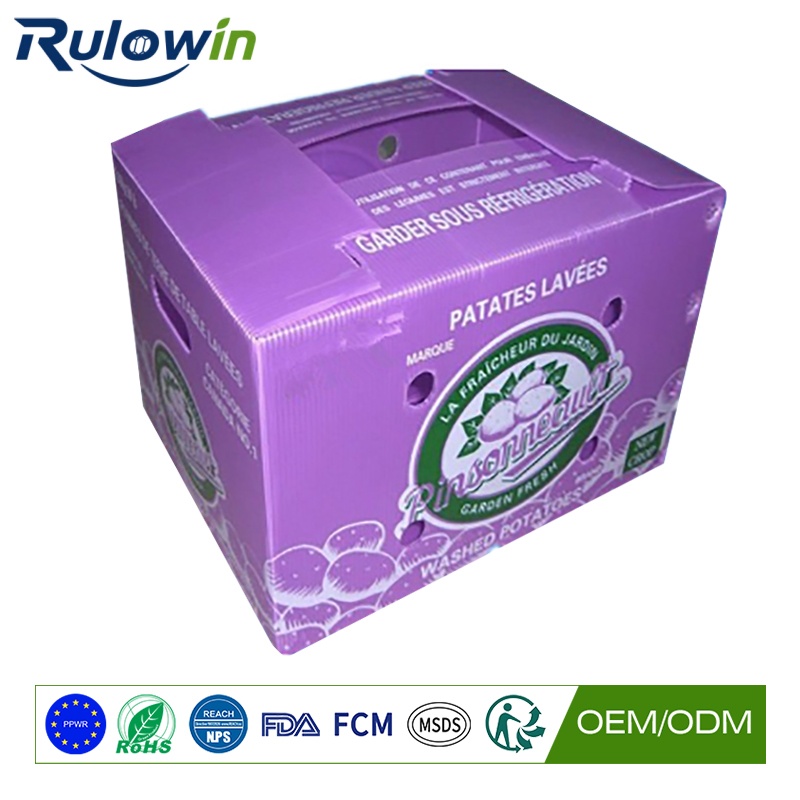
Plastic packaging taxes have been introduced in several markets, and more are being consulted on. Most of them include a distinction for reusable or returnable packaging, and most of that distinction turns on evidence rather than on what the packaging is called. For a produce crate fleet, that distinction is worth understanding before someone files a return.
How the exemption usually works
The common structure is a tax on plastic packaging by weight, with relief for packaging that is demonstrably reusable – usually defined by a minimum number of trips or rotations in a system that exists to return it. The detail varies by jurisdiction, and the definition of “reusable” is the part that matters. A crate that is theoretically reusable and a crate that is actually being returned are treated differently in most regimes.
What counts as evidence
Records of the return system: how many crates, how many trips, what proportion came back. A pooling operator can usually supply this; an owner-operator has to generate it. Where the tax authority asks for evidence, the difference between having trip records and having an intention to reuse is the difference between an exemption and a bill. This is the practical reason to count crates even when nobody else is asking.
The recycled content alternative
Most of these taxes also include a lower rate or an exemption for packaging with a stated proportion of recycled content. For a crate, that is a material decision made at purchase – and for food contact it has to be a grade with the right documentation, which is why the two questions arrive together. Which route is better depends on the rates in the specific jurisdiction.
Imported crates
Some regimes apply the tax at the point of import rather than at the point of sale, and some apply it to the packaging component of an imported filled package. Where crates are imported empty, the treatment is usually clearer than where produce arrives in plastic packaging from abroad. It is worth checking which applies before ordering – the liability can sit with the importer rather than with the grower.
What to do now
Find out whether the market you sell into has a tax in force or in preparation, and whether reusable packaging is treated differently. If it is, start generating the trip records now, because they take a season to accumulate and they cannot be reconstructed later. Then ask your supplier for the crate weight per unit and the recycled content declaration, because both are inputs to the calculation.
Where the tax changes the comparison
A tax on single-use plastic packaging narrows the gap between cartons and crates, and in some markets it reverses it outright. Where a carton has a plastic component – a liner, a coating, a window – it may be in scope too, which surprises people. Running the carton-versus-crate comparison with the tax included is a different calculation from the one most operations did five years ago.
Where the crate qualifies and the liner does not
A returnable crate may be exempt or relieved while the single-use items travelling with it – a liner, a pad, a stretch wrap – are not. That means the tax return has to separate the two, and it means the ongoing single-use items are the part of the packaging bill that the tax still applies to in full.
It is worth listing every plastic component that leaves the site with the produce and checking each against the rules. The crate is usually the easy one; the small items are where mistakes get made, and they are also where the cheapest reductions are. The recycled-content route for the crate is set out in recycled content in food-contact crates.
What we can do
We supply returnable produce crates and can state crate weight per unit and recycled content so the tax position can be calculated. Tell us which market you sell into and we will provide the figures you need for the return.