
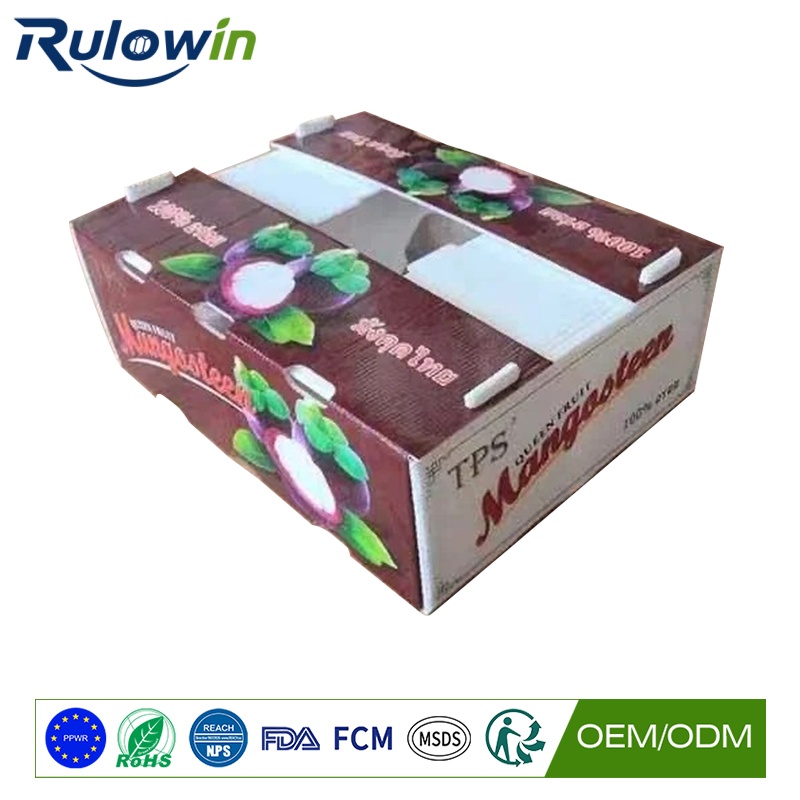
Lost crates are the recurring cost that turns a capital purchase into an annual one. The rate varies enormously between operations, and the variation is almost entirely about process rather than about luck. Three places account for most losses, and the fix is different in each.
Retail back of house
The largest single destination. Crates arrive at a store or a distribution centre, produce is unpacked, and the crates go into a corner or a skip because nobody has been told what to do with them. Store staff turnover is high and training on crate return is rarely a priority. The mitigations that work are a prominent return instruction moulded into the crate, a visible collection point, and a collection frequency high enough that crates do not accumulate.
Transport intermediaries
Where a third-party haulier handles the delivery, the return leg is nobody’s job. The haulier is contracted to deliver produce, not to collect crates, and unless the contract says otherwise the crates stay where they were dropped. This is fixable in the contract and it is usually not – it is worth checking what the haulage agreement actually says about returns before assuming they happen.
Second use
A produce crate is a genuinely useful object. It holds tools, it stores things in a garage, it carries firewood. A proportion of every fleet is quietly adopted and never returns, and the rate goes up when crates are unmarked and go up again when crates are attractive. An owner mark helps; a moulded “property of” panel helps more.
Why the first year is worst
Loss rates are highest in the first season of a new scheme, because none of the downstream parties have a routine for returns yet. They typically improve substantially in year two once the process is established. Building the first-year loss into the business case, rather than treating it as a failure, is the difference between a scheme that survives year one and one that gets abandoned.
What actually reduces loss
Identity marking, in order of effectiveness: a moulded permanent code, a high-contrast owner panel, then a label. Collection frequency high enough that crates do not sit. A named person at each end of the loop who owns the return. And counting, so that a change in the rate is noticed. Those four move the number; exhortation does not.
When to accept it
In an open loop with many small drop points, some loss is the cost of the model and chasing it costs more than the crates. Where the loss rate is stable and known, it can be priced into the product and managed as a top-up order. The mistake is not losing crates; it is not knowing how many. The wider counting question is in reconciling crate numbers at season end, and the rate to expect in a given shape of loop is discussed in loss rates in a returnable crate scheme.
What a crate is actually worth
Before spending effort on recovery, know the replacement cost per crate including freight. Recovery activity that costs more than that is worse than simply buying crates, and it is a common mistake to run an elaborate chasing process for crates that cost less to replace than to pursue. Knowing the number also tells you how much marking and tracking is worth specifying.
Where the crate is expensive – a large, heavy, printed crate for a premium crop – identity marking and active recovery clearly pay. Where it is a cheap general-purpose crate in an open loop, a modest loss rate priced into the product is the rational answer and the effort is better spent elsewhere.
What we can do
We supply produce crates with moulded asset numbering and a high-contrast owner panel, and we will quote annual top-up volumes so replacement is planned rather than reactive.