
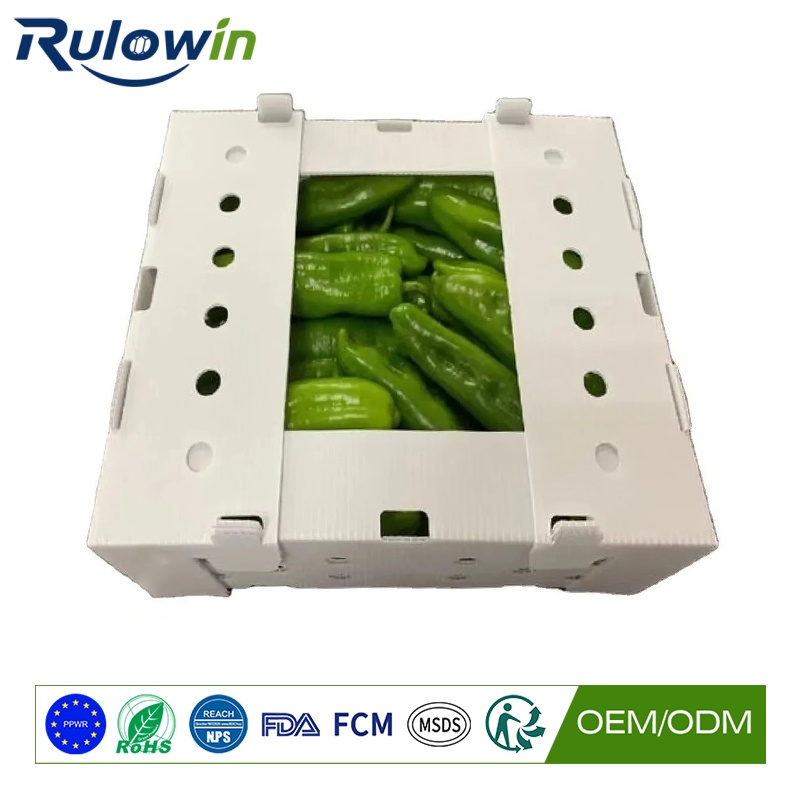
A crate made with recycled content is attractive for a sustainability target and straightforward to specify, provided one thing is understood: the recycled grade needs its own food contact documentation, and assuming the virgin-grade document covers it is the error that surfaces at audit.
Post-industrial versus post-consumer
Post-industrial regrind comes from a controlled manufacturing stream – offcuts and rejects from the same or a related process – and its composition is known. Post-consumer material comes from collected packaging and its history is not. For food contact, post-industrial is far easier to justify, and many food-grade recycled grades are effectively post-industrial. Where a supplier says recycled content, ask which.
What the declaration has to cover
The material, the source stream, the proportion, and the compliance statement for that grade. A declaration for a virgin crate does not cover a recycled one, because the input is different and the migration profile is assessed differently. Asking for both documents at quotation stage costs one email and removes a problem that otherwise appears during a customer audit.
Performance differences
Recycled grades are usually slightly less consistent in colour and slightly more variable in mechanical properties. For a produce crate, which is a thick-section moulding working well within its limits, that variability rarely matters in service. Where it can show is in colour matching between production runs, which is a cosmetic issue, and in the consistency of impact strength in very cold use.
The honest trade-off
A crate with recycled content has a lower material footprint and slightly less predictable properties. A virgin crate is more consistent and uses more new polymer. For a crate that is going to be reused hundreds of times, the footprint of the material is amortised over those trips and the argument for virgin material is weaker than it looks. For a crate that will be lost in two seasons, the recycled content matters more.
What to ask the supplier
What proportion, which stream, and can you have the declaration for that specific grade. If the answer to the third question is a document for a different grade, that is the answer. It is also worth asking whether the recycled content is stated by weight and whether it is verified, because an unverified claim is not much use to a customer who has to report it.
Where it interacts with other requirements
Some plastic packaging taxes give relief for recycled content, which is a reason to specify it. Some customers require a minimum, and some prohibit post-consumer content in food contact applications regardless of what the regulation allows. Those requirements can conflict, and it is worth establishing which applies before choosing a grade. The tax side is discussed in plastic packaging tax and returnable produce crates.
What to tell your customer
If you are specifying recycled content to meet a customer target, say which stream and what proportion, and have the declaration ready. A customer sustainability team asking for recycled content will usually accept post-industrial material with documentation; what they cannot accept is a claim without a number. Being precise early avoids a difficult conversation later.
It is also worth asking whether the target is about recycled content or about reuse, because the two are often confused. A crate reused two hundred times with virgin polymer has a stronger sustainability story than a crate with thirty per cent recycled content that is lost after two seasons – and if the target is written as packaging waste reduction, the second crate does not meet it at all.
What we can do
We supply produce crates in virgin and recycled-content grades with the correct declaration for each, and we will state the proportion and the source stream rather than saying “contains recycled material”.