
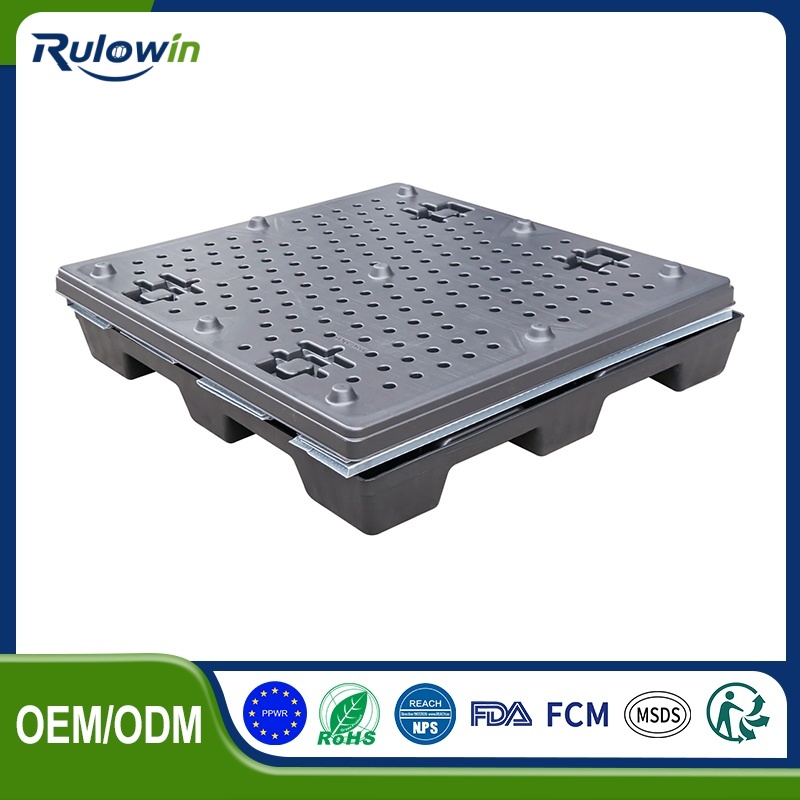
Teams reach for one-way packaging when they do not want the complication of getting something back. The reasoning is sound as far as it goes: no return freight, no tracking, no arguments about who damaged what. What it skips is the fact that the cost per trip never falls, no matter how many trips you make.
One-way is not automatically cheaper
A plywood crate is cheap per unit and expensive per trip, because a trip consumes it. A reusable box is expensive per unit and cheap per trip, because the cost is divided by the number of trips it survives. The only question that matters is how many trips the lane will actually run, and whether anyone is prepared to organise the return.
Finding the break-even trip count
Divide the cost of the box plus the return freight by the cost of one-way packaging per shipment. If a honeycomb board box costs twenty times a plywood crate but lasts forty trips and returns at a fraction of the outbound rate, it breaks even around trip twenty-five and is free thereafter. If the lane runs four times a year, the break-even is six years and the answer is plywood. Same arithmetic, opposite conclusions, and the only input that changes is frequency. We go through the same sums in what a fleet actually costs to run.
Where one-way genuinely wins
Lanes that will not repeat. Destinations with no competent partner to load a return. Parts that are installed into a fixed asset at the far end and shipped once. Promotional shipments to distributors, where the return leg would cost more than the crate. In all of those, the honest answer is one-way packaging, and pushing a fleet into them is how returnable projects get a bad name.
What the return leg actually costs
Less than most people assume if the boxes nest or knock down. This is the single design decision that decides whether a fleet programme works: a box that returns at full volume pays full freight twice, and a box that returns flat pays a fraction of it once. A honeycomb box with removable pins or a knock-down wall changes the return leg from a cost that kills the case into a line that does not. The designs that do this are set out in nesting and knock-down boxes for return freight.
Tracking a fleet without software
Start with a spreadsheet and a rule: boxes leave and boxes come back, and the difference is what you go looking for. Give each box a number and a colour, count at both ends, and accept a two per cent unexplained loss as the cost of not running a system. Software comes later, if it comes at all. Most fleets fail on reconciliation, not on tracking technology.
The first loop to convert
Pick the lane that runs most often, has a cooperative partner at the far end, and carries a part that will not change next quarter. That combination gives you the fastest payback and the least disruption, and it gives you something to show the next lane. Conversion by example works far better than conversion by calculation.
It also gives you a real loss rate. Every one-way packaging decision is made without knowing how many boxes a fleet would actually lose in a year, and the number is usually lower than the pessimists expect. Running one lane for six months produces that number from your own operation, after which the argument about whether returns can be trusted is settled with data rather than opinion.
What to do with the one-way lanes you keep
Not every lane converts, and the ones that do not still need packaging that is cheap, light and easy to dispose of. A well-made corrugated sheet crate for those lanes is often better than plywood, because it is lighter, it is recyclable and it does not need treatment paperwork. Leaving the unconvertible lanes on the right material rather than the inherited one is a useful second-order saving.
Review the split annually. Lanes change frequency as products come and go, and a lane that could not support a fleet two years ago may be running often enough now. A note in the annual packaging review to recheck the break-even trip count costs nothing and occasionally converts another lane.
What we can do
We make PP honeycomb board boxes that knock down and nest for exactly this reason: so the return leg does not decide the project. Tell us the lane, the frequency and the part, and we will give you the break-even trip count before you commit to anything.