
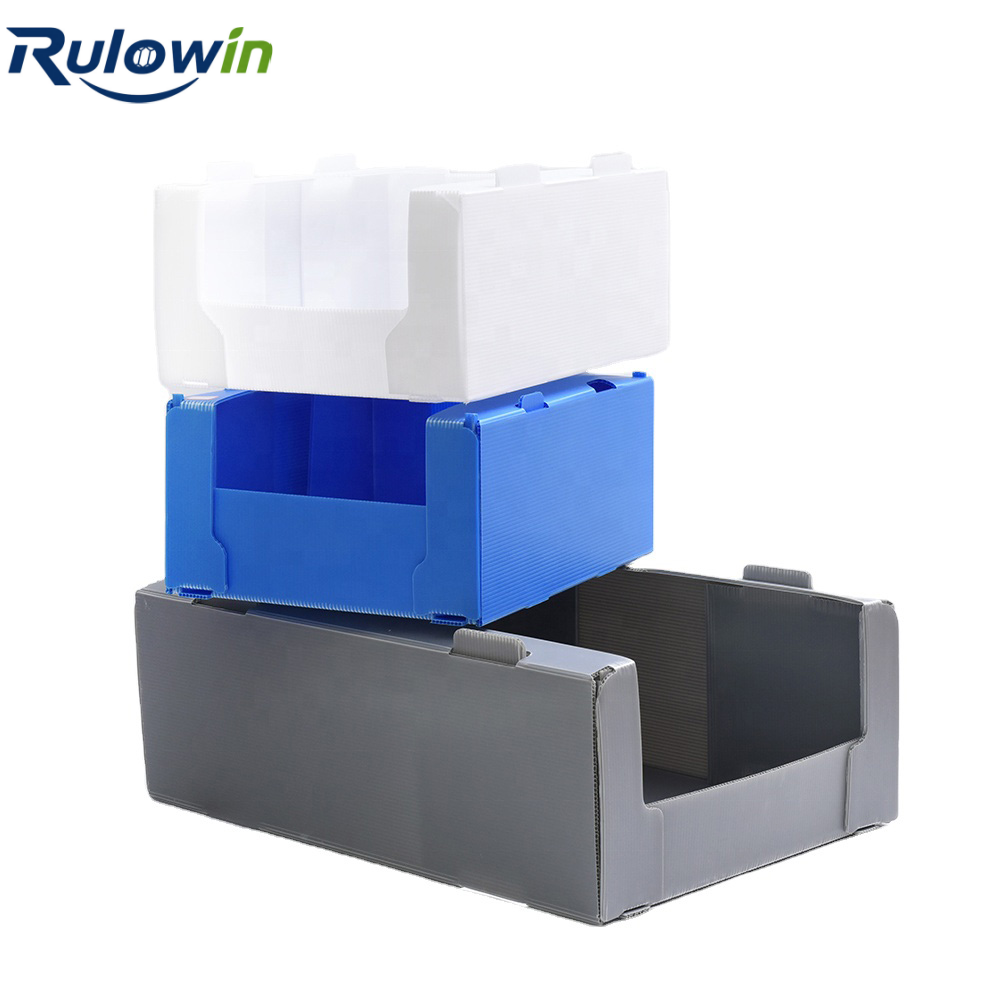
Picking boxes do two things when empty: they nest inside each other, or they stack on top of each other. Which one a design does – and by how much – determines how much space empty boxes take, and that number drives how many you can hold and move.
Nesting: the storage mode
An empty box dropped into another one takes up only the incremental height of one box wall. A nest of twenty boxes is barely taller than a stack of three full ones. For storing empties and for returning them, this is the mode that matters.
The nesting ratio – how much height each additional box adds – is the number to ask a supplier for. It varies a lot between designs and it is the single biggest driver of empty-box storage volume.
Stacking: the loaded mode
Full boxes stack, and the stack height is set by the contents and by how stable the box is when loaded. Some designs stack securely, some do not, and the difference is usually whether the base has a positive location into the box below.
A box without a stacking feature will slide off under braking, and that is a safety issue rather than a tidiness one.
Why both matter
Because a picking operation has boxes in both states at once. Boxes in use are full and stacked or on a trolley; boxes waiting are empty and nested. Sizing your storage for full boxes and your returns for nested empties gives two very different numbers, and confusing them is a common planning error.
How many boxes you need in total is worked through in how many picking boxes you need.
The taper problem
A box that nests very efficiently has steeply tapered walls, and a tapered box holds less at the top than at the base. So the best-nesting design is often the worst-storing one in terms of usable volume. Worth weighing the two rather than optimising either.
What breaks
Forcing a box out of a tight nest. Boxes jam, someone pulls hard, and the handle root or the rim cracks. A design with a positive stop – so boxes cannot jam fully – prevents this and is worth having.
Handle failures are the most common consequence and the pattern is described in why picking box handles tear.
On a trolley
Whether boxes nest or stack on a trolley depends on whether they are being filled or emptied. The layout question is covered in laying out a picking trolley and box flow, and it is worth reading before buying boxes for a new layout.
Un-nesting without breaking things
Tap the nest sideways against a bench rather than pulling the top box straight up. Straight pulling is what cracks rims and handle roots, and the sideways tap releases the wedge in a fraction of the time.
If a nest is consistently jamming, the design has no positive stop. That is a purchasing issue rather than a technique one, and worth noting at the next order.
What we can do
We supply PP picking boxes and will tell you the nesting ratio and the safe stack height for each design. Tell us how many empties you need to store and how they move – those two numbers pick the design better than anything else.