
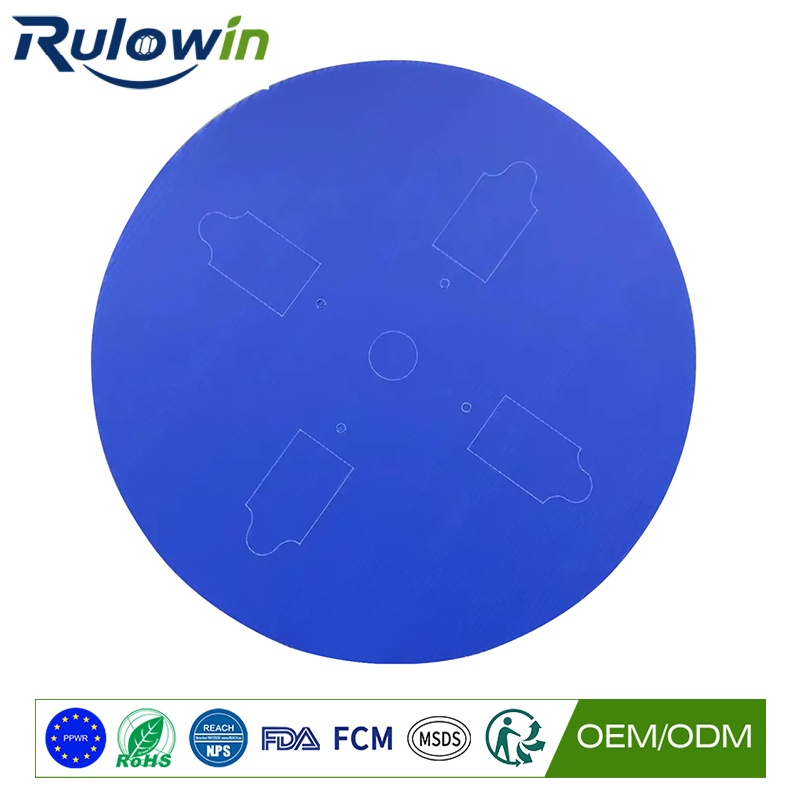
Spools cause manual handling problems out of proportion to their weight. They are round, they have no natural grip, they roll when put down, and the load is often concentrated at one side. A weight limit that works for a box is optimistic for a spool of the same mass.
Why weight alone is the wrong measure
Several characteristics make a spool harder than its weight implies:
- No handles and no good grip. You hold the flange edges, which puts the load away from the body.
- Bulky. The load cannot be held close, which increases the effective strain considerably.
- Unstable when set down. It rolls, so it cannot be put down half-way and adjusted.
- Often lifted from the floor or from a low stack, which is the least favourable starting position.
- Sometimes lifted above shoulder height onto racking, which is worse again.
Any assessment based on weight alone will clear a spool that is genuinely difficult to handle.
What a sensible limit looks like
We are not going to quote a figure, because manual handling limits depend on posture, frequency, distance, floor condition and the individual, and because they are properly set by whoever carries the legal duty in your jurisdiction — usually via a risk assessment rather than a rule of thumb.
What we can say usefully:
- Empty spools are rarely the problem — a hollow board spool is light relative to its size, which is one of the practical benefits of the material over plywood or steel
- Full spools usually are the problem, and the question is whether they should be handled manually at all
- Frequency matters as much as weight. Fifty lifts an hour is a different job from five, at any weight
- Height matters most of all. Lifting to shoulder height or above changes the assessment substantially
What actually reduces the risk
- Mechanise the movement. A simple trolley, a spool cart, or a pallet truck with the right attachment removes most of the problem. This is usually cheaper than people expect.
- Bring the work to a sensible height. A lift table or a change to where the spool sits on the machine removes the worst postures.
- Store at the height it is used at. The most effective intervention is often eliminating the lift rather than assisting it.
- Two-person handling with a defined method where mechanisation is not practical — and defined means agreed and taught, not improvised.
- Reduce the weight. Where the duty allows, a lighter spool construction is a genuine control measure, and it is the one suppliers have influence over.
Design features that help
Worth specifying if handling is manual:
- Hand-holds or grips positioned so the spool can be held close rather than at arm’s length
- A rim profile that does not cut into hands — a sharp or delaminated edge is a handling hazard in its own right, and is discussed in the rim reinforcement article
- Predictable weight so there is no surprise, which is mostly a matter of consistent construction
- A shape that can be set down without rolling or, alternatively, one that rolls predictably and can be controlled
The awkward cases
- Large-diameter light spools — easy to lift, hard to hold, and affected by wind outdoors
- Small heavy spools — deceptively difficult, because people judge by size
- Spools with product partly unwound, where the centre of gravity has moved
- Spools in a stack, where extracting one requires pulling it out sideways
That third one is a real and under-recognised issue. A part-used spool does not balance like a full one.
What to do
Have somebody who is competent do an assessment of the actual task — including the heights, the frequencies and the awkward cases — rather than applying a generic limit. Then fix the storage heights and buy the trolley, which is where most of the benefit usually is.
What we can contribute
Accurate weights and dimensions for our hollow board spools at each size, so any assessment is working from real numbers. And if manual handling is a significant part of your duty, tell us — it is a legitimate reason to favour a lighter construction, and it changes what we would recommend.