
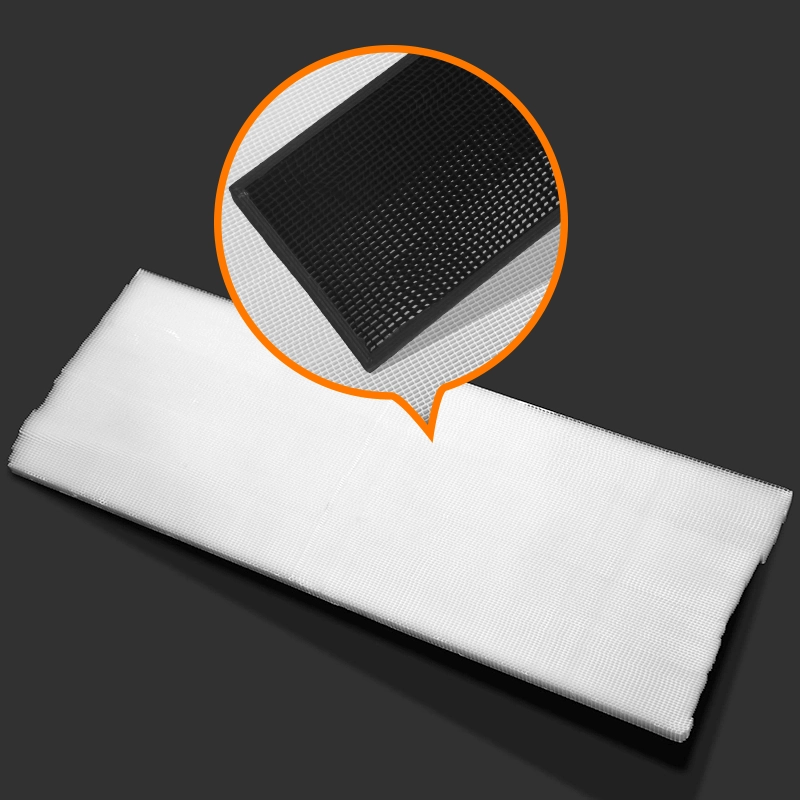
Filter screen life is one of those questions where a single number would be misleading, because the variable that ends a screen is different from one installation to the next. What is predictable is which factors matter and roughly how they rank.
What ends a screen
In a clean, dry, indoor application, very little happens to polypropylene for years. The screen is far more likely to be retired because it was damaged during handling or cleaning than because it wore out.
In a wet, chemically aggressive or outdoor application, exposure becomes the limiting factor – though for polypropylene that usually still means a long life compared with paper or metal in the same position.
In a greasy application, contaminant is the limit. Loading that penetrates and will not rinse out ends the screen regardless of its condition, and this is the one case where a washable screen can have a genuinely short life.
Handling is the variable nobody budgets for
Screens get bent getting them out of frames, cracked by being dropped, deformed by hot washing water, and stored badly – leaned against a wall in a warm room, where they take a set and arrive at the frame curved. Most of this is preventable and most of it is what actually ends screens in practice.
A spares set helps more than it sounds. The reason damaged screens go back into service is that nothing else is available. With a spare on the shelf, the inspection that finds damage can result in the screen being retired.
Getting an actual figure
Mark the installation date on the frame. When a screen comes out for good, note it. Two or three of those and you have an interval for your plant, which is worth more than any figure from a supplier because it includes your handling and your contaminant.
Outdoor exposure and sunlight
Unstabilised polypropylene degrades under ultraviolet exposure – it chalks, loses strength and becomes brittle. A screen in direct sun at an intake will age far faster than the same screen inside a plant room, and this is the one environmental factor that genuinely limits the material.
UV-stabilised grades exist for exactly this reason and are worth specifying for any outdoor or sunlit position. The cost difference is small and the difference in service life is not. If a screen is going outdoors, say so when ordering – it is not a detail suppliers will infer.
A record worth keeping
Mark the installation date on the frame or on the panel edge with a marker that survives washing. When a screen is retired, note the date and the reason: damaged, would not clean, or replaced for another cause.
Three or four of those entries and you have a service life figure for your plant that includes your handling and your contaminant. That is worth more than any published figure, because it is measured in the conditions that apply.
Replacing before failure
Where a filter’s failure has consequences beyond airflow – protecting a coil, a cartridge stage, or an occupied space from something it should not receive – replace on a schedule rather than on condition. The cost of a panel is small compared with the cost of the thing behind it.
That is the argument for keeping spares and for retiring a screen at the first sign of damage rather than refitting it until it fails completely. A screen that cracks and stays in service is not protecting anything.
What we can do
We supply long-lasting PP honeycomb filter screens in a range of gauges, and will recommend a heavier gauge where handling is rough. Tell us the environment, the wash method and who does the work, and we will tell you honestly what to expect.