
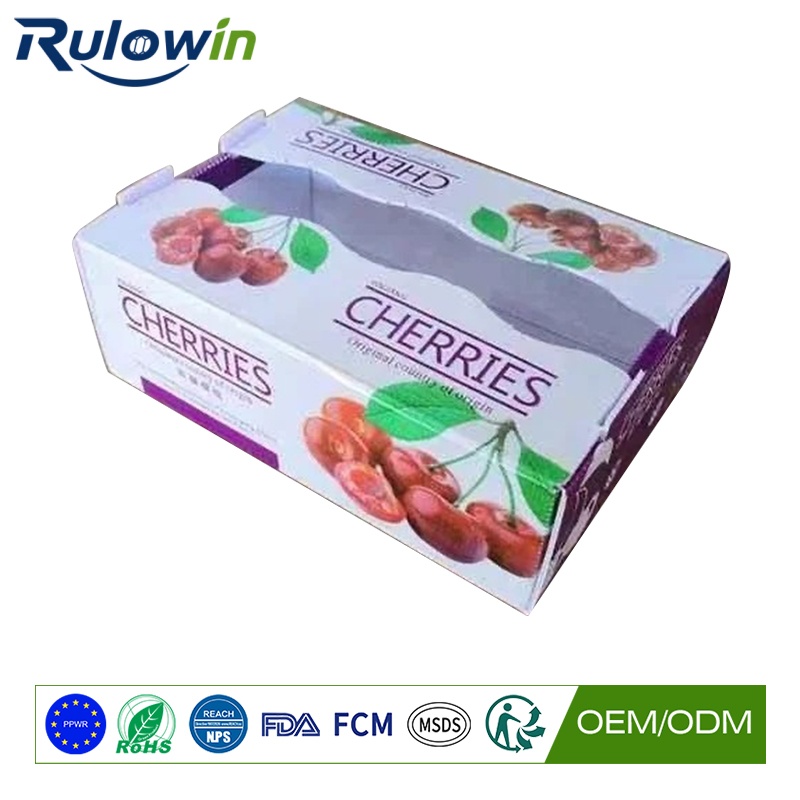
Produce crates are bulky and light, which means nearly every freight bill for them is charged on volume rather than weight. And because a crate travels empty on the return leg, and empty again to the field, and empty to storage, most of the freight a crate generates is freight on air.
Nesting is the whole game
A crate that nests – drops inside another when empty – can reduce the empty stack height by more than half. Over a loop with several empty legs that is the difference between a viable return system and one that costs more in transport than it saves in packaging. The nesting ratio is a specification, not a nice-to-have, and it should be quoted as a number: the height of fifty nested crates against the height of fifty stacked ones.
Count the empty legs
Most people cost the loaded journey. A realistic loop has more empty legs than loaded ones: field to packhouse, packhouse to wash, wash to storage, storage back to field. Each is a volume charge. Drawing the loop on paper and counting the legs is usually the moment the economics become clear, and it is also the moment to consider whether the wash or the storage is in the wrong place.
Container loading
For an import or a long-distance move, the question is how many crates fit in a container, and that depends on nesting and on whether they are loaded nested or assembled. A supplier who can state crates per container is a supplier who has thought about it. Where crates are imported, the difference between a good and a poor nesting design is a meaningful number of containers per order.
Backhauls
The cheapest empty leg is one that is already happening. A truck that delivers produce to a distribution centre and returns empty can carry crates back for very little marginal cost. Where a loop has a natural backhaul, the economics change completely, and finding one is worth more than negotiating the crate price. This is the practical heart of return logistics for reusable fruit boxes.
Where a loop stops making sense
Distance. At some point the return freight exceeds the cost of a single-use carton, and that point is closer than most people assume for a low-value crop. High-value, high-volume, short-distance loops are where returnable crates win clearly; long-distance, low-value ones are where they struggle. It is worth running the number rather than assuming.
Reducing empty volume
Nest them, obviously. Ship them on the backhaul. Wash closer to where they are used rather than transporting them to a central wash. And store them where the season starts rather than where it ends. Each of those removes one empty leg, and the legs are the cost.
What a full truck of empty crates looks like
Ask your supplier for the crates-per-truck figure on a nested load and on a stacked one. The difference is usually the single most surprising number in the whole exercise – the nested load can be several times larger, which means the same freight bill moves several times more crates. Any decision about where to wash, where to store or whether to consolidate should start from that figure.
It also explains why pooling operators exist. A pool consolidates the empty legs of many growers into full loads, which is exactly the efficiency an individual grower with a partial load cannot reach. Where the empty legs are the dominant cost, that consolidation is the product being bought.
What we can do
We supply nestable produce crates and will state the nesting ratio and the crates-per-container figure so you can cost the empty legs properly. Tell us the loop and we will help count them.