
Incoterms decide who pays what and where risk transfers, and on a bulky, low-density product they matter more than on most goods – because freight is a large share of landed cost and whoever controls it controls a lot of the outcome.
FOB: you take it from the port
The supplier gets the goods to the port and loaded; you take it from there. You nominate the forwarder, you control the routing and the schedule, and you carry the risk and the cost from the rail of the ship.
The advantage is control and usually cost, if you have a good freight arrangement. The disadvantage is that you need one. An operation without a forwarder relationship is often better off on CIF, whatever the arithmetic says.
CIF: the supplier delivers to your port
Cost, insurance and freight to the destination port are in the supplier’s price. You clear and deliver onward. Simple, one invoice, and no need to manage a forwarder.
The disadvantage is that the freight is bundled and you cannot see or negotiate it, and the routing and schedule are the supplier’s choice. For a bulky shipment that can mean a slower service than you would have chosen.
Why packaging is a special case
Packaging fills a container before it fills a weight limit, so freight is charged on volume and volume is what you are shipping. The freight line on a CIF quote for packaging is often a substantial fraction of the total – which makes it worth unbundling and looking at.
Ask for both terms. A supplier quoting FOB and CIF gives you the freight cost explicitly, and that is the number that lets you judge whether your own arrangement is better.
Two things that catch people out
Where risk transfers is not where cost transfers. On CIF, risk transfers at the origin port but the supplier pays to destination. Insurance matters here – check who is covered during the sea leg.
Local charges at destination. Neither term includes them, and they are not trivial. Ask what is excluded rather than assuming the price is door-to-door.
And the option people forget
Ex-works, where you collect from the factory. Maximum control, maximum responsibility. It suits operations with their own consolidation in the region and it is a poor choice for anyone without – the coordination burden is real and the saving is often smaller than it looks.
What to ask for, in one email
Both terms, on the same order, with the freight line shown separately. Then you can see what the supplier’s freight actually costs and compare it with your own rate. Suppliers quote both routinely and it takes nothing to ask.
Also ask what is excluded at destination – terminal handling, documentation, any local charge. Those are yours under both terms and they are the part that surprises people on the invoice.
When to stop optimising
If the difference between terms is a small fraction of the order value and you do not have a forwarder relationship, take CIF. The administrative burden of managing a sea leg you do not have volume in is real, and it is not reflected in the freight comparison.
What we can do
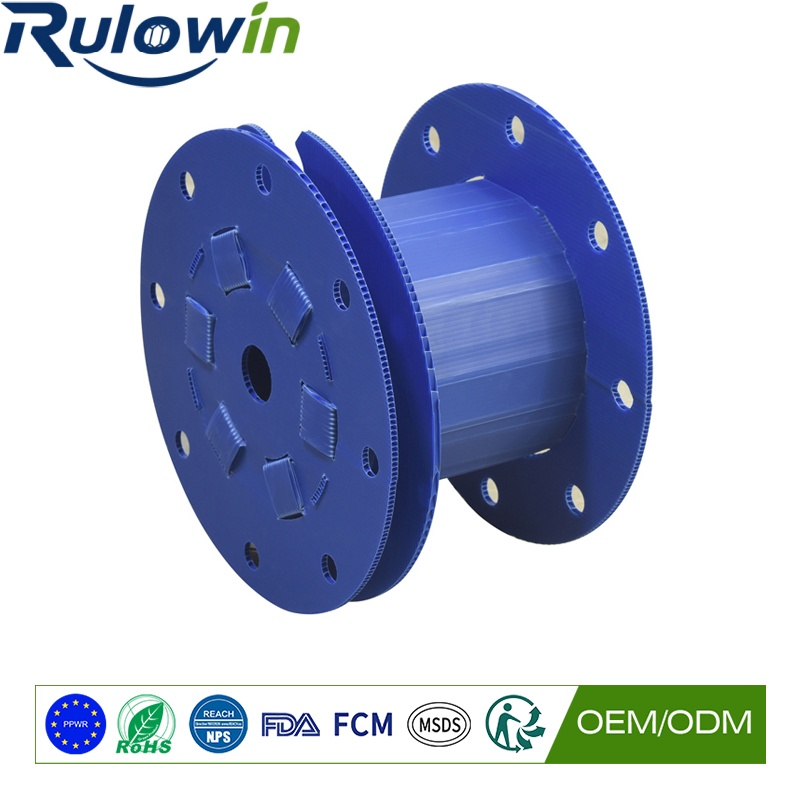
We supply export-grade plastic fiber optic cable reels and quote FOB and CIF so you can see the freight separately. Tell us your port and whether you have a forwarder, and we will tell you which term costs you less – including when the answer is ours.