
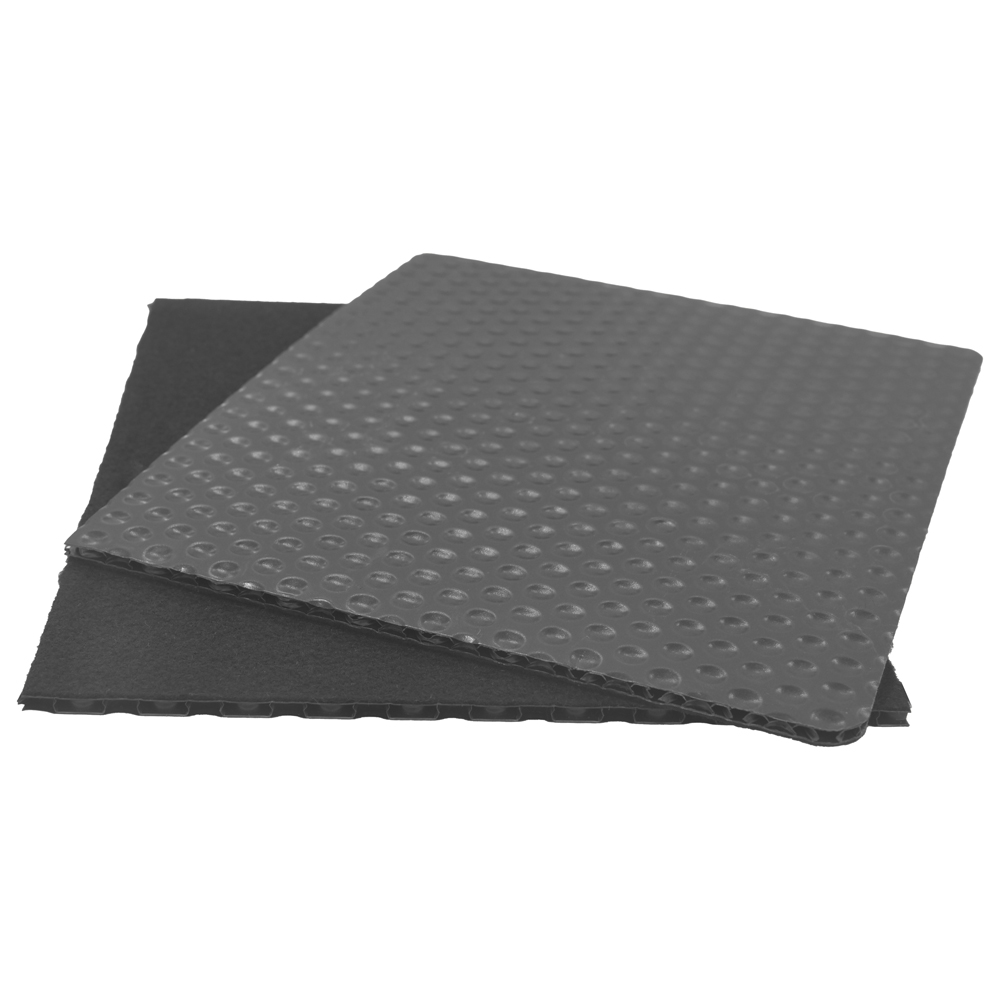
Line-side dunnage is a different problem from transit dunnage. Transit dunnage protects a part once. Line-side dunnage is handled hundreds of times a day by the same operator, and the failure mode is not damage to the part – it is the operator working around the dunnage because it is awkward.
Design for the motion
An operator reaches for a part, takes it, and puts the next one in the cycle. A fixture that holds the part perfectly but requires two hands or a twist gets bypassed within a shift. Fit the pocket to the motion, not to the geometry.
That usually means generous clearance – a few millimetres more than seems necessary – and an open top rather than a closed pocket. A part that drops into a pocket with slack loads in half the time, and for most stamped or machined parts the extra slack costs nothing in protection.
Lint, which is a defect
Corrugated dunnage sheds fibre. In a paint shop or an assembly area, that fibre is a defect – it lands on a surface that is about to be painted or sealed. This is one of the clearest cases for polypropylene, which does not shed.
If your parts go anywhere near a paint or clean-assembly process, this alone usually justifies the change regardless of the durability argument.
Identification, built into the fixture
Line-side racks hold many part numbers. The fixture should carry the part number visibly – printed, embossed, or in a holder. A fixture that requires the operator to remember which pocket is which will be loaded wrongly, and mis-picking a line-side rack stops a line.
Moulded or embossed marking lasts; printed abrades and labels lift off polypropylene. Specify the marking when the fixture is made.
Durability, in the specific sense that matters
Line-side dunnage does not get dropped from height. It gets rubbed, knocked by a part, and leaned on. What kills it is abrasion at the points where parts go in and out, and crushing at the rack contact points.
So the specification is about edge and contact-point reinforcement rather than about overall thickness. A heavier panel everywhere is the wrong answer; a reinforced pocket mouth is the right one.
Flow, and the return
Empty fixtures have to go back. In a plant-to-plant loop that is straightforward. Within a single plant, the return is usually the same pallet or stillage the full ones arrived on, and it needs to work both ways – nesting or stacking empty.
We covered the loop side generally in alternatives to single-use dunnage in a closed loop.
Changeovers, and designing for them
Most line-side racks serve more than one part number over their life. A fixture cut precisely for one part is useless after a changeover, and that is expensive.
Where changeovers are expected, design for a family of parts rather than one – a pocket that accepts several similar components, or a fixture with adjustable or replaceable inserts. It costs a little more up front and it survives the next model year.
Worth asking at the outset how long the part is expected to run. If the answer is “a couple of years”, design for that and not for eternity.
What we can do
We supply automotive honeycomb dunnage designed around the handling motion rather than the part drawing. Tell us the part, the cycle and what the operator does with their hands, and we will design it – including telling you when a simpler fixture works better.