
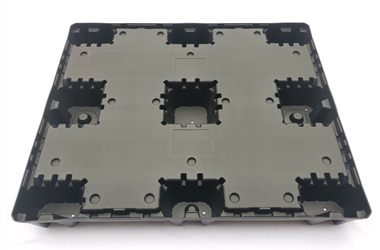
Whether a pallet sleeve box needs a liner comes down to one question that people often skip: does the food actually touch the box? The answer for loose, unpackaged produce is different from the answer for cartons of packaged goods, and treating them the same leads to unnecessary liners or, worse, to none.
Unpackaged produce: line it
Loose fruit or vegetables in direct contact with the box needs a liner, or needs the box to be food-contact declared and cleanable to the standard that implies. A liner is the simpler route and it is what most operations use.
The liner also does a second job: it contains soil and juice, which keeps the box clean and makes the whole loop easier to run. Even where a declaration would cover direct contact, the cleaning burden usually justifies a liner anyway.
Packaged food: usually not
Cartons, trays and wrapped product do not contact the box. A liner there is protecting the cartons from scuffing rather than serving a hygiene purpose, and it is often unnecessary.
Where it is worth having is when the box itself is dirty – in a return loop, boxes come back with marks on them, and a liner keeps that off the packaging. That is a presentation decision rather than a food safety one, and it is legitimate either way.
What the liner has to be
Food-safe, obviously, and sized so it does not tear at the corners. A liner that splits is worse than no liner because it looks like protection and gives none.
Also worth thinking about disposal: a liner is single-use waste and in a reusable system that is a noticeable addition to the waste stream. The alternatives to disposable liners are covered in alternatives to disposable crate liners.
What to ask a supplier for
A food-contact declaration for the box material, naming the regulation and the conditions – contact type, temperature, duration. A general statement that PP is food-grade is not a declaration and several customers will reject it.
The questions worth asking before buying are set out in food contact questions before buying PP crates, and most of them apply equally here.
Cleaning between uses
If boxes carry food without a liner, they have to be cleaned between loads, and the cleaning has to be verifiable. That is a real operational cost and it is the main argument for lining. If you already have a wash process for other reasons, the calculation changes.
Allergens and what came before
If the box previously carried something allergenic, a liner does not address the risk in the way people assume – the box itself is the concern. Where allergens are in play, dedicated boxes or a validated cleaning step is the answer, and a liner is not.
Worth saying plainly because it is a common gap: a liner protects the product from the box, not the box from what it carried before.
Who supplies them
Liners are a consumable and they are usually cheaper bought as a consumable rather than bundled with the box. Ask your box supplier for the size that fits, then buy them wherever is cheapest – they are a standard item.
What we can do
We supply factory-direct pallet sleeve boxes with food-contact documentation available. Tell us what is going in the box and whether it is packaged – we will tell you honestly whether you need a liner, and when you do not.