
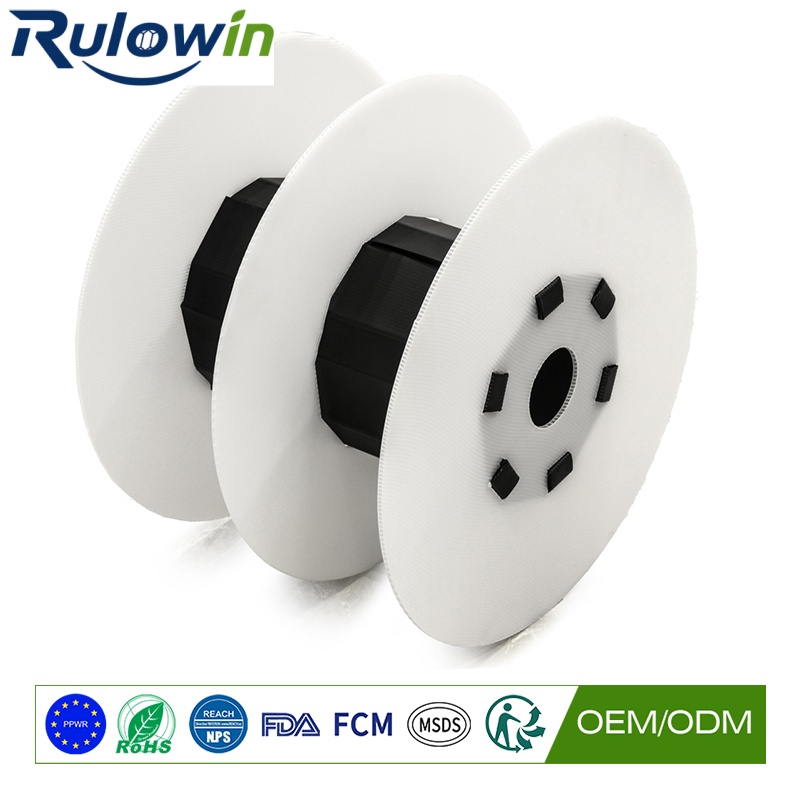
A reel that has been stored outside is wet, and the water that matters is not the water you can see. It is the water in the hub bore and between the flange and the cable, and it causes two specific problems if it is not dealt with.
Why the bore matters
The bore is the interface with the payout stand. Water there means a wet arbor, and a wet arbor in a bore means the reel does not seat properly and can slip under drive. It also means rust on a steel stand, and rust in a bore is abrasive.
The second problem is water trapped between the inner flange face and the cable. It sits there, it does not evaporate quickly, and in cold weather it freezes and bonds the outer wraps together.
How to dry them
Stand the reels on their flanges, spaced, in a covered area with air movement. Standing puts the bore vertical so water drains out of it; laying them flat traps it. This is the single most useful thing and it costs nothing but floor space.
If you have compressed air, blow through the bore. It takes seconds per reel and it is the difference between dry and mostly dry.
How long
A few hours for the flange surfaces, and longer for the cable itself. If the cable is wet, the outer wraps dry first and the inner ones stay damp for a day or more. Do not pay out wet cable if you can avoid it – water drawn into a duct is a problem later.
What to check before paying out
Look down the bore and feel it. Then look at the inner flange faces for standing water. Then check the outer wraps of cable for visible damp, and if there is any, unwind a turn or two and look underneath.
If the reel has been outside through a freeze, check that the wraps are not bonded before applying tension. Forcing a frozen reel is how flanges get cracked.
And the reel itself
Outdoor storage is also when you notice UV damage, and a reel that has been outside a while is worth checking before it goes back into service. The surface test is described in can cable reel flanges warp in direct sunlight.
Preventing it rather than curing it
A tarpaulin over a stack costs very little and it prevents both the wet and the UV. If reels are going to sit outside regularly, cover them – it is cheaper than the time spent drying and inspecting, and it removes the freeze problem entirely.
The cable itself
Water on the cable is the part people forget. Cable drawn into a duct wet carries water with it, and water in a duct is a problem that surfaces months later and nowhere near the reel.
If the outer wraps are visibly wet, dry before pulling rather than after. Where the cable is going underground, this is worth being strict about.
If you are short of time
Wipe the bore out with a rag and blow through it, and accept that the cable may still be damp. A reel that is dry at the bore and the flange will pay out fine even if the inner wraps are not perfectly dry, which is the part you cannot get to anyway.
What we can do
We supply industrial fiber optic cable reels and will tell you which grades tolerate outdoor storage and which do not. Tell us whether your reels live outside – if they do, we will specify for it rather than let you find out.